Civil Rights Groups Call For A Better Measure Of Accountability In Public Education
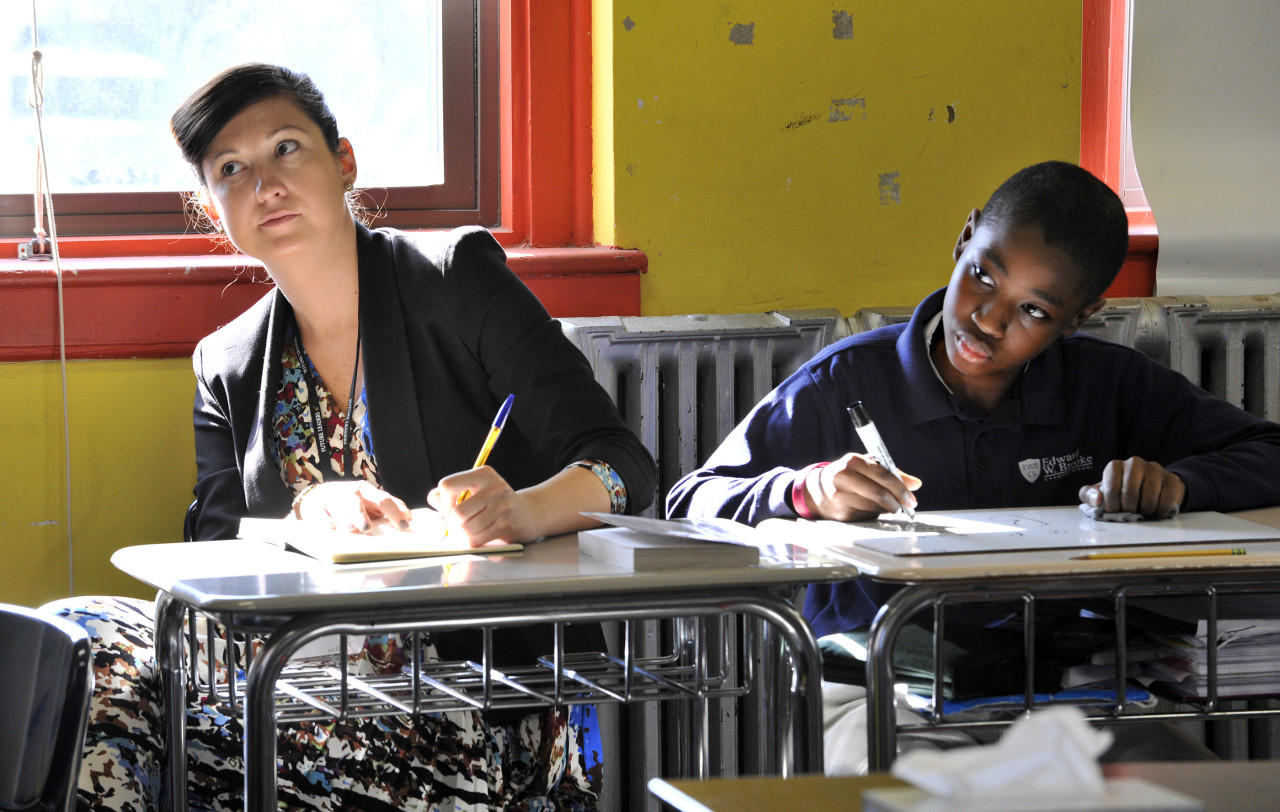
The country's current education system is placing "tremendous burden on schools disproportionately serving low-income students and students of color" and leaving them under-resourced and ill-prepared, charged a coalition of civil rights groups in a letter to President Barack Obama, Education Secretary Arne Duncan, congressional and state educational leaders.
Eleven civil rights groups released the letter Tuesday urging improved accountability at the local, state, and federal levels in order to increase equity and opportunity for students of color. The group wants to see government officials implement measures beyond high-stakes testing to make sure schools are serving students well.
Pushing back against laws like No Child Left Behind -- the 2001 federal law driven by high-stakes testing that declared all students would test at grade level in reading and math by 2014 -- the group recommends that a new system of accountability must consider the resources, geography, student population and needs of specific schools.
"Racial achievement and opportunity gaps remain large," the groups write, "and many struggling school systems have made little progress under rules that emphasize testing without investing."
The letter calls upon local, state, and federal policymakers to rethink public education accountability systems and include eight specific measures:
-
Appropriate and Equitable Resources
Ensure equal access, within and across schools, to high-quality curricula, technology and adequate facilities. Student poverty, culture, language learning and social, emotional, nutritional and health services should be taken into account when distributing resources.
-
Multiple Measures
School systems that monitor tools that indicate a student's "academic social, emotional, physical health and cultural well-being" beyond tests focused only on college and career readiness.
-
Shared Responsibility
Federal, state, and local governments, districts, and schools are held accountable at each level for producing high-quality learning opportunities in all settings.
-
Professional Competence
Educators need to have the "time, investments, and supports" necessary to teach students effectively. This should require additional support and professional learning for teachers and education professionals in historically under-resourced and disadvantaged classrooms.
-
Informative Assessments For Meaningful 21st Century Learning
Evaluations that assess critical thinking, problem-solving, collaboration, communication and creativity. They should look at whether or not the overall education systems are promoting equity in opportunities and achievement.
-
Transparency
Information and data about schools should be available for parents and community members, as well as students and educators.
-
Meaningful and Culturally and Linguistically Responsive Parental and Family Engagement
Engagement of all parents and families included in both the teaching and learning processes, with adequate steps taken to ensure participation from low-income parents and parents who do not speak English.
-
Capacity Building
A good system of accountability will include consequences for poor performance in a manner that maximizes student learning.
"For our nation to thrive, our education system must produce outcomes that are equitable across student groups -- outcomes that demonstrate that every student achieves to his or her highest potential," said Thomas A. Saenz, MALDEF President and General Counsel, in a statement on behalf of the coalition.