Learning Lab
This is an archive of WBUR’s Learning Lab, which covered education in Massachusetts from 2013 to 2016.

Comment of the Day

Comment of the Day

Guest Commentary: It’s Time to Stop Hiding Behind Graduation Rates

By Nicholas C. Donohue

This month, tens of thousands of high school seniors across the state are returning home to the thrill of a college acceptance letter, heralding an important path toward a successful and prosperous life. As we celebrate the achievement these well-deserving students worked so hard to earn, we should also ask ourselves if we are doing everything we can to make sure current and future graduates are completely prepared for this important next step.

It is easy to point to high school seniors graduating at an all-time high rate of 82 percent nationally and say that we are making great strides across the country in guiding students into rewarding futures. And an 87 percent rate in Massachusetts might even strengthen the argument to suggest that we are leading the way in doing so.

Yet while higher graduation rates are positive news, it is important to keep our eyes on the real prize. Late last year, The New York Times reported that these peaks in graduation rates overshadow an alarming truth: Many high school graduates are not fully ready for college or career. These questions over the value of a high school diploma echo the results of a recent survey conducted among high school students nationwide, which found that less than half of them felt positive about their college or career readiness.

Read more of Guest Commentary: It’s Time to Stop Hiding Behind Graduation Rates →
Comment of the Day

Guest Commentary: Don't Make College Free -- Increase Need-Based Aid

By Catharine Hill

Increases in college costs and concerns about student debt have led to a variety of proposals for free tuition across American higher education.

Several alumni hoping to be elected to Harvard University’s Board of Overseers are now campaigning on a platform of zero tuition for Harvard students. Other proposals focus on community college tuitions, which are already relatively low compared to other types of colleges and universities. And U.S. Rep. Tom Reed (R-N.Y.) is going after the country’s selective private colleges with large endowments. His draft legislation would require these schools to increase spending from their endowments in an effort to hold down tuition and reduce student debt burdens.

But who will actually benefit from these proposals?

Reducing tuition at the well-endowed schools would primarily benefit students from the top 20 percent of the income distribution, students and their families who can already pay much or all of the tuition. To help lower- and middle-income students and their families, it makes more sense to focus on expanding need-based financial aid, rather than lowering tuition levels.

Read more of Guest Commentary: Don't Make College Free -- Increase Need-Based Aid →

Comment of the Day

Guest Commentary: Beware The College Financial Aid Letter

By Bob Hildreth

This is the time of year when students and their parents pack a light lunch or an overnight bag and head off to visit colleges. Some may be aware that these highly orchestrated guided tours are marketing tools. After all, colleges are in a high-stakes competition with one another to attract students and money. That’s capitalism.

Families later receive a second big marketing job: the financial aid letter. Unfortunately it hides more than it reveals.

Specifically, it obscures the real cost of going to college and the means of paying for it. Colleges, in which we put so much trust, knowingly draft confusing and deceptive financial aid letters to make their value look better than it actually is.

According to Mark Kantrowitz, a financial aid consultant with Edvisors.com, the letters “are designed to convince the family that the college costs less and is more affordable than it really is.”

Read more of Guest Commentary: Beware The College Financial Aid Letter →

Reporter's Notebook

Guest Commentary: Schools Need Restraint -- And Restraint In Using It

By James V. Major

It is a precarious line that teachers and staff walk when students erupt into emotional and physical outbursts, kicking, biting or punching fellow students or teachers. It might seem that children should never be physically restrained in school. But, when all other interventions have failed, how do we deter a child from running into traffic, break up a fight between 18-year-olds or stop a teenager in an acute psychotic episode from committing suicide?

The use of restraints in schools has not been without reason. There are times when emotionally, behaviorally and medically challenged students need to be prevented from hurting themselves, classmates and teachers. School professionals should continue to embrace positive behavior management tools, but they should also be highly trained and skilled in using safe restraint techniques when dangerous situations arise.

Given recent events, the public is right to be concerned about the use of physical restraints in schools. School administrators must provide the proper training and support to staff so it is understood that restraints must never be used as punishment and are not therapeutic. Restraints can only be used as a last resort to protect students and staff -- after all other interventions have failed.

This month, new state regulations go into effect that govern the use of physical restraint and seclusion in all publicly funded schools and group care facilities in Massachusetts. The new state regulations, which limit the use of physical restraints, are the result of last year’s extensive debate by advocates, school personnel and parents across the state. While both public and private schools have invested a great deal of time and energy in preparing to comply with the regulations, the real focus of our work should be, and has been, on the prevention and elimination of the need for physical restraints in the first place.

Read more of Guest Commentary: Schools Need Restraint -- And Restraint In Using It →

Comment of the Day

Guest Commentary: Let's Do More To Connect With Youth

By Tiziana Dearing

In the world of working with young people, there’s a concept called “disconnected youth.” That means young people, ages 16-24, who are neither working nor in school. As you can imagine, disconnection is a bad thing. It can lead to higher rates of poverty, poor health outcomes, crime and more.

As part of a new presidential issues project,  the Boston-area Opportunity Nation has been talking in social media about a report it commissioned this summer on disconnected youth. It showed alarming rates of disconnection at the national level, but relatively good numbers for Greater Boston – depending on who you are.

The report found that more than 5 million youth in America are disconnected. That’s “larger than the population of thirty US states,” and it cost the country $27 billion in 2013 alone.

Read more of Guest Commentary: Let's Do More To Connect With Youth →

Reporter's Notebook

Guest Commentary: In Social Emotional Learning, Massachusetts Should Step Up

By Chad d’Entremont, Ph.D

Preparing today’s students for life after graduation must extend beyond academics. In an ever-changing global economy, employers want workers who can think critically, solve problems and adapt quickly. As more and more jobs become automated, ones that require both technical and interpersonal skills are still in demand.

Teaching our students reading, writing and arithmetic simply is not enough anymore -- they need to learn persistence, patience and compassion too.

A growing body of evidence points to the importance of teaching children how to manage their emotions and behaviors. Known as social and emotional learning (SEL), the development of these noncognitive skills, like self-motivation and grit, is linked to better academic performance, higher college retention rates and increased employment and wages. These abilities lead to improved health and well-being as well, including a lower risk of substance abuse, obesity and criminal activity.

Read more of Guest Commentary: In Social Emotional Learning, Massachusetts Should Step Up →

Reporter's Notebook

Guest Commentary: Why We Shouldn't Privatize Public Education

By Richard Stutman

A recent ruling by Washington state’s Supreme Court declared charter schools unconstitutional, which has only served to further fuel the debate surrounding these often controversial educational institutions. The ruling, which argued that charter schools are not truly public schools because they are not governed by elected boards, found that these schools largely adhere to their own standards and as such are not accountable to voters. Charter schools are in fact independently run and operate without the same accountabilities as truly public schools.

As someone who was a teacher and is now the president of the 11,000-member Boston Teachers Union, I agree that we need to provide more educational options to low-income students, but charter schools are not the way to do this. In fact, their growth is a step toward privatizing public education. Charter schools take opportunities away from the other public schools by cherry-picking the students who come through their doors.

Read more of Guest Commentary: Why We Shouldn't Privatize Public Education →

Reporter's Notebook

Guest Commentary: Something Is Rotten In The State Of Massachusetts

By Rebecca Steinitz

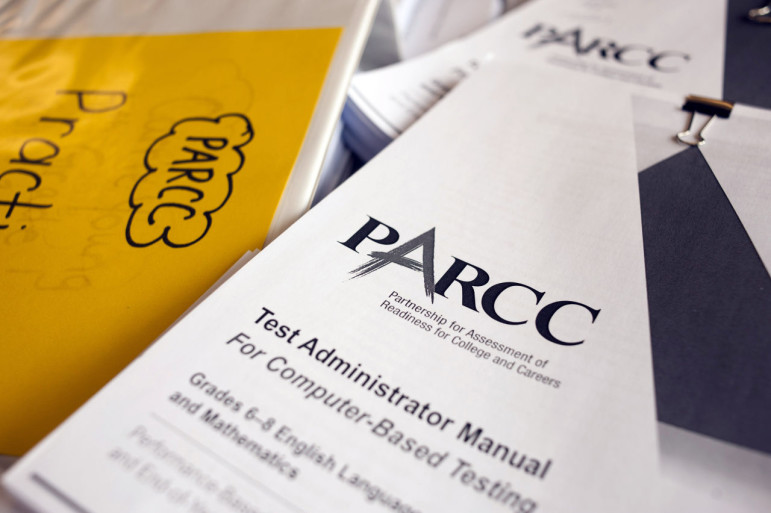
An Open Letter to Gov. Baker about Transparency, Accountability and the PARCC Test

Dear Gov. Baker,

Eighteen months ago, I wrote an open letter to President Obama in which I shared my deep qualms about the quality and efficacy of the PARCC test. The letter quickly went viral, suggesting that the nation’s parents, teachers and politicians shared my concerns. In the subsequent year and a half, our concerns have only escalated, an opt-out movement has emerged, and a growing number of educators have spoken out against the increased focus on testing in American education.

I wish I were writing to you today, Gov. Baker, to tell you that my concerns have been assuaged and that I am ready to embrace the PARCC tests. Unfortunately, I am not. Instead, I am writing to express my new concern: that the Department of Elementary and Secondary Education (DESE) and Commissioner Mitchell Chester are recklessly pushing Massachusetts into the PARCC test, without giving educators, citizens and lawmakers the information we need to make a real choice about our children’s educational future.

Read more of Guest Commentary: Something Is Rotten In The State Of Massachusetts →