
Learning Lab
This is an archive of WBUR’s Learning Lab, which covered education in Massachusetts from 2013 to 2016.

5 Questions With

5 Questions With

5 Questions With 'The Prize' Author Dale Russakoff

When Facebook founder Mark Zuckerberg announced on "Oprah" in 2010 that he was donating $100 million to the city of Newark to improve its schools, longtime Washington Post reporter Dale Russakoff decided to follow along and see what happened next. Over the next four years, she talked with teachers, parents, students, administrators, politicians, donors -- just about every major figure in the story, in Newark and beyond -- to build a deeply researched, nuanced and thoughtful report.

The result, her book "The Prize," has just been published to widespread acclaim. In it, Russakoff details the missteps and controversies that plagued the reformers from the beginning -- starting, perhaps, with their decision to announce the gift on national television before telling anyone in Newark about it. Even with an additional $100 million in matching funds, the largesse seems to have done shockingly little to improve the quality of Newark's public schools.

Anyone who's interested in how to improve urban schools -- and how not to -- will find a wealth of information and insight in "The Prize." By focusing deeply on one city's issues, the book illuminates many of the problems that all cities face.

Read more of 5 Questions With 'The Prize' Author Dale Russakoff →
5 Questions With

5 Questions With Primary Source's Julia de la Torre

Where existing school curriculum leaves out a global perspective, Watertown-based nonprofit Primary Source hopes to step in and change this.

For the past 25 years, Primary Source has pushed educators to advance a global education in classrooms. The program currently works with over 50 districts and schools as collaborative partners.

At a time when classrooms in the country are becoming more and more diverse, Primary Source is working to expand its programs and reach more teachers throughout the state.

Currently, they offer online courses, teacher workshops, book discussion groups, summer institutes and international outings in an effort provide teachers with tools and resources to globalize curricula.

Read more of 5 Questions With Primary Source's Julia de la Torre →

5 Questions With

5 Questions With Wôpanâak Language Reclamation Project's Jennifer C. Weston

Indigenous and tribal communities are working hard to preserve their native tongues and cultural practices after weathering centuries of cultural loss -- and they are turning toward charter schools for the job.

Now, a group of tribal leaders and educators on Cape Cod are in the process of opening a charter school to revive their native language -- one almost lost to history.

In recent years, a wave of charter schools have popped up across the nation to educate students in native languages, containing curricula infused with cultural beliefs and practices. Language immersion schools are currently operated by the Shoshone-Bannock tribe in Idaho, Cherokee Nation in Oklahoma, and the Lac Courte Oreilles tribe in Wisconsin. Other examples include the Window Rock school district's Navajo language-immersion school, and the Lakota Language Project in South Dakota.

Read more of 5 Questions With Wôpanâak Language Reclamation Project's Jennifer C. Weston →

5 Questions With

5 Questions With Institute For Creative Educational Leadership Founder Linda Nathan

The Institute for Creative Educational Leadership (ICL) at Boston University's School of Education offers a one-year intensive program for experienced and aspiring school leaders. Participants will be a part of a small learning community focused on community collaboration.

In an effort to foster a community-wide learning environment, the ICL is working to foster coalitions between educational and community leaders.

Read more of 5 Questions With Institute For Creative Educational Leadership Founder Linda Nathan →

5 Questions With

5 Questions With Hackathon Winner Erica Manoppo

This interview is the second in a three-part series talking to winners of the Mass EduData Challenge. Check back each day for the next installment.

Big data is playing a more significant role in education policy, innovation, and teaching.

For the Mass EduData Challenge civic hackers, engineers, and developers all came together with a single goal: to create programs and tools to analyze trends found across Massachusetts education department data.

Erica Manoppo and the rest of the City Year challenge team won the award for Best Use of Data. They created visualizations of different AP and MCAS exam results in order to explore and compare the participation and performance of girls in STEM education across the state.

  • View the team's award winning project
  • More coverage of the Mass EduData Challenge
  • Read more of 5 Questions With Hackathon Winner Erica Manoppo →

    5 Questions With

    5 Questions With Hackathon Winner David Lago

    This interview is the first in a three-part series talking to winners of the Mass EduData Challenge. Check back each day for the next installment.

    Recently the six-week Mass EduData Challenge joined civic hackers, engineers, and developers seeking to create programs and tools to analyze trends found in a stockpile of Massachusetts education data.

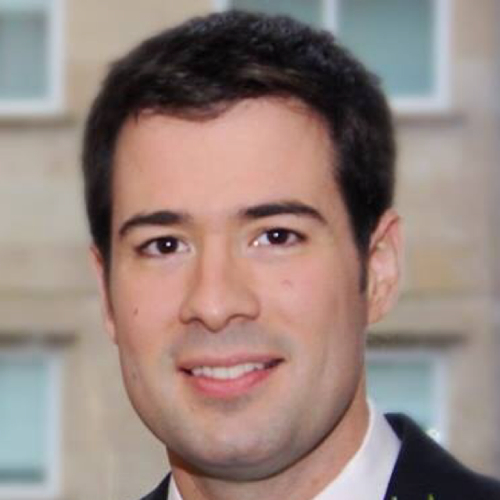
    Participants with a competitive flair may have hesitated at helping their opponents, but this was not the case for David Lago (pictured left) and Christopher Buck, winners of the Collaboration Award, who both spoke with Learning Lab in our earlier coverage of the challenge.

    Lago told Learning Lab that he was surprised to see “the amount of data that was being tracked for every school and district.”

    Read more of 5 Questions With Hackathon Winner David Lago →

    5 Questions With

    5 Questions with Blueprint School Fellow Jayde Bennett

    Non-profit Blueprint Schools Network was selected last spring to take-over Dever Elementary School in Dorchester, Mass. The reform-driven program is part of a national network that brings techniques from charter schools into traditional schools.

    Among the program components: a fellowship program placing young tutors in classrooms to work with students one-on-one and in small groups.

    The week, Learning Lab spoke with one of them, Jayde Bennett, who spent the last year tutoring fourth grade math at Elihu Greenwood Leadership Academy. Now finished with the fellowship, Bennett is working as an admissions counselor and basketball coach at Kent School in Kent, Conn.

    In this week's 5 Questions, Bennett spoke with us about working at Elihu Greenwood Leadership Academy, her education, and the first-year teacher that made her feel a part of the team.

    Read more of 5 Questions with Blueprint School Fellow Jayde Bennett →

    5 Questions With

    5 Questions with Josh Biber, Executive Director Teach for America in Massachusetts

    More than 300 new teachers in Massachusetts public schools in the past four years have been members of Teach for America, the national non-profit that matches teachers with open positions in low-income schools.

    An additional 400 alumni of the program continue to teach in Massachusetts, and more than 50 work as principals or school system leaders, according to the organization.

    At the helm of Teach for America's Massachusetts efforts is Josh Biber. With ten years experience in TFA, including establishing the Massachusetts program in 2008, Biber also sits on a number of school advisory boards including Orchard Gardens Pilot School, Kingsley Montessori School, and Salem Academy Charter School.

    This week, Biber sat down with Learning Lab to talk about education in Massachusetts' Gateway Cities and what lessons the state can draw from what's happening in places like Fall River, New Bedford, and Lawrence-- all districts where TFA works.

    Read more of 5 Questions with Josh Biber, Executive Director Teach for America in Massachusetts →

    5 Questions With

    5 Questions with Nick Donohue, President of the Nellie Mae Education Foundation

    In the past 12 months, the Nellie Mae Education Foundation has spent more than $12 million on education programming, policy and research. Nearly $2.5 million of that funding has gone to Massachusetts, to schools like the Boston Day & Evening Academy and Revere High School, as well as foundations like The Boston Foundation, Bellwether Education Partners and Massachusetts Business Alliance for Education.

    This week, Nellie Mae Foundation President and CEO Nick Donohue sat down with Learning Lab to talk about the Foundation's investments.

    Read more of 5 Questions with Nick Donohue, President of the Nellie Mae Education Foundation →