Learning Lab
This is an archive of WBUR’s Learning Lab, which covered education in Massachusetts from 2013 to 2016.

Explainer

STEM Schools in Massachusetts

STEM stands for science, technology, engineering, and mathematics. At STEM-focused schools, students take an interdisciplinary curriculum with special attention paid to these four areas.

Since 2008, the Obama administration has invested heavily in STEM high school programs across the country, with the goal of raising students’ proficiency in all STEM fields.

In 2009, Gov. Deval Patrick created the Governor's STEM Advisory Council to act as the liaison between STEM proponents in the public and private sectors and the Governor’s Office. The Advisory Council has sought to complete five goals since 2013.

  1. Increase student interest in STEM areas
  2. Increase student achievement in all STEM areas
  3. Increase the number of STEM teachers
  4. Increase the number of students pursuing higher education in STEM areas
  5. Ensure that a "STEM talent pipeline" is created (the state will grow workforce need for STEM jobs as students graduate with STEM-related degrees and certificates)

In line with federal recommendations, the Massachusetts Department of Elementary and Secondary Education has encouraged districts to develop Early College High Schools, high schools that allow students to obtain college credit while in high school, to focus on STEM areas.

These high schools are intended to focus on low-income, minority, and first-generation college students.

Already six districts have received $120,000 grants from Race to the Top to implement STEM focused Early College High Schools.
Related coverage

Reporter's Notebook

How One Student Went From Illiteracy To The Top Of Her Class

BOSTON -- This Saturday's 69th Annual Boston Citywide Science Fair will feature the best and brightest of Boston Public Schools' (BPS) budding student scientists. Roughly 350 students will publicly present projects related to science, technology, engineering and math.

The students will be vying for prizes in the form of scholarships, grants, a chance to advance to the statewide science fair and, for top prize winners, a coveted place at the annual Intel International Science and Engineering Fair (ISEF) in May.

Last year, Boston students did just that. Perhaps most well known is Nathan Han who, as a freshman at Boston Latin School, won top honors at ISEF and took home the $75,000 Gordon Moore Award.

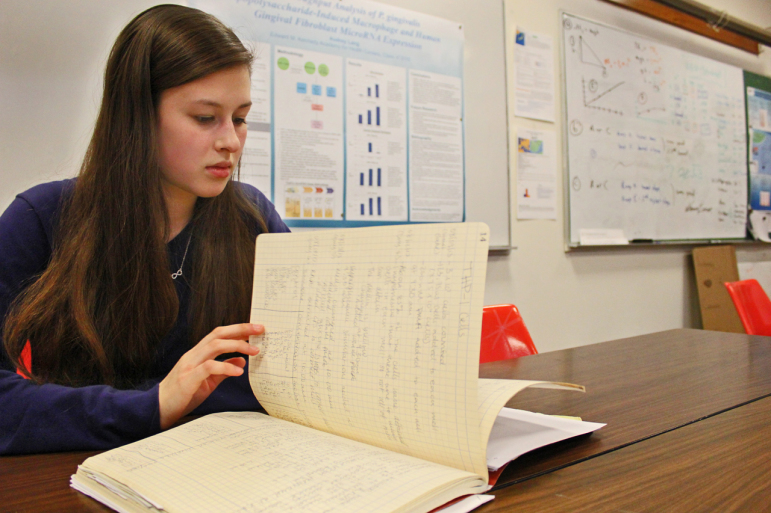
Yet, Han was just one of four Boston students who won the chance to go to ISEF to present their projects. Another was Audrey Lang. This year she's a senior and again has an eye on the Citywide Science fair.

Read more of How One Student Went From Illiteracy To The Top Of Her Class →

Reporter's Notebook

Charting The Future Of The Dearborn School

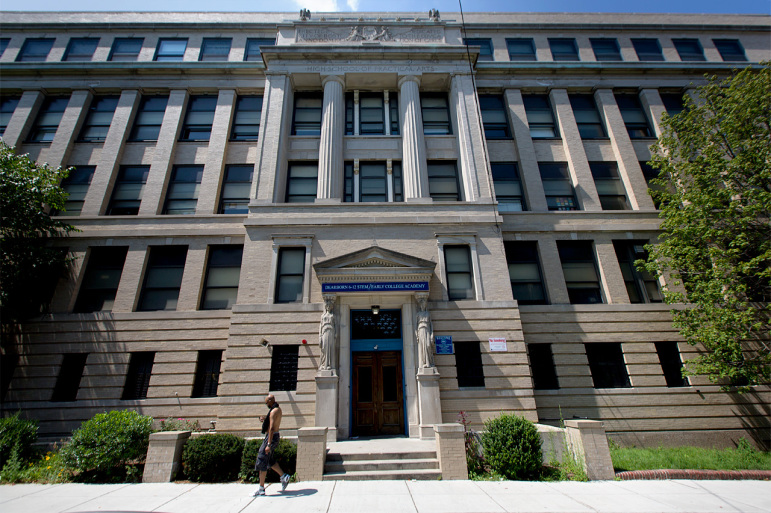
Determining that the Dearborn Middle School in Roxbury has not exhibited the type of rapid academic progress needed, Boston Public Schools (BPS) has chosen nonprofit BPE, formerly known as the Boston Plan for Excellence, to run the school as an outside partner.

In recent years the Dearborn School, which currently serves about 300 students, has consistently ranked among the district's lowest achieving and least improving schools.

The Dearborn partnership was green-lighted last week to avoid having the school potentially taken over by the state. Yet, outside operators have failed to raise test scores or turn around student performance at other schools that enacted partnerships last fall.

Read more of Charting The Future Of The Dearborn School →

Reporter's Notebook

MGH After-School Program Boosts STEM Learning

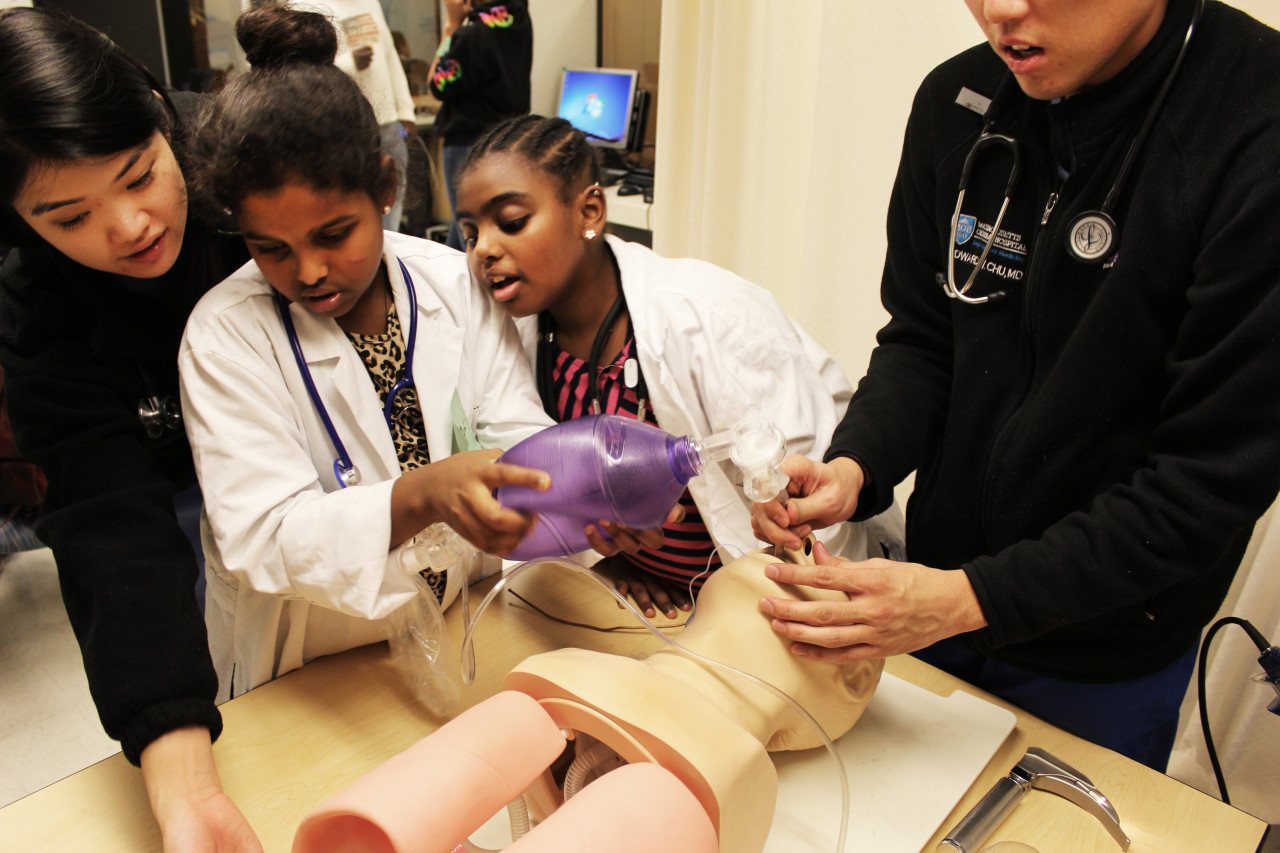
BOSTON -- "Tonight, we're gonna learn how to save a life," Edward Chu, a second year internal medicine resident student at Massachusetts General Hospital (MGH), told the group of four middle school girls wearing white lab coats and stethoscopes on Tuesday night. "Multiple lives hopefully."

Chu and his four students are in MGH's Learning Laboratory -- a simulation ward equipped with the latest training equipment, educational technologies and mannequin-simulators. The students are members of the Senior STEM Club after-school program at the Yawkey Boys & Girls Club in Roxbury.

The club, an MGH Youth Program created by Chu and Cambridge Health Alliance resident student Lisa Yeung, gives middle school students hands-on STEM learning experiences outside of the classroom.

Read more of MGH After-School Program Boosts STEM Learning →

5 Questions With

5 Questions With Hackathon Winner Erica Manoppo

This interview is the second in a three-part series talking to winners of the Mass EduData Challenge. Check back each day for the next installment.

Big data is playing a more significant role in education policy, innovation, and teaching.

For the Mass EduData Challenge civic hackers, engineers, and developers all came together with a single goal: to create programs and tools to analyze trends found across Massachusetts education department data.

Erica Manoppo and the rest of the City Year challenge team won the award for Best Use of Data. They created visualizations of different AP and MCAS exam results in order to explore and compare the participation and performance of girls in STEM education across the state.

  • View the team's award winning project
  • More coverage of the Mass EduData Challenge
  • Read more of 5 Questions With Hackathon Winner Erica Manoppo →

    5 Questions With

    5 Questions With Hackathon Winner David Lago

    This interview is the first in a three-part series talking to winners of the Mass EduData Challenge. Check back each day for the next installment.

    Recently the six-week Mass EduData Challenge joined civic hackers, engineers, and developers seeking to create programs and tools to analyze trends found in a stockpile of Massachusetts education data.

    Participants with a competitive flair may have hesitated at helping their opponents, but this was not the case for David Lago (pictured left) and Christopher Buck, winners of the Collaboration Award, who both spoke with Learning Lab in our earlier coverage of the challenge.

    Lago told Learning Lab that he was surprised to see “the amount of data that was being tracked for every school and district.”

    Read more of 5 Questions With Hackathon Winner David Lago →

    Reporter's Notebook

    Guest Column: Linda Nathan on School Autonomy

    Linda Nathan is a nationally recognized educator working in school reform. She is the founding headmaster of Boston Arts Academy and has worked in BPS for 35 years.

    In June Boston University announced that Nathan was joining the School of Education to lead a new initiative on developing educational leadership.

    Nathan spent the past year working with BPS to study school autonomy. She reflects on her experiences in the guest column below.

    A special job came with a singular special request: Get clarity on the issue of autonomy for Boston Public Schools. This was the essence of my assignment for most of a year for the Boston School Superintendent.

    So what did autonomy mean? Why does it often get a “bad rap”? Ideally, autonomy comes with increased accountability and includes latitude for a school to make its own management decisions without the constrictions of central office mandates. In most cases, in Boston, autonomous schools often have more flexibility with union contracts.

    Such decisions regard budgeting, staffing,governance, curriculum, assessment, professional development, length of school day and calendar. Autonomy is a way to leverage innovative practices and improve student achievement. Charter (and there are many variations of charters including Horace Mann and in-district charters as well as Commonwealth charters which are not part of the Boston Public Schools), Innovation schools and Pilot schools fall into this category.

    Read more of Guest Column: Linda Nathan on School Autonomy →

    5 Questions With

    5 Questions with Blueprint School Fellow Jayde Bennett

    Non-profit Blueprint Schools Network was selected last spring to take-over Dever Elementary School in Dorchester, Mass. The reform-driven program is part of a national network that brings techniques from charter schools into traditional schools.

    Among the program components: a fellowship program placing young tutors in classrooms to work with students one-on-one and in small groups.

    The week, Learning Lab spoke with one of them, Jayde Bennett, who spent the last year tutoring fourth grade math at Elihu Greenwood Leadership Academy. Now finished with the fellowship, Bennett is working as an admissions counselor and basketball coach at Kent School in Kent, Conn.

    In this week's 5 Questions, Bennett spoke with us about working at Elihu Greenwood Leadership Academy, her education, and the first-year teacher that made her feel a part of the team.

    Read more of 5 Questions with Blueprint School Fellow Jayde Bennett →

    Weekend Read

    Weekend Read: Boston schools look outside for money

    The Boston Globe this weekend reports on Boston Public Schools new search for capital. The district is hoping to raise $25 million towards staff development.

    The effort began quietly a few months ago and has already secured $3 million in commitments from donors. School officials aim to raise the remaining amount over the next three years, and the School Department itself has kicked in $6 million.

    Read more of Weekend Read: Boston schools look outside for money →

    Reporter's Notebook

    Six new education ideas from Boston EdTalks

    At one point Wednesday night, dozens of suit and dress-clad people – some white-haired, many in glasses – stood in a small presentation hall in the heart of Boston and rapidly touched their elbows to their knees. Looking more like a kindergarten class than teachers, the crowd – including Massachusetts Commissioner of Elementary and Secondary…

    Read more of Six new education ideas from Boston EdTalks →

    Last Bell

    Last Bell: Teacher Collaboration and Student Success, Educator Diversity Remains a Problem, Nonprofit Hopes to Get More Students into STEM APs

    Student performance improves when teachers collaborate, according to a new study of five Boston schools. The Rennie Center, a Cambridge-based education research and policy center, studied Clarence R. Edwards Middle School, New Mission High School, George H. Conley Elementary School, Orchard Gardens Pilot K-8 School, and the Urban Science Academy last fall and winter. Researchers…

    Read more of Last Bell: Teacher Collaboration and Student Success, Educator Diversity Remains a Problem, Nonprofit Hopes to Get More Students into STEM APs →

    Last Bell

    Last Bell: STEM Grant in Marlborough, Superintendent Search in Hudson, Charter School Leaders Oppose District Rating Changes, Houghton Mifflin Harcourt's New Math Program, and Boston School Committee Meeting Tonight

    Before a school committee meeting in Marlborough last night, educators and business leaders toasted to a new $1.8 million federal STEM grant for the district, the MetroWest Daily News reports. The grant was originally announced earlier this month, according to the newspaper. School officials announced earlier this month that Marlborough was one of three districts…

    Read more of Last Bell: STEM Grant in Marlborough, Superintendent Search in Hudson, Charter School Leaders Oppose District Rating Changes, Houghton Mifflin Harcourt's New Math Program, and Boston School Committee Meeting Tonight →

    Reporter's Notebook

    22 AP STEM Teachers to be Honored at Mass Insight's Partners in Excellence Teacher Awards

    Mass Insight Education, a Boston-based non-profit that provides philanthropic support for Advanced Placement math, science and English courses in Massachusetts, is honoring 22 teachers from 15 schools tonight as Partners in Excellence Teacher Award winners.

    Read more of 22 AP STEM Teachers to be Honored at Mass Insight's Partners in Excellence Teacher Awards →

    Reporter's Notebook

    Lesson from the Classroom: Engineering Class at Marlborough STEM Early College High School

    At Marlbourough's STEM Early College High School on Thursday morning, students in Paul Duplessis' engineering class were hard at work on a math problem: determining the correct scaling of a pen.

    They had one hour to complete the assignment. If successful, their pens would be printed on the school's 3-D printer, they would be supplied with ink, and they would take home a fully functional-- and personalized-- pen.

    It's been three years since Marlborough schools launched the STEM Early College High School within Marlborough High School, making these students the third freshman class. They'll enroll in honors and Advanced Placement courses with a particular emphasis in science, technology and math classes. There ninth graders, for example, enroll in honors active physics, honors algebra 1, honors engineering, honors English, and honors world history.

    Read more of Lesson from the Classroom: Engineering Class at Marlborough STEM Early College High School →

    Reporter's Notebook

    A crowdfunded classroom: Boston teachers seek private funding for classroom needs and wants

    At the start of the school year special-education teacher Emma Patton was allotted $100 for classroom supplies by the principal at her school, Kenny Elementary in Dorchester. It didn't go far. It covered pencils and some copy paper. For the other things her students have needed, like markers and a pencil sharpener, she's reached into her own wallet or gone without.

    Frustrated, in October she turned to the community for help and posted a request on education crowd-funding site DonorsChoose.

    Her pitch: that for $284.18 she could buy binders to help her students learn to organize work, headphones to let them listen to the reading games they like, a stool to help fidgety students remain calm enough to learn, a pencil sharpener so they could complete assignments, and, the perennial favorite among elementary school students, markers.

    Since January 2008, Boston Public Schools teachers have brought in just over one million dollars for classroom and learning supplies through DonorsChoose, funding items ranging from graphing calculators to light bulbs, geography games to highlighters. And most frequently, books.

    Read more of A crowdfunded classroom: Boston teachers seek private funding for classroom needs and wants →