Learning Lab
This is an archive of WBUR’s Learning Lab, which covered education in Massachusetts from 2013 to 2016.

October 2015

Reporter's Notebook

Report: Schools Fall Short In Handling Students' Digital Data

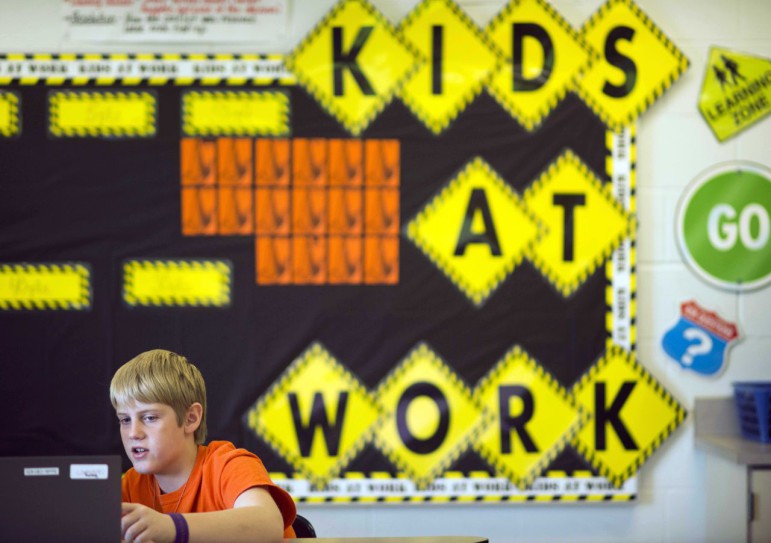
Many Massachusetts schools are using technology to monitor students, collect personal data about them and share that data in ways that raise troubling questions about student privacy, according to a new study from the American Civil Liberties Union of Massachusetts.

The study, released Wednesday, examined 35 school districts across the state, including Boston, Springfield and various rural and suburban districts. Almost universally, the study found, students in those districts have "no expectation of privacy" when going online in school; many are similarly unprotected when using school-issued electronic devices, such as Chromebooks or iPads.

And many districts reserve the right to inspect those devices without notice or consent, the report said. Unlike searches of school lockers or student backpacks, the report said, in many cases school officials can search cellphones and other devices without even a "reasonable suspicion."

Read more of Report: Schools Fall Short In Handling Students' Digital Data →
Reporter's Notebook

'Nation's Report Card' Shows Massachusetts At The Top -- But Slipping

BOSTON -- Massachusetts students are showing gains in fourth-grade reading but are slipping in fourth-grade math and eighth-grade reading and math. That's the major takeaway from national standardized test scores released Wednesday.

While some scores are lower than in 2013, Massachusetts students still rank at the top of the nation on those tests, the National Assessment of Educational Progress (NAEP). NAEP is often called the nation's report card because it is the only measure of student achievement given regularly to a nationwide sampling of students.

In this year's results, Massachusetts leads the nation in fourth-grade reading scores; even with its lower scores, the state statistically ties for first in fourth-grade math and eighth-grade reading and math.

Read more of 'Nation's Report Card' Shows Massachusetts At The Top -- But Slipping →

Reporter's Notebook

Group Of Legislators Push To Remove 'High-Stakes' Nature Of Standardized Testing

Legislators critical of standardized testing are pushing five bills that could change how much sway test scores have in Massachusetts schooling. It comes just as the Obama administration is urging limits on school testing.

While the group of state legislators still want assessments that can measure students and highlight achievement gaps, their bills would remove much of the tests' current high-stakes nature -- graduation, evaluation or district ranking based on test scores.

One proposed bill would remove passing 10th grade standardized tests as a graduation requirement. Another, more comprehensive bill proposed by Rep. Marjorie Decker (D-Cambridge) would establish a three-year moratorium on high-stakes measures, which she says can punish students, teachers or schools based on low standardized test scores.

Read more of Group Of Legislators Push To Remove 'High-Stakes' Nature Of Standardized Testing →

Reporter's Notebook

This 'Fantasy Reading League' Trades Footballs For Books

BLACKSTONE, Mass. -- The cafeteria at Frederick W. Hartnett Middle School buzzes as the entire student body of sixth- to eighth-graders comes clamoring in. It's draft time at the school, and everyone is beyond excited to see who will get signed to which team this year.

"So everybody should have two things with them," principal Justin Cameron tells the students when they've taken their seats. "They should have their independent reading book, and they should have their draft card."

Many of these kids love sports, but they're not here for a football draft. Rather, Cameron explains to the school's roughly 450 students that it's a draft for something different: Hartnett's fantasy reading league.

"So fantasy reading takes a model from fantasy football or any other fantasy sport that you have," says Cameron. "But what I find that is incredibly neat, is that instead of drafting pro athletes to make up a team, every adult in this building puts together a team of you."

For the second year, Hartnett will transform into a school-wide fantasy league that combines literature, digital fantasy sports and fierce competition. It's all part of a push to keep students reading at a crucial stage of their learning lives.

Read more of This 'Fantasy Reading League' Trades Footballs For Books →

Reporter's Notebook

State Finds No Wrongdoing In English High MCAS Scores

State officials will soon release 10th-grade math MCAS scores for The English High School in Boston, after finding no evidence of wrongdoing in the school's administration of the test.

The state department of elementary and secondary education had withheld the English 10th-grade math scores, citing "anomalies," when it released district and individual school MCAS results in September. Officials have repeatedly declined to specify what flagged their interest.

Now, however, the state is validating the scores, according to a memo from education commissioner Mitchell Chester to Tommy Chang, superintendent of Boston Public Schools.

Read more of State Finds No Wrongdoing In English High MCAS Scores →

Reporter's Notebook

MCAS Vs. PARCC: Now, Education Board Might Face A Third Option

At the Tuesday meeting of the state Board of Elementary and Higher Education where the latest standardized test scores were released, those scores weren't the main topic of the day. Instead, talk focused on a new twist in the ongoing discussion of whether to keep using the MCAS test or switch to PARCC: How about neither one?

Mitchell Chester, commissioner of elementary and secondary education, is due to make his recommendation on the tests to the board before its Nov. 17 vote. In a special meeting Monday, he told the board that he was now weighing a third possibility, or "Door No. 3," as he put it: a so-called "MCAS 2.0," which could use elements of the new PARCC tests to build a state-specific assessment.

"It's not a binary decision," Chester said Tuesday.

Read more of MCAS Vs. PARCC: Now, Education Board Might Face A Third Option →

Reporter's Notebook

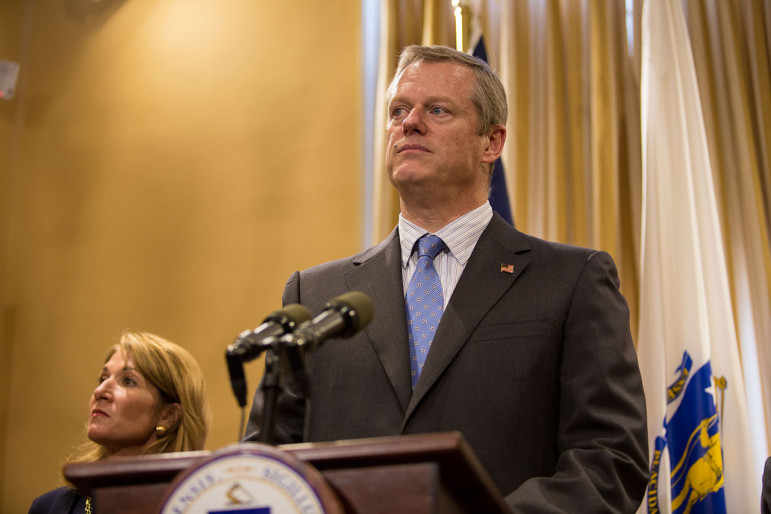
Baker's Opioid Bill Would Support Recovery Schools, Training In Prevention

BOSTON -- Under the opioid legislation that Gov. Charlie Baker filed Thursday, the state would expand access to recovery high schools and would require education for athletic coaches and parents on the effects of opioids.

“Combating the opioid epidemic in the Commonwealth calls for a comprehensive approach," said Baker in a statement.

In the bill, Baker calls for the Department of Public Health and the Department of Elementary and Secondary Education to develop and fund a transportation plan for students attending recovery high schools, which are specifically designed for students recovering from substance abuse and addiction.

Read more of Baker's Opioid Bill Would Support Recovery Schools, Training In Prevention →

Reporter's Notebook

Baker And Walsh Advocate For Charter School Expansion, But At Different Rates

By Steve Brown

BOSTON -- Gov. Charlie Baker and Boston Mayor Marty Walsh appeared separately before the Legislature's Joint Committee on Education on Tuesday to offer testimony regarding proposals to raise the cap on the number of charter schools allowed in Massachusetts.

Both are in favor of raising the cap, but they have differing views on how to do it.

Baker told the legislators that Massachusetts charter schools are the envy of the nation. He said they deliver amazing results to more than 40,000 students in the state, most of them from disadvantaged communities and underperforming school districts. But, the governor says, too many kids remain on charter school waiting lists, and the performance gap remains too high.

"Nothing makes this point clearer than a charter school lottery," he said. "Held before the start of each school year, parents and children gather, their numbers in hand, to find out if this time, their number comes up. Everybody cries over charter school lotteries, everybody. They cry because it's totally binary. You either win, or you lose. There is no in between."

The governor has filed a bill that would allow the state to add 12 new or expanded charter schools every year, above the existing state cap.

Read more of Baker And Walsh Advocate For Charter School Expansion, But At Different Rates →

Reporter's Notebook

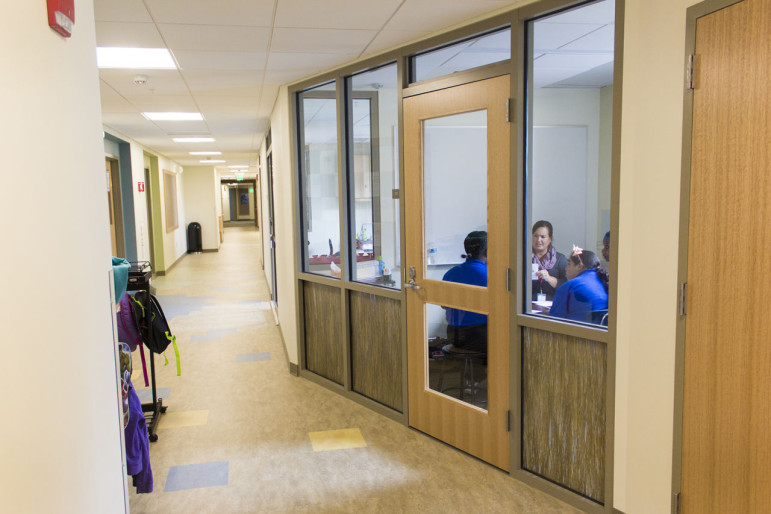
How A Boston School Uses Design To Help Heal Students' Trauma

BOSTON -- Walk into any classroom, in any school, and you're likely to find students suffering from severe trauma. Even students in kindergarten? Unfortunately, yes.

When Dorchester’s Codman Academy Charter School expanded to include kindergarten students two years ago, executive director Meg Campbell found herself face to face with this sad fact.

"The children coming in, the 4- and 5-year-olds, so many of them were so ... traumatized," recalls Campbell. "Clearly traumatized."

She was seeing the kind of severe trauma that typically runs rampant across all grades in urban schools. Trauma from constant exposure to violence. From emotional, physical or sexual abuse. From daily worries about food, housing or safety. Beyond that, those kindergartners had grown up in the aftermath of the 2008 recession and as a result, Campbell says, had many of their social services cut.

Now, to support its entire student body, Codman has turned somewhere unique: the very walls of the building that its lower and middle schools moved into this year. Using what's known as "trauma-informed building design," the newly renovated space harnesses architecture as a tool to address students' social and emotional needs.

Read more of How A Boston School Uses Design To Help Heal Students' Trauma →

5 Questions With

5 Questions With 'The Prize' Author Dale Russakoff

When Facebook founder Mark Zuckerberg announced on "Oprah" in 2010 that he was donating $100 million to the city of Newark to improve its schools, longtime Washington Post reporter Dale Russakoff decided to follow along and see what happened next. Over the next four years, she talked with teachers, parents, students, administrators, politicians, donors -- just about every major figure in the story, in Newark and beyond -- to build a deeply researched, nuanced and thoughtful report.

The result, her book "The Prize," has just been published to widespread acclaim. In it, Russakoff details the missteps and controversies that plagued the reformers from the beginning -- starting, perhaps, with their decision to announce the gift on national television before telling anyone in Newark about it. Even with an additional $100 million in matching funds, the largesse seems to have done shockingly little to improve the quality of Newark's public schools.

Anyone who's interested in how to improve urban schools -- and how not to -- will find a wealth of information and insight in "The Prize." By focusing deeply on one city's issues, the book illuminates many of the problems that all cities face.

Read more of 5 Questions With 'The Prize' Author Dale Russakoff →