MGH After-School Program Boosts STEM Learning
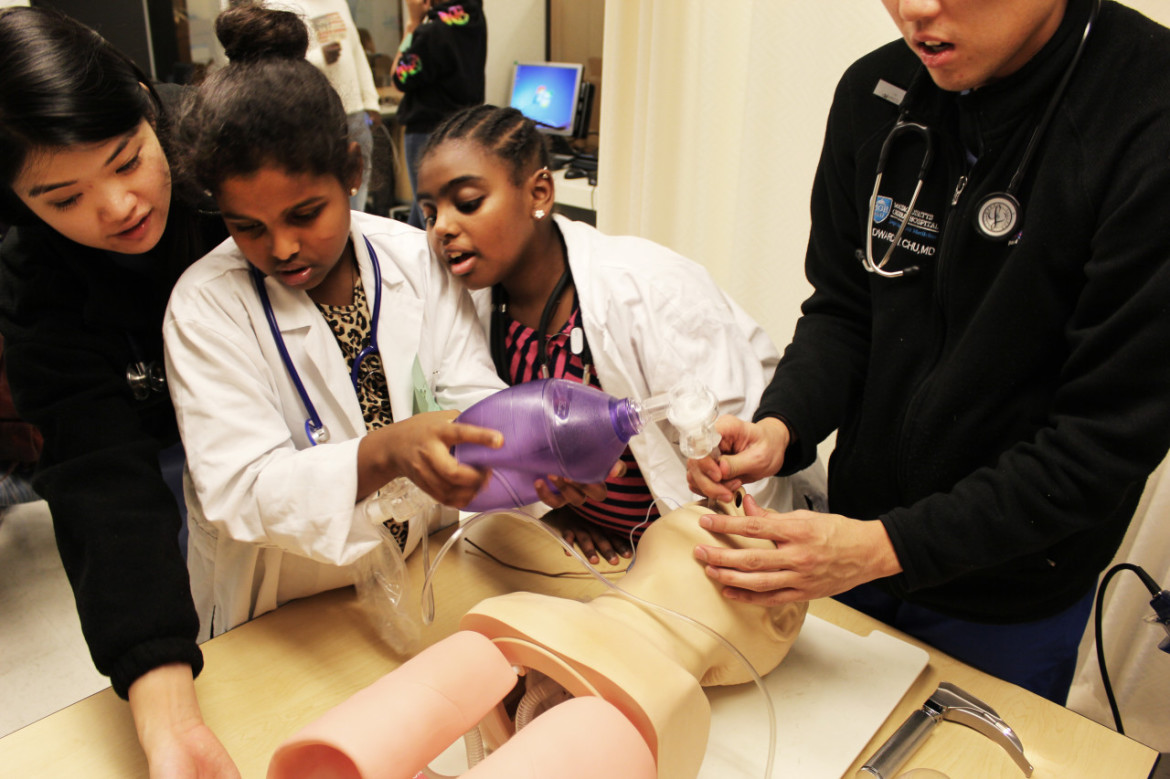
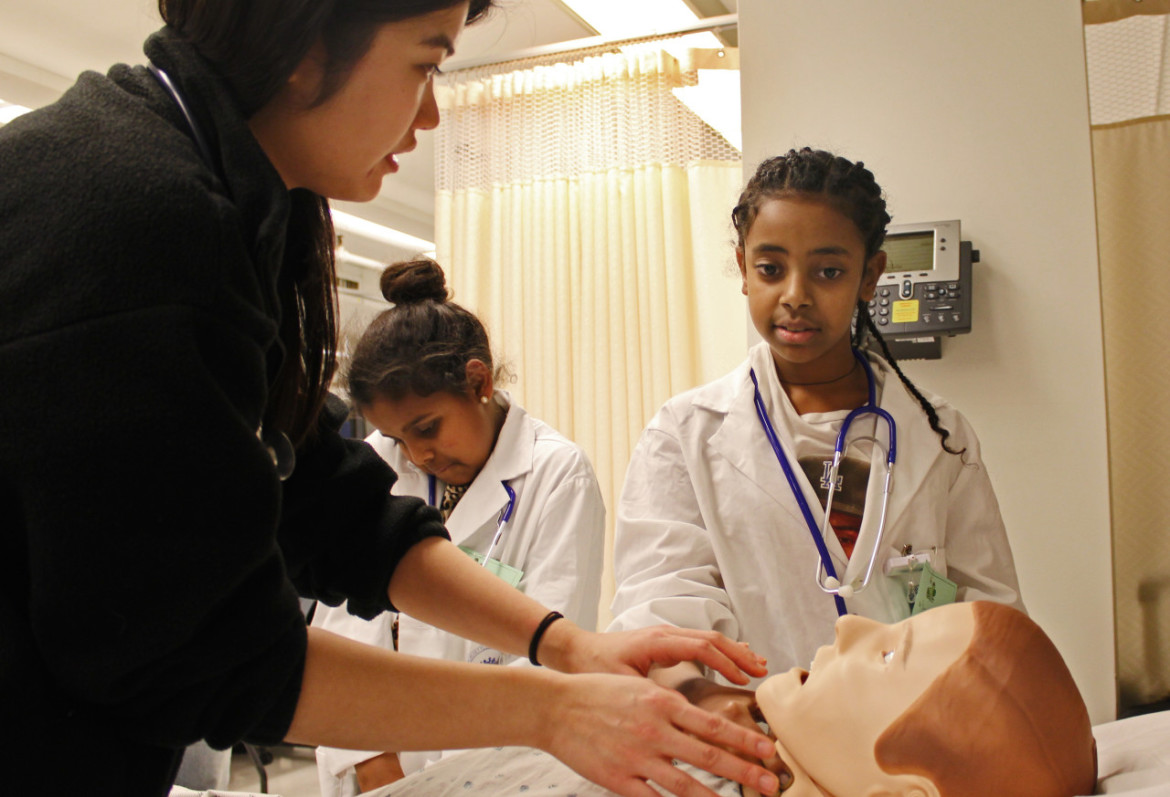
BOSTON -- "Tonight, we're gonna learn how to save a life," Edward Chu, a second year internal medicine resident student at Massachusetts General Hospital (MGH), told the group of four middle school girls wearing white lab coats and stethoscopes on Tuesday night. "Multiple lives hopefully."
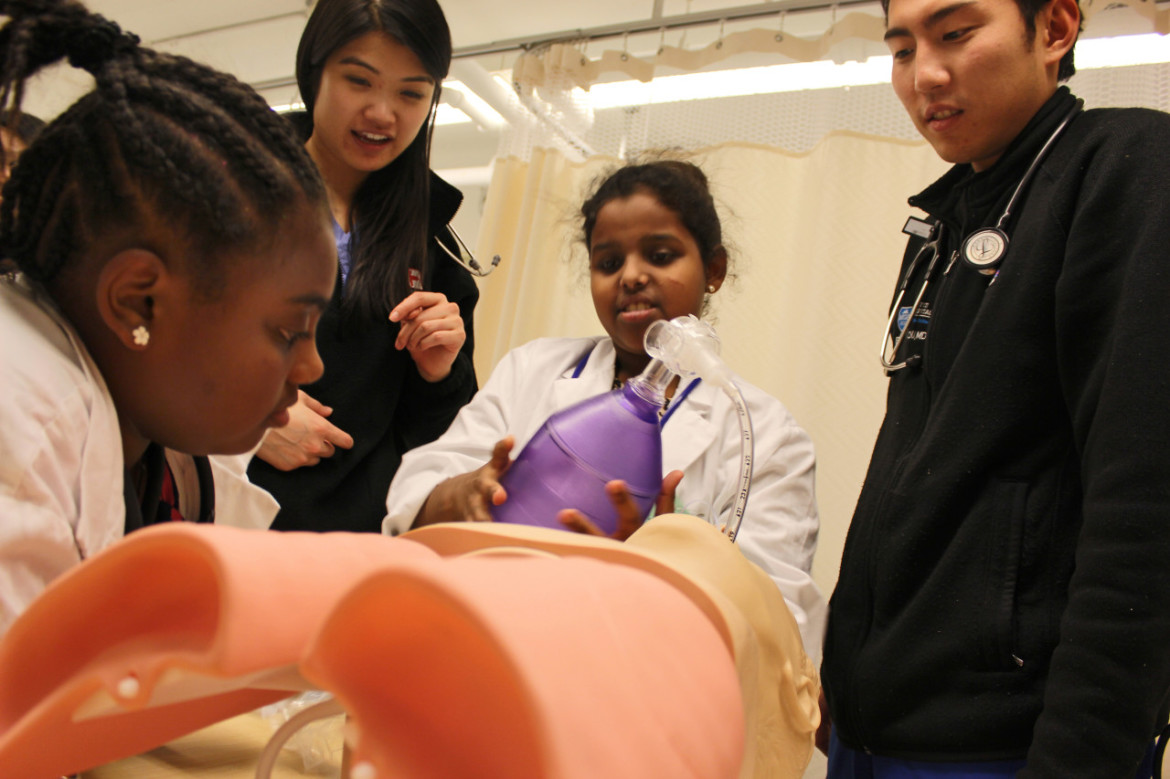
Chu and his four students are in MGH's Learning Laboratory -- a simulation ward equipped with the latest training equipment, educational technologies and mannequin-simulators. The students are members of the Senior STEM Club after-school program at the Yawkey Boys & Girls Club in Roxbury.
The club, an MGH Youth Program created by Chu and Cambridge Health Alliance resident student Lisa Yeung, gives middle school students hands-on STEM learning experiences outside of the classroom.
The 5th and 6th grade students are at an age, the creators say, where they may be most impressionable to follow paths towards science, technology, engineering and mathematics (STEM) careers.
Interactive Learning Comes To Life
"This is the youngest group to ever be in here," Chu said of the Learning Laboratory. "For the past several weeks we've been learning vital signs and how to identify them."
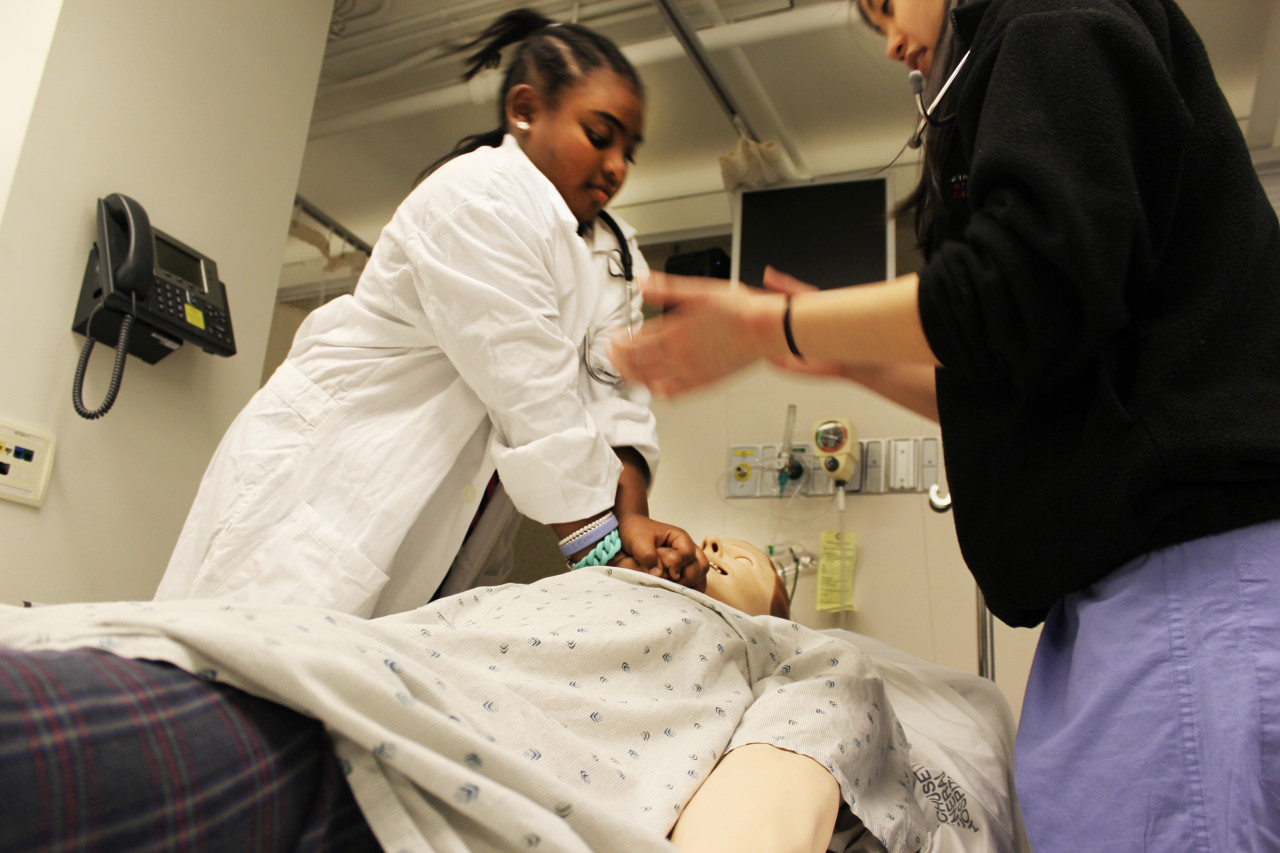
Now, the young students get the chance to apply what they've learned to mannequin "patients" in a real hospital setting.
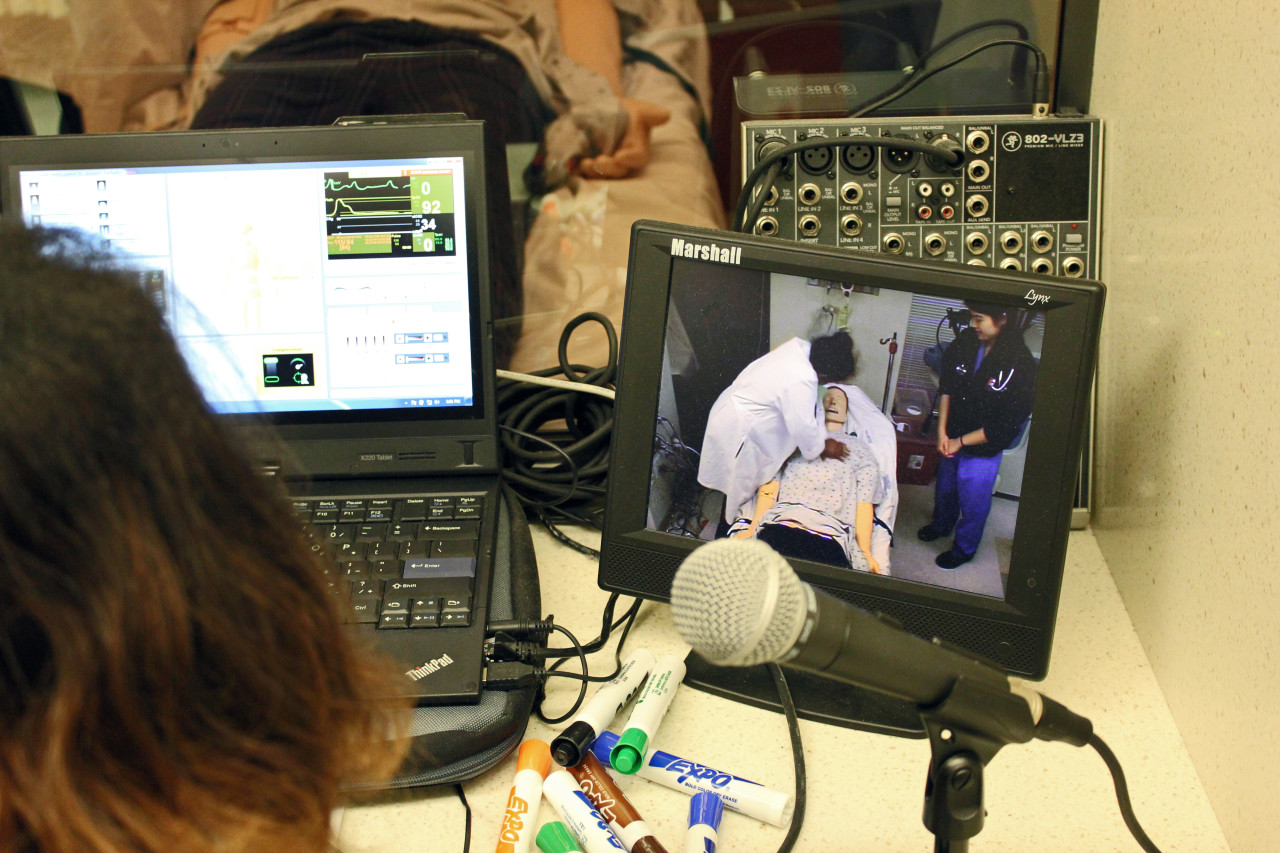
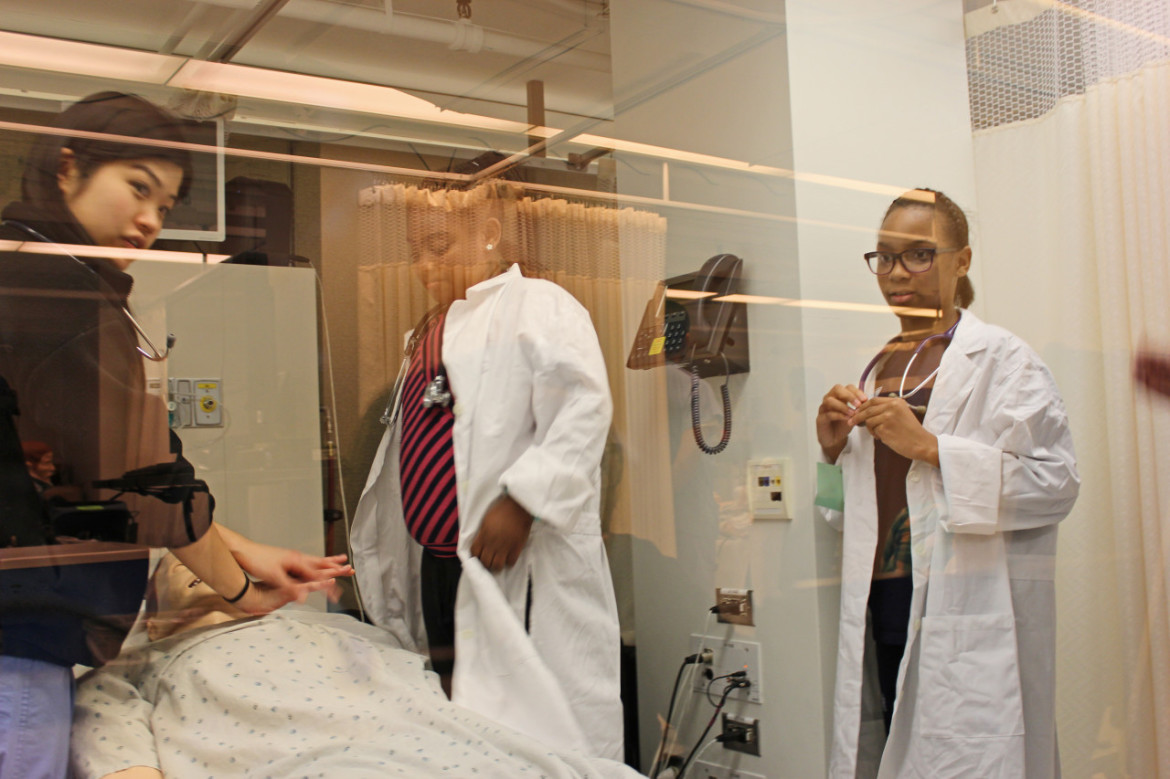
The mannequin simulators are very lifelike and, depending on your affinity for human sized dolls, borderline-creepy. They have pulses, can blink, their chests rise and fall as they "breathe," and are equipped with speakers to "talk." All of which, this night, are controlled in an adjoining booth by resident doctors Chu has enlisted to help.
"The whole premise behind what I'm doing here is to provide interactive learning, hands-on learning," Chu said. "I think a lot of it is just empowering them to become excited about, not only medical conditions that may down the line affect them, but to let them realize what it's like to potentially be in the health care field."
Statistics show that girls and women have made gains in the last three decades in terms of educational equity, but studies indicate they still substantially lag behind their male peers in terms of representation in STEM subjects, especially girls of color.
After-school programs, like this one, are heralded as an effective strategy in improving students' attitudes about and understanding of STEM subjects.
Yet, according to a 2012 federal report, there is a need for about 1 million more STEM professionals than the U.S. will produce at the current rate over the next decade. Experts agree that STEM education is critical to the future of the American economy.
'Information Can Be Attained No Matter Where You Are'
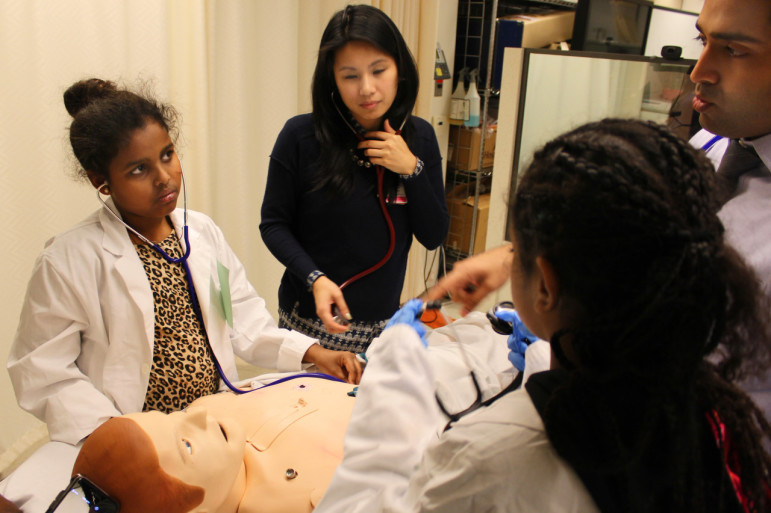
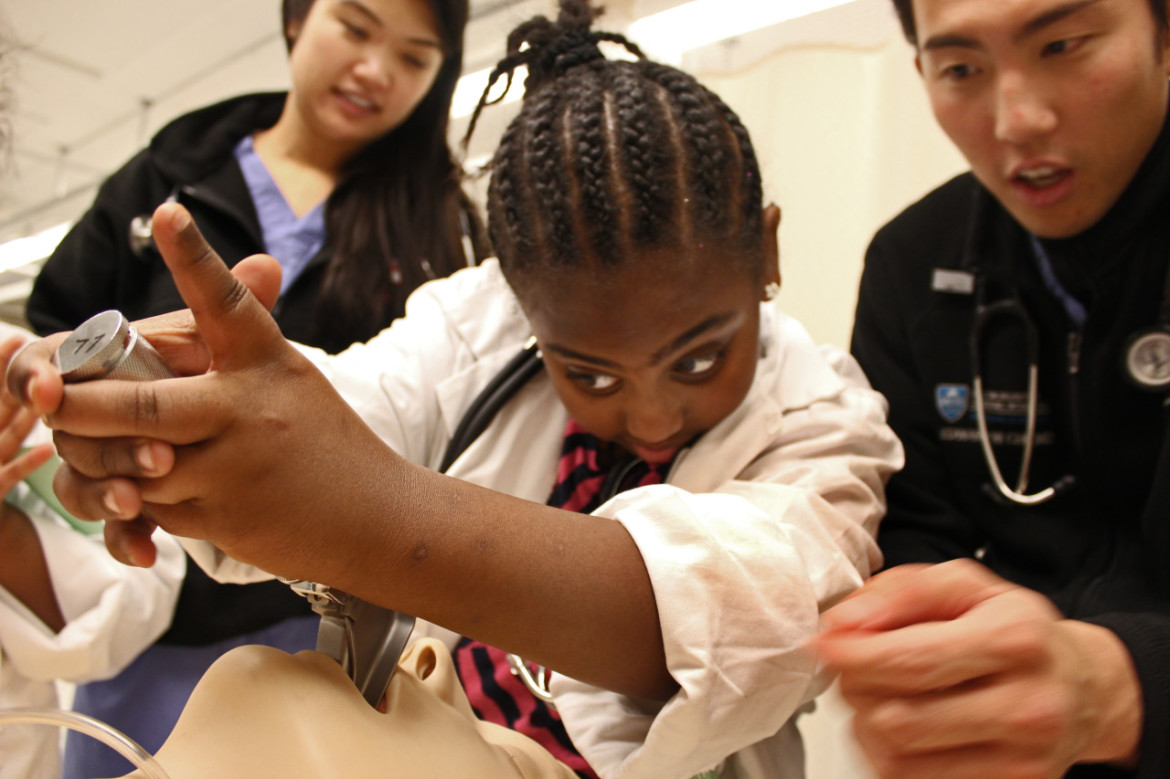
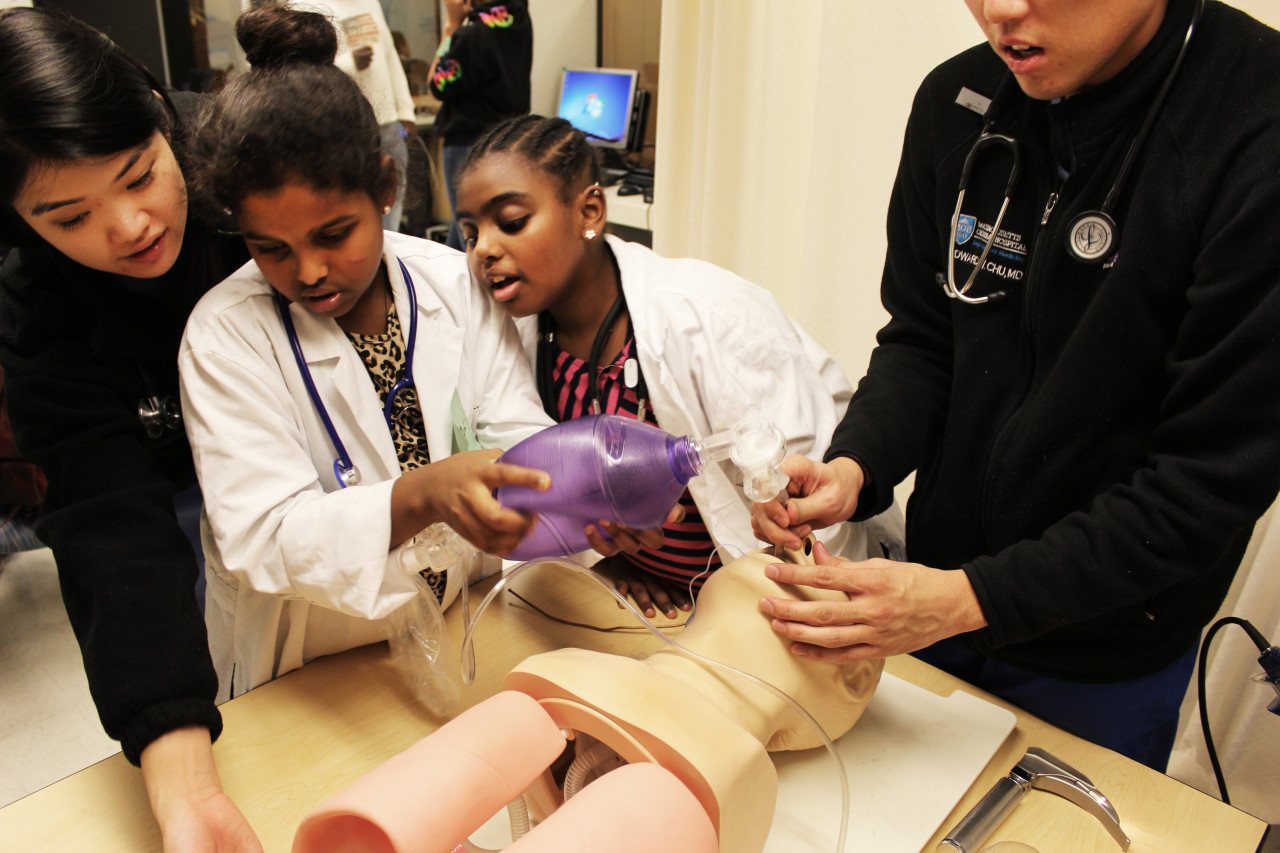
Excited is a mild way to put the girls' reactions and enthusiasm to checking the mannequins vital signs, performing CPR and monitoring pulses. They whoop, laugh and high five as they work with their "patients."
Stationed at one mannequin are two doctors who repeatedly ask the students where to find pulses and what each kind of pulse is called to reinforce the learning, that students say, is beyond what they learn in school.
"Radial, carotid, brachial, femoral... and..." Dellena Bereket, a 6th grader at Weston Middle School, trailed off as she named the types of pulses on the body.
"And dorsalis pedis," Nathalee Kong, a resident doctor at MGH, fills in.
"Something like the STEM club actually enables them to think outside of school," said Ricky Voltaire, an education assistant at the Boys and Girls Club in charge of the STEM club. "It lets them know that information can be attained no matter where you are."
Girls, Minorities Face Limits In STEM Education
An emphasis on STEM education has emerged in recent years, but evidence remains that girls limit their consideration of technical careers by the end of middle school.
A statistic by the National Science Foundation paints a troubling picture: 66 percent of 4th grade girls say they like science and math, but only 18 percent of all college engineering majors are female.
African-American girls face unique challenges in participating in STEM activities, according to a recent report from the National Women's Law Center and the NAACP Legal Defense and Educational fund:
Schools that disproportionately serve students of color, including high numbers of African American students, are considerably less likely to teach higher-level math and science courses and more likely to hire teachers without significant teaching experience in those subjects. Furthermore, African American girls report being discouraged by teachers from pursuing STEM classes; for example, some education professionals steer African American girls to classes that promote dialogue, instead of encouraging them to achieve in the sciences.
This manifests itself in professional opportunities: fewer than 1 in 10 employed scientists and engineers are minority women.
The STEM Club, however, is actively working to inspire their youth at a younger age to see STEM careers as possibilities. And it's working.
Unlike the other girls in STEM Club, Inari Lewis, a 5th grade student at Roxbury Prep, is adamant that she does not want to be a doctor. Lewis is firm in her resolve -- she will be a scientist.
She credits an activity during STEM club as being her inspiration.
"One day they brought in real frogs and we dissected them," Lewis said. "And that made me want to be a scientist."