5 Questions With Put MA Kids First Coalition Leader Marie St. Fleur
A new coalition with an eye on early education and care policy says "a renewed commitment is needed."
Last month, a group of more than two dozen early childhood education organizations and out-of-school programs formed Put MA Kids First, a coalition to push for policy changes that will deliver more publicly-funded early education to Massachusetts children.
Roughly 30 percent of Massachusetts' roughly 225,000 preschool-aged children (3-5 years old) are not enrolled in any formal education program.
One quarter of preschool-aged children in Massachusetts have publicly financed early education and care and about 43 percent attend programs their families pay for completely out-of-pocket, recent data shows.
While low-income families may receive state subsidies to pay for early education and care, just under 15,000 children are on waiting lists for that aid, according to the Department of Early Education and Care.
Last month, state senator Sonia Chang-Diaz filed a bill that, if passed, could provide state-funded full-day preschool programs for all Massachusetts three- and four-year olds.
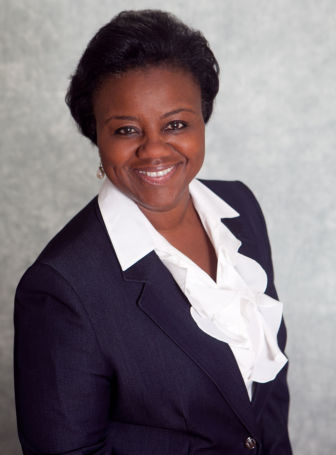
Learning Lab sat down last week with Marie St. Fleur, a former state senator and current president and CEO of the Bessie Tartt Wilson Foundation and leader of the Put MA Kids First Coalition, to discuss early education policy, achievement gaps and Put MA Kids First.
1. Early education seems to be a topic on a lot of people's minds recently -- from the legislature to education advocates. What is missing from the discourse you've heard so far?
There are two things missing from the debate: One issue is the gap between brain research and public policy. We seem to be accumulating more and richer data about the critical importance of early development of the brain for successful long-term outcomes, but the state’s commitment to early education is not keeping pace. By a long shot.
From 2001 to 2012, state spending on early education and care dropped by $114 million -- more than 50 percent -- just as research has conclusively demonstrated that children’s brains develop rapidly through the birth-to-5 age period.
The second thing is equity. Research has consistently shown that kids who start the race ten steps behind aren’t likely to catch up, especially with their higher-income peers who had the benefits of greater resources and access to high-quality early education and enrichment programs from a very early age. That’s a message the business community needs to hear, because these kids are the workforce of the future, which will be more demanding in terms of intellectual capital.
2. How can early education be used as a resource to address achievement gaps in Massachusetts?
Studies consistently show that children start learning at birth and that high-quality early education and care programs have a significant impact on all children who participate. Disparities in cognition and health can become evident as early as nine months of age in low-income children compared to their higher-income peers. The achievement gap starts for these children long before they enter kindergarten.
Studies show that 48 percent of children from low-income families are ready for school at age five compared to 75 percent of children from higher-income families.
We know that high-quality early education improves the school readiness of children from all ethnic, racial and economic backgrounds, with disproportionate benefits to low-income and minority children.
Several studies have found that low-income children who receive early childhood education are less likely to drop out of school, become teen parents or get arrested for violent crimes. Their economic outlook improves dramatically, and young people who attended preschool programs are more likely to graduate from high school or college and to own their own homes. Moreover, researchers estimate that children who participate in early education programs may earn more than $9,000 more per year than children who did not.
3. What, if anything, needs to be done to better support early education teachers?
There is a huge gap in pay for early education teachers. Salaries for degreed teachers start at about $21,000 which is far less than for K-12 teachers. Lower pay resulted in turnover rates of about 28 percent in 2005, exacerbating chronic under-funding of the system.
The average starting salary for K-12 teachers in the Boston Public School system is $49,000 and reaches $67,000 in five years.
Adequate compensation for early childhood professionals is equally as necessary to support and retain a highly skilled workforce capable of delivering high-quality early education programs. Well-compensated educators deliver more effective and nurturing developmental experiences for our young children. The state Department of Early Education and Care (DEEC) has long recognized the need for a career ladder to define professional growth in early education and out of school time, and its potential to remedy the inadequate compensation of educators in this field.
4. What would you like to see included in public policy regarding early education?
We agree with DEEC that additional funding is needed this year for program quality and workforce support. Eligible early education and school age programs need to ensure that all of their educators and administrators are registered and/or updated in the DEEC Professional Qualifications Registry and must meet existing standards. Those are already in place, and they ensure that educators and administrators are held accountable. It’s a matter of doing what we know works well. But without adequate funding for implementation, this amounts to an unfunded mandate.
5. What is Put MA Kids First?
The Put Massachusetts Kids First Coalition is a group of more than two-dozen early childhood education organizations and out-of-school programs that is working to help shape public policy on a critical part of the state’s education system. It is a multi-year campaign to invest in children through enhanced quality in early education and school age programs with the development of a well qualified and compensated educator workforce. Great educators are the key to improving outcomes for children. We know that, and it starts at birth, not in kindergarten.
Correction: An earlier version of this piece incorrectly stated the timespan for which state spending on early education and care decreased by $114 million. State spending for early education and care decreased by $114 million between 2001 and 2012.