Reforming The Use Of Physical Restraints And Seclusion In Massachusetts Schools
Gail Merriam's daughter was in first grade when, lying on the floor, she told her mother she didn't want to live anymore.
The daughter, who was enrolled in a program for students with behavioral challenges at the John F. Kennedy Elementary School in Somerville, Massachusetts, had become scared to go to school, depressed and suicidal, her mother said.
"She lay down on the floor upstairs one day and said, 'I don't want to live anymore, I want to kill myself,'" Merriam recalled during an interview last month, her eyes filled with a pain that betrayed an otherwise strong composure. "I ended up having to hospitalize her."
Merriam believes it was the use of physical restraints at the school that caused her daughter's suicidal thoughts.
Merriam admits her daughter -- whom we've agreed not to name for her privacy -- could act out by hitting and biting teachers and other students, prompting her to be restrained.
The use of physical restraints in schools remains a controversial method for calming or controlling disruptive students. Yet thousands of cases are reported annually by schools across the state.
Now, for the first time in 14 years, the rules for restraining and secluding students in Massachusetts public schools are changing.
A new set of statewide regulations approved late last year by the Massachusetts Board of Elementary and Secondary Education will phase in this fall and take full effect in January 2016.
Public school staff will no longer be able to restrain students in immobilized, face down positions, in most cases, or place a student in a time-out outside of class for more than 30 minutes without a principal's approval. The new regulations, notably, include the previously absent requirement that schools and programs must report all uses of physical restraints to the state on an annual basis.
"The restraint regulations that the Board approved strike the appropriate balance, protecting individual student safety and well-being, as well as the safety of the school community," Mitchell Chester, Commissioner of Elementary and Secondary Education, said in a statement. "The new regulations will also generate more data to inform any future adjustments to the regulations."
Data originally published last year by ProPublica from the Office of Civil Rights at the U.S. Department of Education show that restraints were used some 3,482 times on Massachusetts schoolchildren during the 2011-2012 school year, the last year for which data is available. Of those restraints, 52 were reported as mechanical restraints -- meaning school staff used something artificial like straps, handcuffs or bungee cords to do the restraining.
Students with disabilities absorb the largest impact of restraints -- 3,223 of the 3,482 reported restraints were performed on students with disabilities.
Traumatic Memories
Gail Merriam's daughter is diagnosed with developmental trauma disorder and sensory processing disorder. After her daughter's hospitalization, Merriam withdrew her daughter from the Kennedy School.
But it was five years later, at the mere mention of a visit to the school, that Merriam could fully grasp the extent of her daughter's ongoing trauma from the restraints.
"She became hysterical. She started sobbing and she begged me, begged me, to not make her set foot inside the Kennedy School again," Merriam said. "She said, 'I remember being restrained, I remember my head being banged against the wall, I remember wanting to kill myself when I was there.'"
Officials with the Kennedy School's program did not return calls for comment.
"We do everything in our power to utilize passive calming measures (meaning methods that do not involve physical restraint) to de-escalate a situation," Mary DiGuardia, Director of Special Education at Somerville Public Schools, said in an email. "Should the option of restraint be absolutely necessary to prevent the student from harming themselves or others, it would be conducted only by an individual trained in safe and proper restraint techniques."

Under-Reported And Overused
Due to compliance and accuracy problems, concerns have been raised that the 3,248 restraints in Massachusetts self-reported to the U.S. Department of Education doesn't even begin to cover the full picture.
Sixty-four percent of Massachusetts districts did not self-report a single restraint, a number some advocates say is unrealistic.
“We know that if you were to look at data in Connecticut, you could conclude that as many as 90 percent of the restraints in Massachusetts went unreported,” said Rick Glassman, director of advocacy at the Disability Law Center based in Boston.
Connecticut, which requires all restraints on students with disabilities be reported to the state, recorded over five times the number of restraints as Massachusetts during the 2011-2012 school year.
Still, nine Massachusetts schools reported over 100 uses of restraints in 2011-2012.
U.S. Department of Education Civil Rights Data Collection (CRDC) data reveals that Lawrence's School for Exceptional Studies reported 200 cases of physical restraints. The school's total enrollment was 204 students.
"The School For Exceptional Studies made the switch in January of the 2012-13 school year to trauma informed care, which utilizes more preventive interventions and time out options to avoid the need for physical restraints," Chris Markuns, a spokesperson for Lawrence Public Schools, said in an email. He says after adopting the new methods, the school reported 73 restraints in 2012-2013 and 41 in 2013-2014.
Eastham Elementary in Eastham, which enrolled 207 students in 2011-2012, recorded 181 instances of restraints. All were students with disabilities. Orleans Elementary in Orleans, which enrolled 205 students, recorded 155 instances of restraints.
"We restrain students as a last resort -- if they are in danger to themselves or others," said Ann Caretti, director of pupil services for the Nauset Regional School District (NRSD), the district that oversees both Eastham Elementary and Orleans Elementary. She says NRSD's meticulous approach to recording restraints may contribute to higher reported numbers than districts that record less diligently.
Under the new state regulations, the use of physical restraints may only be used as a last resort to calm students and never as discipline -- a practice many schools say they already employ.
Prone Restraints
The new regulations affect one specific type of restraint the most -- prone restraints.
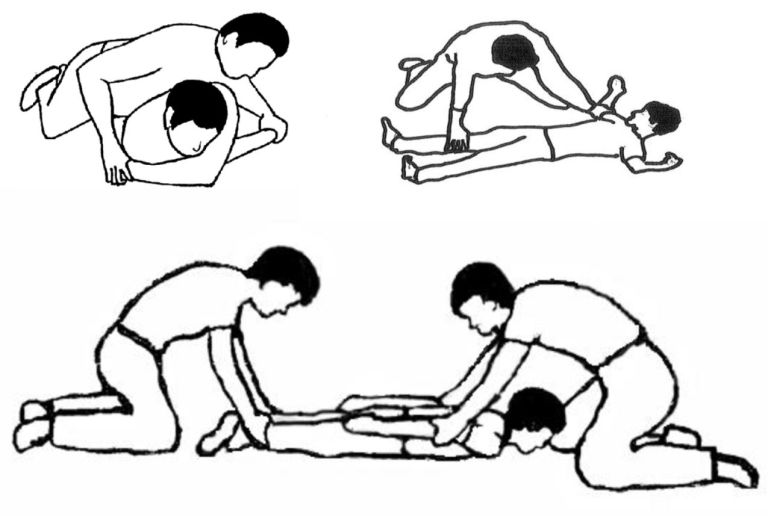
Prone restraints are restraint positions where an individual is pinned down, face to the floor. There is no uniform method used by all schools or agencies. A student's arms can be behind them, spread to their sides, next to them, or under them.
Under the new regulations, the use of prone restraints will be all but eliminated, except for a select set of circumstances. The conditions for using prone restraints will require parental consent, approval from a physician and mental health professional, approval from the principal, and a student history of self-injury or injuries to others.
"They're being driven, I have to think, by people who don't really do the work," Judy Gelfand said of the requirements. She is principal of Bay Cove Academy, a small, publicly funded therapeutic day school in Brookline. "They're taking away a tool that's been very effective and they're hampering schools' abilities to manage what can be very scary and dangerous behaviors themselves."
"One of the new conditions -- the documented history of harm to self or others -- that puts [schools] in a position of having to wait until harm occurs before they can use a prone restraint on a student," said Jim Major, the executive director of Massachusetts Association of Approved Private Schools (MAAPS). Approved private schools are publicly funded and provide educational services to students with special needs.
While MAAPS would not support an outright ban on prone restraints, Major is in favor of the coming restrictions.
"It will improve the practice and the use of restraints," said Major. "The proper emphasis should be on the prevention of the use of restraints and seclusion to begin with."
"Restricting it so narrowly, is to make sure that it's not in any way overused or inappropriately used," said Russel Johnston, senior associate commissioner of the Board of Elementary and Secondary Education. He said the conditions still leave a pathway for schools and programs to use them, if necessary.
There is a growing awareness that prone restraints can be dangerous and, in some cases, even fatal.
The Disability Law Center submitted a lengthy white paper to the state Board of Elementary and Secondary Education on the risks of prone restraints.
"One of the biggest difficulties has been that sometimes the individuals that are most likely to restrain a student with behavioral challenges, are the individuals who are the least trained in the system," said Disability Law's Glassman.
The Center's paper cited several instances of restraints causing injury or even death, including:
- Corey Foster, a 16-year-old at a Westchester County, New York, residential school, died in 2012 after he went into cardiac arrest when six staff members piled on top of him trying to restrain him.
- Angellika Arndt, a 7-year-old weighing 67 pounds was suffocated and died from chest compression asphyxia from being restrained for over an hour at a mental health treatment facility in Rice Lake, Wisconsin. The 2006 restraint was due to Arndt, who was diagnosed with ADHD and emotional disturbance, blowing bubbles in her milk and not following the facility's time-out rules, the paper says.
- Mark Soares, a 16-year-old at Wayside Academy in Framingham, Massachusetts, died in 1998 from cardiac arrest during a prone restraint. Aides thought the teen was faking unconsciousness and physically restrained him face down on the floor with a staffer on his back.

Voluntary Consent
After Gail Merriam's daughter left the hospital in 2008, Merriam enrolled her at the Walker School, an approved private school in Needham that also used restraints.
"They used restraints a fair amount," Merriam said. "In fact, the first parent support group I went to, they offered child care. My daughter ended up getting restraining that night."
But in 2011, when meeting with her daughter's school adjustment counselor, Merriam was met with a shock: she learned she had the option to refuse to sign forms giving her consent to restraints.
"I was thrilled! I was like, 'Can I put my line right through it?'" Merriam exclaimed, gesturing as if crossing out her signature. "I was so thrilled to know that was within my rights."
However, finding a school that allows parents to say no to restraints has proven difficult for other Massachusetts parents.
"There are definitely instances, to gain admission to a program, you have to give that consent," said Daniel Heffernan, a partner at Kotin, Crabtree & Strong, who has represented several families in cases involving restraints by schools. "You have a situation where a family very much wants to have a child go to a particular program... so they’ll sign the paperwork without sort of understanding, necessarily, the ramifications of it."
But some schools say consent to restraints is a necessary precaution.
"We require signatures and approval for our restraint procedure -- which is approved by the Department of Education -- by all parents," said Howard Rossman, executive director of Dearborn Academy, an approved private school in Arlington. "Sometimes parents are very reluctant to sign it only because they think that if they sign it, we do it a lot. And we don’t do it a lot."
Rossman said that although the school has used only one restraint in the past year, the school prefers to have the ability to physically restrain students in case an incident occurs.
"We sometimes have to convince parents," said Rossman.
The new regulations stipulate that no program may condition the admission or continued enrollment of a student on a parent's consent to the use of any restraint. If a parent refuses consent to restraints, schools must rely on alternative methods to deescalate situations.
Data: A Critical Tool
While districts and schools collected their own data on the use of restraints, there has been no statewide collection by the Department of Elementary and Secondary Education (DESE) on the use of most restraints.
The state has only required reports of restraints to DESE if the restraint lasted longer than 20 minutes or resulted in serious bodily injury to staff or students. The definition of what made bodily injury serious was left open to the discretion of the person reporting it.
Under the new regulations that begin in 2016, schools will be required to annually report all uses of restraints to the state regardless of type or length, a tool that both advocates and school officials are eager to use.
"We realized that we didn't have the data that we should have in order to have a good sense of the use of restraints in the state," said Dianne Curran, general counsel for DESE. "In 2017, we will have the first set of data that will give us the full picture of the use of restraints in Massachusetts."