Mixed Feelings As Boston Sets Out To Redesign High Schools
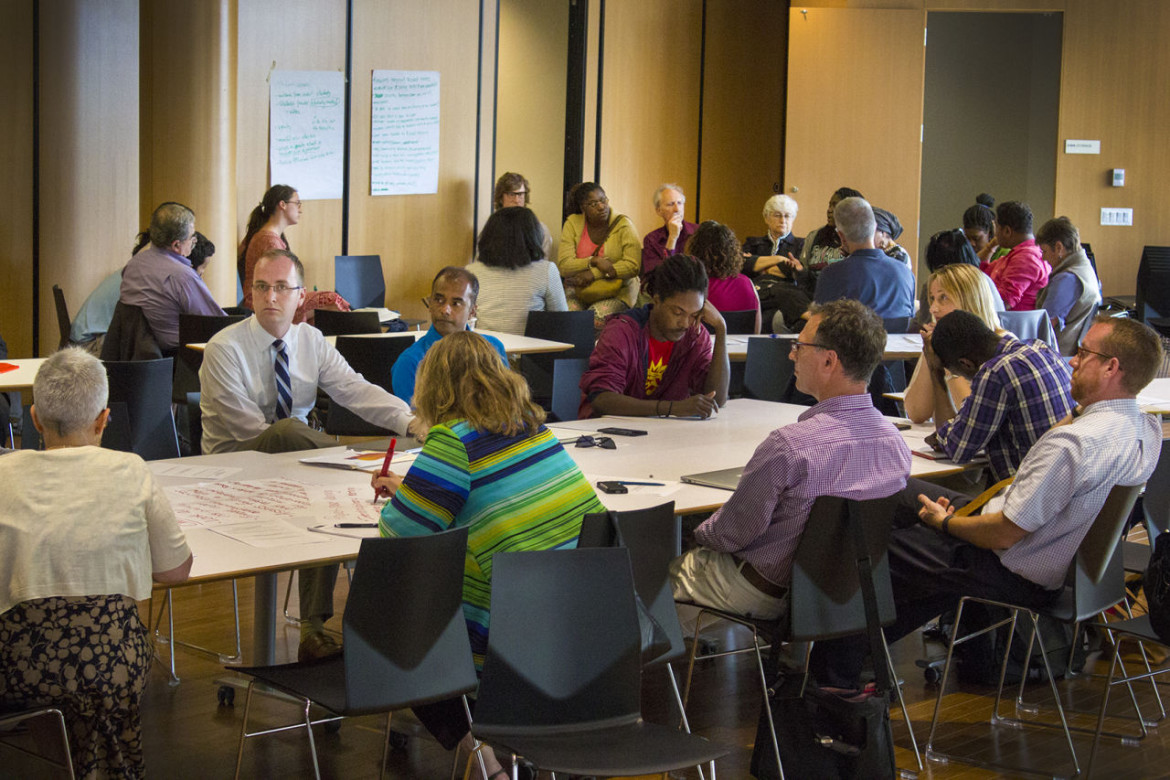
BOSTON -- During the second in a series of public conversations aimed at imagining the high school of the future, community members raised concerns about steps the district has taken to include students in the process.
Held at the new Boston Public Schools (BPS) headquarters in Roxbury's Dudley Square on Monday, about 60 educators, school officials, teachers, parents, students and others came together to submit their vision for how BPS high schools may look in the years to come.
When city officials opened the floor for public comment, the few students present were the first to lament the process' inclusivity, a sentiment echoed by many participants.
"If you're doing something that is going to affect students, who best to include other than the people that it's affecting -- students," said Kalise Osula, a senior at Hyde Park's Boston Community Leadership Academy and member of the Boston Student Advisory Council.
She said that the current avenues for public input aren't enough to include students because of meeting locations and timing in the school year. Instead, she'd like to see students join together as a partner in the process.
"Just get students of different walks of life to come together and say, how can we change BPS?" said Osula. "How can we change these schools? How can we change these policies which are failing students?"
The forum is part of High School Redesign, a citywide effort to reinvent Boston's high schools. City officials hope to source recommendations for changes on everything from the general high school experience to the physical design of schools to the skills students should know by the time they graduate.
The High School Redesign initiative -- a collaboration of the Mayor's Office of Education, BPS and the Boston Opportunity Agenda -- will produce a set of recommendations and a design vision for upcoming changes to BPS high schools.
Osula said that she feels that current BPS curriculum "absolutely does not" reflect the district's student body. Women and people of color must be given more visibility in the curriculum as high schools are redesigned, she said.
Other community input included the desire to see learning and teaching occur outside of school and throughout Boston, an increase in student created project-based learning, a change to school discipline policies, vocational skills taught throughout district schools and more financial literacy.
The redesign effort was created in order to address a number of ongoing challenges in the district.
Challenges identified by city officials include a district graduation rate 20 points below the state average; persistent achievement and opportunity gaps for black, Latino, special needs and English-language learner students; and students that have to take remedial courses in college or have not gained non-academic skills after graduating.
City officials say that public input will be used as Mayor Martin Walsh, the Boston School Committee and incoming Superintendent Tommy Chang present a final plan for high school redesign.
The city launched a website as part of the effort to redesign high schools, where it seeks community recommendations. It lists instructions for how community members and stakeholders may hold their own forums and submit the results to the city.
Remaining city-hosted meetings will be held May 20 at East Boston High School, and on May 21 at the Boston Foundation at 75 Arlington St. Both are from 4 to 6 p.m.
As community members raised concerns about the meetings' accessibility and timing, school officials indicated they may be open to creating more space and time for community and student input. Currently, the public engagement phase of the process runs through July 2015.
"We are very much at the beginning phase of the High School Redesign process. So we're kind of building the plane as we're flying it, but we wanted to capitalize on this time at the end of the school year," said Marsha Inniss-Mitchell, director of post-secondary readiness for BPS. "Given the push from a lot of the participants at the various forums saying that this is moving too quickly, I definitely see where we may definitely move in that direction of being more flexible around the timeline."
It's a decision Inniss-Mitchell said that will be made by the leadership team after the remaining meetings.
Alexandra Steinhauer, who works for the nonprofit Tenacity, which partners with a number of BPS schools, had mixed feelings about the redesign process in general.
She said that high school is the "end of the path," not the beginning where many of the challenges identified by city officials originate.
"I think that it's really exciting that we're having these big conversations, I think that that's a really great start. I just want to know the rationale as to, why high school?" said Steinhauer. "There is inequity starting before kindergarten. I just want to know that if we go through this process -- you know if we get all the student voices, all the parent voices involved -- that it's really going to make a difference."
The redesign initiative has a goal of implementing its first changes in 2016.