Reports Of Elementary School Bullying Spike In Boston
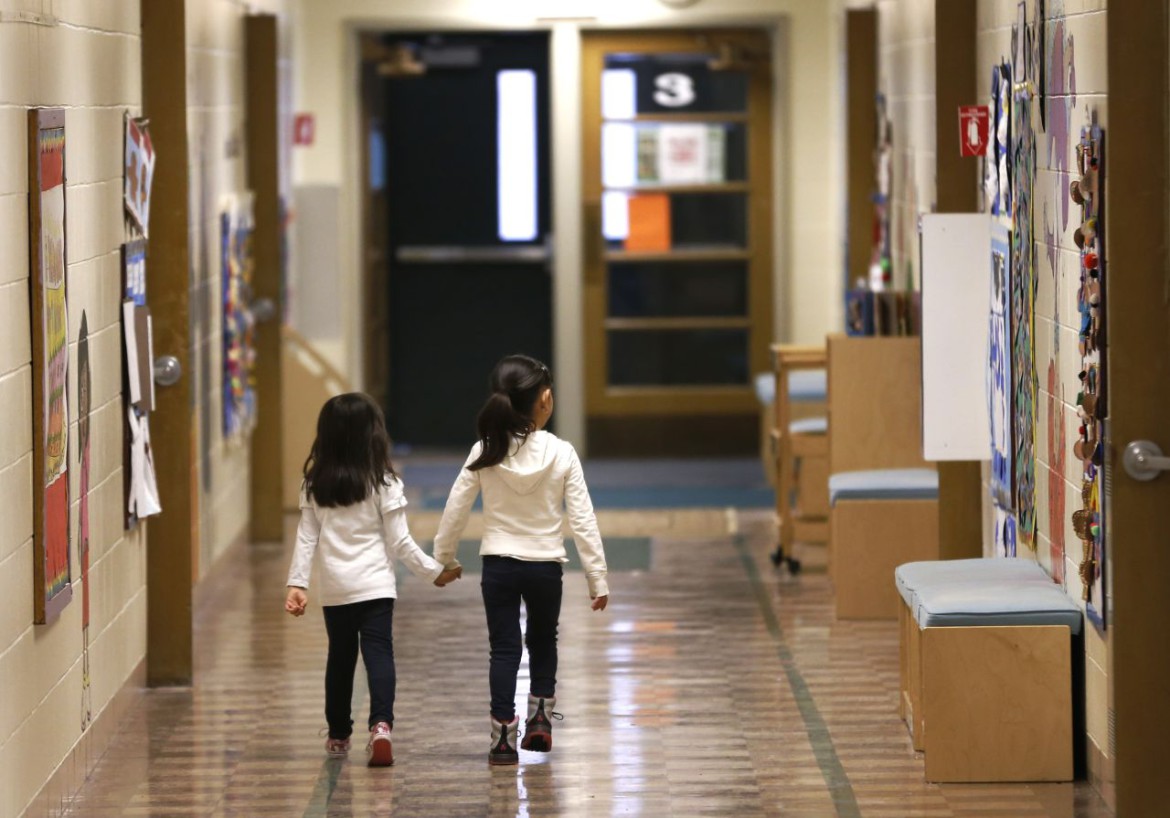
Reports of bullying in Boston's elementary schools are on the rise, according to data for the current academic year and obtained by Learning Lab from the Boston Public Schools' Counseling and Intervention Center.
For the first time, the data show, incidents involving elementary school students make up the majority of reported cases of bullying. The spike in reports comes as the Counseling and Intervention Center -- which among other work, addresses bullying in the district -- is about to lose almost a quarter of its funding next school year.
"The entire BPS community plays a role in ensuring students have a safe and productive learning environment, and this includes identifying, reporting and addressing bullying in our schools," said Superintendent John McDonough. "We are fully committed to the well being of our students."
Elementary Bullying On The Rise
So far this school year, 52 percent of reported bullying involves elementary students. That's a sharp increase from the entire 2013-2014 school year, when 36 percent of reported incidents involved elementary students. The data also indicate that reports of physical bullying has surpassed verbal bullying this school year.
The swell at the elementary level came as a shock to Jodie Elgee, director of the BPS Counseling and Intervention Center.
"When I looked at this, I was surprised the increase was so great," Elgee said in an interview last week.
Elgee believes the increase in reports is an indication her center has effectively educated elementary teachers and administrators to identify bullying, as well as a general increase in incidents.
"The fact that over half of the data reflects elementary students, there has to be something there," said Elgee. "We know around issues of conduct, the most pressing issues are coming from the elementary schools."
The numbers highlight a need for early interventions, which Elgee said can change the climate and culture of schools. Research shows that interventions are most successful when implemented in early years of schooling.
"Social and emotional learning in the elementary schools themselves," Elgee said. "The schools really need support for those."
Addressing Bullying In Boston
While the Counseling and Intervention Center does consultations with individual classes and runs school assemblies at schools' requests, much of their work happens beyond the school day.
The center conducts bully prevention training and programs for BPS teachers. Alongside a Boston-area nonprofit organization, the center also heads up an eight-week skills-building program on Saturdays for students to learn about bullying behavior, prevention and how to address it.
About half of the bullying reports come through phone and text hotlines set up by the district. Other incidents are reported to the center by individual schools.
Although a district-wide support system, the Counseling and Intervention Center is not the only means to address bullying in Boston schools.
BPS school staff, including school psychologists, teachers, principals and nurses, address bullying in their own schools. Professional development focused on bully prevention is run by individual schools and departments.
The district also began implementing a behavioral health model in 2012, which, in part, focuses on early bullying detection and prevention.
Budget Woes Pose Challenge To Addressing Bullying
Despite the increase in elementary bullying reports, due to budget constraints the Counseling and Intervention Center has no concrete plans to reach out to elementary schools with additional support.
Like many departments across the district, the Counseling and Intervention Center has taken a hit in funding for the upcoming school year in the wake of a district-wide funding gap.
The center will lose roughly 22 percent of its funding next year -- their budget will go from about $1.1 million to about $841,000 for the year. According to Boston school officials, the center's weekend programming will be cut, but the weekday programming will continue.
"Until we fundamentally shift the way we do business in the Boston Public Schools, our costs will continue to rise and we will be forced to make painful cuts that impact all our students," said Interim Superintendent McDonough. "The budget for next school year, despite a very thoughtful and public process, reflects this hard reality, with cuts made to departments across the district."