Boston Public Library Puts Teacher Training On The Map
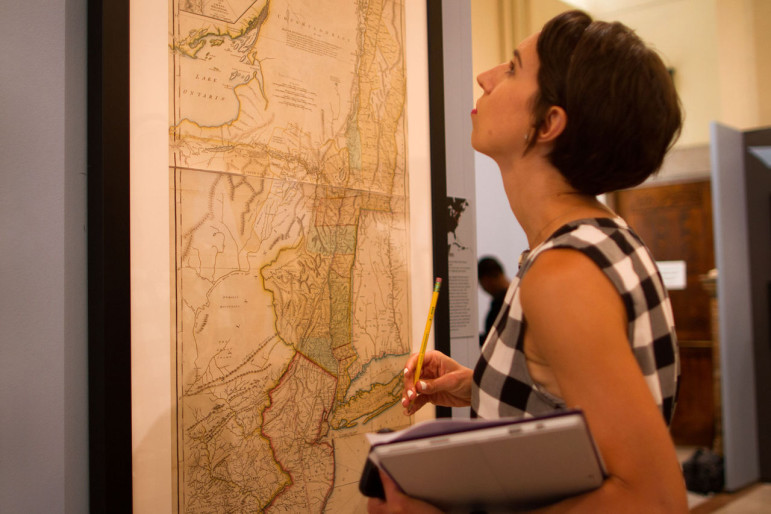
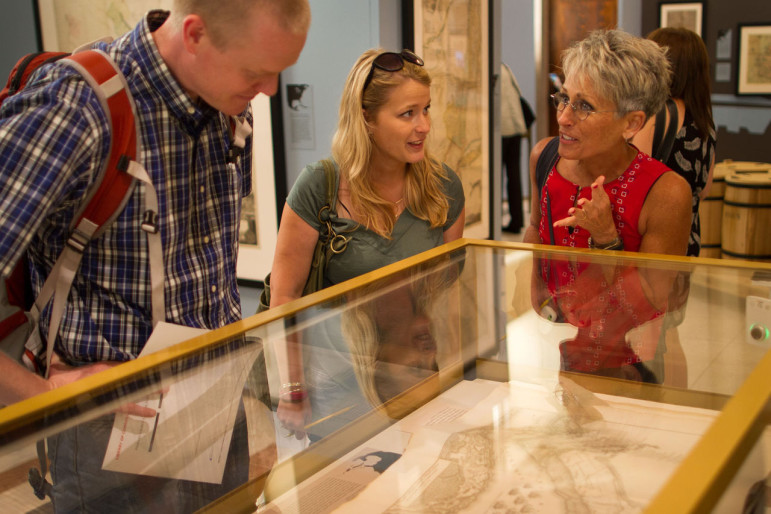
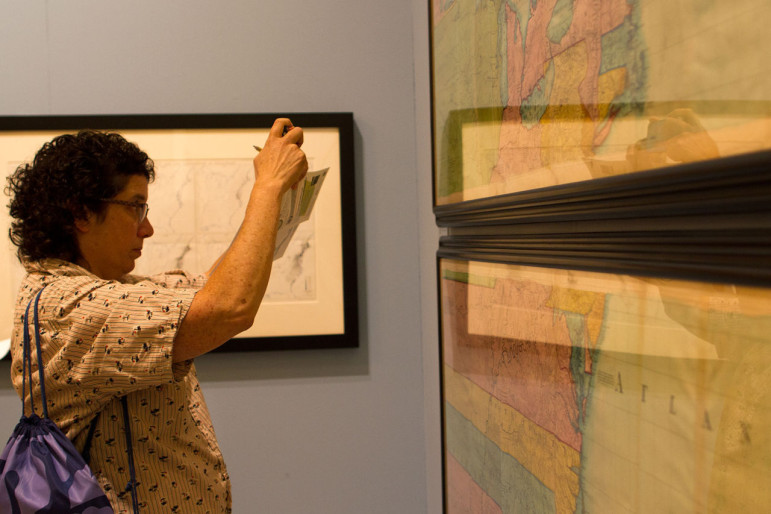
BOSTON -- On a Wednesday morning in July, the sun reflects blindingly off the impressive stone facade of the Boston Public Library. It's cooler inside, where tourists, students and silence-seeking city dwellers explore the book-lined rooms. Among today's visitors are 28 teachers who swarm around archived maps, peer over their eyeglasses into shiny display cases and take photos of historical documents.
It's the third day of the Norman B. Leventhal Map Center's Summer Teacher Institute, and this group of educators has come from around the East Coast to learn how maps and primary sources can bolster their teaching. It's the kind of program the institute has run for educators since opening in 2004, using its extensive collection of maps and documents.
For educators, summer is not just a time for vacation; it's also a valuable opportunity to learn new teaching strategies and plan for the year ahead. Professional development courses like this one can help them do that.
“There’s a misconception that summers are time off for teachers," says Seth Pingree, a seventh-grade teacher who's participating in this year's institute. "Every summer since I started teaching, I’ve done some sort of professional development that’s taken up a large chunk of my time."
Surrounded by the library's Colonial-era maps and documents, Pingree and 27 other teachers immerse themselves in Boston's history during the years leading up to the American Revolution. They'll take what they learn here about the past and use it to improve their teaching in the future.
When Teachers Become Students
“Teachers love to learn!” Pingree says. “Being able to go and take a class is exciting for me, and it’s exciting for everybody who is here. You can see it in the faces of the other teachers when they’re here.”
Teachers say they're always looking for such opportunities, both because they think it will improve their quality of teaching and because of annual professional development requirements.
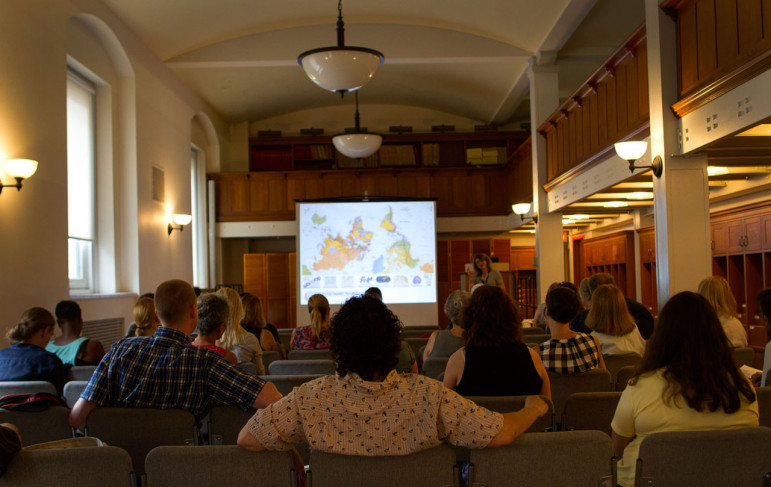
Almost all states, including Massachusetts, require teachers to garner a certain number of professional development points every year to maintain their accreditation. Teachers may earn these points from courses provided by their schools or through outside programs offered by community organizations, like the Leventhal Map Institute.
While some educators take professional development courses in the towns or states where they teach, others seek programs that are unique.
For Pingree, this was the first workshop he's attended outside New Hampshire, where he teaches. "When I saw this opportunity," he says, "I was excited to be able to come to something that I could commute to but that would be unusual and really stretch my knowledge about the subject."
Kate Bauman, a fourth-grade teacher, traveled from Corning, New York, to participate.
"We look for opportunities like this, and I’m sure all the teachers will say the same thing," says Bauman. "They’re looking for professional development that is relevant to what they are teaching."
Lindsey Eres, another teacher from Corning, says that the program has helped her see areas where her teaching can improve.
"There are certain areas where we feel like we’re doing a great job, but it kind of takes us a step back," says Eres. As a result, she says, she now sees that she needs to make some of her lessons "more alive."
Obstacles To Professional Development
While educators who attended the Leventhal Map Center Institute rave about the program, the quality of other professional development courses can vary.
“It’s definitely a hodgepodge," says Paul Tritter, director of professional learning at the Boston Teachers Union. "Generally speaking, teachers are not satisfied with the quality of professional development they receive."
In a statewide survey of licensed teachers conducted by TELL Massachusetts, a professional development group, only 58 percent say they have "sufficient resources" for professional development, while 69.9 percent believe that it "enhances teachers' abilities to improve student learning."
Beverly Miyares, a professional development specialist at the Massachusetts Teacher Association, explains that, for the programs offered through schools, it's a question of money.
If a school's budget doesn't have enough money for development, the quality of the courses it offers can suffer, and its ability to reimburse teachers for outside courses can be limited.
Jan Spitz, the Leventhal Map Center's executive director, says her team prioritizes serving Boston teachers but promotes the program all over Massachusetts.
The weeklong program costs educators $75. The relatively low fee, she says, "keeps it from being a financial burden."
Mapping The Route To Classroom Success
"We have a city that has changed its geography so dramatically over 250 years," Spitz says. "That is a very fun thing for people to learn about their city, and it can really start a conversation about the importance of maps."
Indeed, educators at this year's Summer Institute are enthusiastic about studying Boston’s revolutionary past with a map in hand.
“We’ve been talking all week long about new things that we can do based on ideas that have been sparked by this workshop," Bauman says. “I think that’s really lit a fire under a lot of us to bring that knowledge back to the kids.”
"It's been an amazing workshop," Pingree says. "I've gotten so much out of it, so much that I'm excited to bring back to the kids in the fall. I'm really excited about and energized about the new school year."
BTU's Tritter says professional development is crucial when "more and more is always being asked of teachers and less and less support is being given."
If the buzzing atmosphere at Leventhal is any indication, high-quality professional development programs can keep both students and teachers engaged.
“You want to make sure that you get something that feels relevant to you now, that you can go try out in your classroom the next day, the next week, the next month,” Tritter says. “But you want to make sure it has theoretical underpinning, that it gives you big ideas to chew on, and think about over time.
"Because," he says, "that’s really what sustains people as teachers in the long haul of their profession."
Correction: An earlier version of this story incorrectly spelled Seth Pingree's last name. We regret the error.