Baker's Opioid Bill Would Support Recovery Schools, Training In Prevention
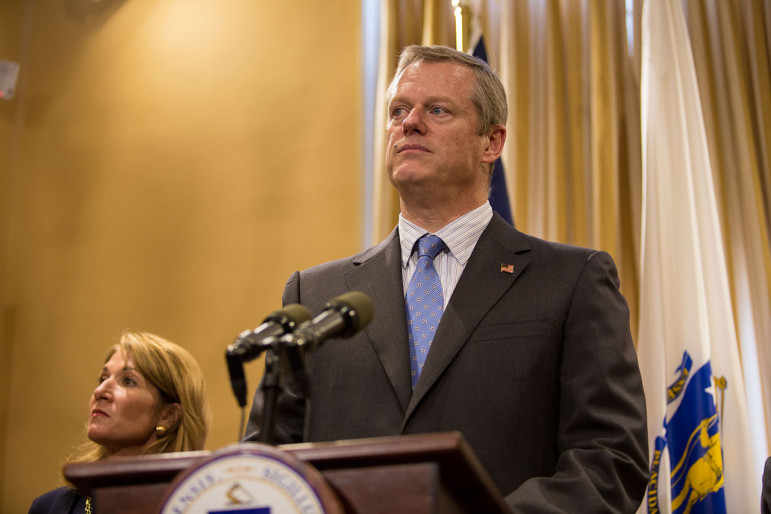
BOSTON -- Under the opioid legislation that Gov. Charlie Baker filed Thursday, the state would expand access to recovery high schools and would require education for athletic coaches and parents on the effects of opioids.
“Combating the opioid epidemic in the Commonwealth calls for a comprehensive approach," said Baker in a statement.
In the bill, Baker calls for the Department of Public Health and the Department of Elementary and Secondary Education to develop and fund a transportation plan for students attending recovery high schools, which are specifically designed for students recovering from substance abuse and addiction.
No public funds currently support transportation for students in Massachusetts' five recovery high schools, which are located in Boston, Beverly, Brockton, Springfield and Worcester.
Ryan Morgan, principal of Independence Academy, Brockton's recovery school, said transportation is a constant challenge for his students, who come from all over the state.
"When we have a student interested in attending, the No. 1 question that schools or parents or families ask is 'How does the transportation work and how does the student get here?' " said Morgan. "And I quite honestly answer, very honestly, and say no one is really required to get the student here."
Neither recovery high schools nor the sending districts are required to provide transportation. Often, Morgan said, students take a train to the nearest station and school staff members pick them up, or they find other ways of getting to school.
"A lot of times parents are driving students. We've had counselors, therapists and mentors driving students, everyone kind of pitching in to get students here," said Morgan. "But there currently is no set funding structure in place."
Morgan said he hopes the proposed funding would help and would also boost the school's enrollment. About 15 students now attend classes there each day.
This is not the first time Gov. Baker has supported recovery high schools as a tool to address the state's opioid epidemic. He signed the 2016 state budget that gives $3.1 million to such schools, with $1 million of that intended to create at least two new schools.
“Our administration is utilizing every tool in the toolbox to fight the opioid crisis tainting every corner of the Commonwealth,” said Lt. Governor Karyn Polito in a statement. “Filing today’s bill serves as the latest call to action to execute a dynamic strategy and we look forward to working with the legislature to enact meaningful laws to help our citizens.”
Another provision of the bill addresses education for parents and other adults who work with students. As an addition to the already mandatory safety training on head injury, the bill would require public schools to provide training for parents, coaches, trainers and nurses on the dangers of opioid use.