Maybe High Schools Should Start Later -- But How?
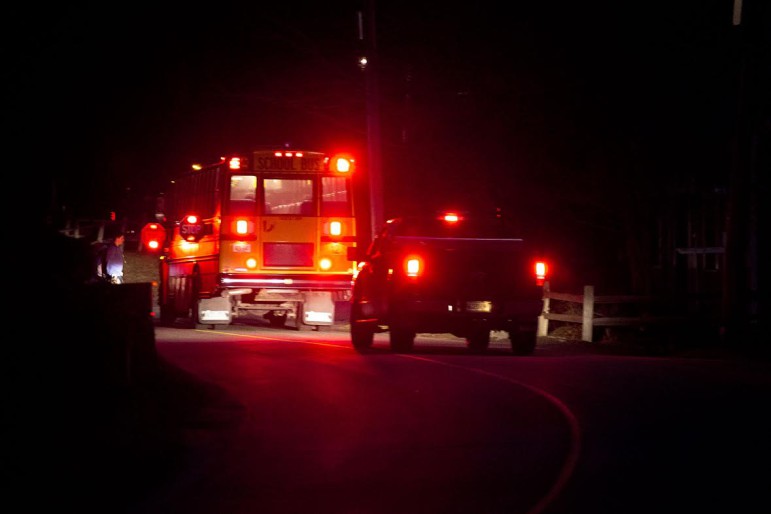
It's one of parenting's great mysteries. How can that bright-eyed grade-schooler, bouncing out of bed at 6 a.m., morph into a groggy, irritable teenager who burrows back under the sheets and begs for just five more minutes?
Turns out the cranky teen actually has a valid claim, rooted in biology, that doctors say high schools ignore by starting too early. Both the American Academy of Pediatrics and the Massachusetts Medical Society say a lack of sleep can hurt students.
They recommend that middle and high schools start no earlier than 8:30 a.m.
More than 75 percent of high schools in Massachusetts now start before 8 a.m. But many districts are beginning to think about pushing their start times later.
An Unlikely Finding
Dr. Judy Owens, director of sleep medicine at Boston Children's Hospital, says teens often have to wake up far too early for their health. She began studying teens and sleep in the mid-1990s.
"Sleep is really, really critical for brain development," Owens says. "It’s critical for memory, it’s critical for decision making, it’s critical for attention."

Owens conducted a study when her daughter's school pushed its start from 8 to 8:30. The results surprised her.
"Their bedtimes, on average, actually shifted earlier by 20 minutes," Owens says.
Wait, why would starting school later mean students get to bed earlier?
"They were more efficient at getting their work done, because they were awake, alert, focused and they could get their homework done so they could get to bed earlier," Owens says.
Biologically, teens need more sleep than adults -- as much as nine and a half hours. At the same time, puberty resets their internal clock, so teens don't get sleepy until about 11 p.m.
"And if they need eight and a half to nine and a half hours of sleep, then they’re biologically programmed to wake up at around 8, when most of them have already been in school for some amount of time," Owens says.
Some Districts Now Start Later
It's based on this knowledge that the medical societies came up with their recommended 8:30 start times. And it's an idea that has started to spread.
At least 20 Massachusetts districts have pushed their high school starts to 7:45 or later. The advocacy group Start School Later Massachusetts says the idea has come up in at least 38 different communities.
And some school districts are currently looking into later starts, including Ashland, Framingham, Georgetown, Newton and Worcester.
"We all talk in education so much about it being based on research, and this was one where all of that was so clear that I thought we’ve got to at least try," says Tracy O'Connell Novick, a member of the Worcester School Committee.
Novick says a later start could help students do better in school.
"If we can fix the quantity of sleep they get, then you are improving their well-being across the board," Novick says.
Studies show a good night's sleep can help mental health, boost learning and even prevent sleep-related car accidents.
But What About Sports?
Still, a later start means a later end for the school day. And that means later after-school activities: tutoring, drama clubs, math leagues and, of course, sports.
Bo Ruggiero has coached high school basketball for more than 35 years. He's the president of the Massachusetts Basketball Coaches Association.
"What they would have to do is just move everything back, so the kids would be getting home later from an away game than they would now," says Ruggiero.
He says districts have to think about practice facilities and game travel. Now, he says, players often get back from away games around 9:30 p.m.
"So, if you’re not getting home till 10:30 at night instead of 9:30 at night, and you can sleep in the extra hour," Ruggiero says, "does that make a difference?"
School Buses And Traffic
Districts find different ways to push start times later.
Sometimes it's a flipflop -- start elementary schools earlier and high schools later. Sometimes they keep elementary schools the same and add transportation. Either way, it presents another challenge: school buses.
"Economically, physically, traffic-wise, everything works because of how the system is put together," says Chuck Winitzer, Eastern Bus Company president and owner.
His company serves 11 Boston-area communities. Most have a system down pat -- the same bus carries high school kids first, then middle school, then elementary school.
Winitzer says messing with that routine would shake up morning traffic.
"We start early, because it’s better on traffic. They’re picking up kids by 6:30, 7 o’clock," Winitzer says. "If we push that back half an hour, it just changes the traffic pattern. It’s worse."
And he says the flipflop -- starting grade schools earlier -- could have drastic effects later in the day.
"The thing with smaller kids is, in the afternoon a lot of kids go to after-schools and day cares," Winitzer says.
And if you push that earlier, it could mean higher costs for parents or new pickup times.
"It changes the whole dynamic of the way the systems are all put together by these cities to make them work," Winitzer says. "If you tried to change that, you’d adjust everything in every city with each parent."
Owens agrees that later school start times would mean changes for the whole community. She says it's worth it. Lack of sleep has been associated with diabetes, strokes -- even dementia later in life.
"To do nothing is to do harm," Owens says. "There are potentially major health consequences to that non-decision."