METCO: A Great Experience, But Only For The Few?
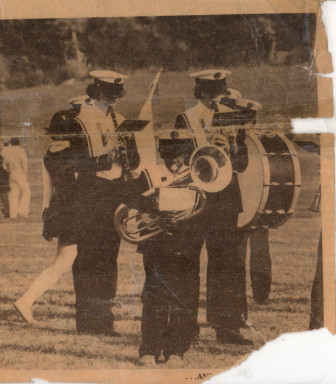
William "Sir William" Mosley loved playing the baritone horn as a member of Wayland High's marching band. As a middle school student, Mosley dedicated hours outside of school to crafting his sound on the large brass instrument.
And it paid off.
In a moment that still makes him proud over 30 years later, a picture of the 7th grade student nicknamed "Sir William" carrying his baritone and playing his heart out, made it into The Wayland Town Crier, Wayland's local newspaper (pictured below).
A well-loved and respected member of the Wayland community, Mosley, however, did not live in the town. He boarded a bus at 6:20 a.m. to get from Boston to Wayland High School by 8 a.m. every day.
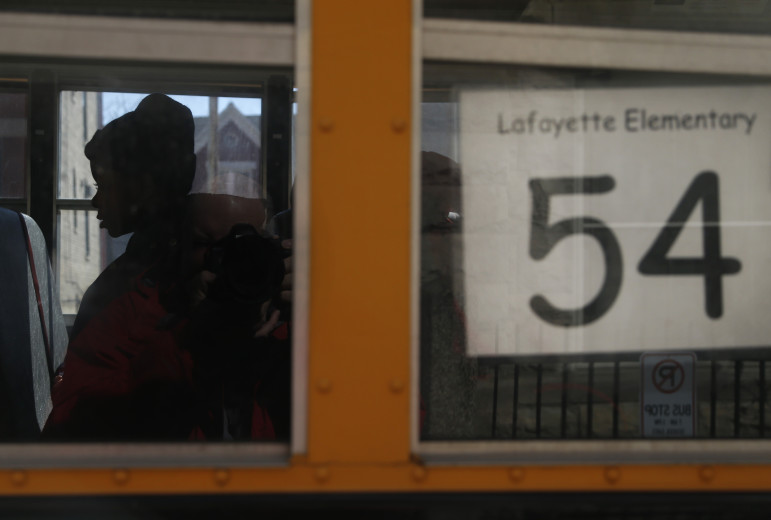
Beginning in 1974, Mosley was one of a handful of students of color bused from Boston to Wayland High School as a member of Wayland's METCO program. A desegregation program started in 1966, METCO buses non-white students from Boston and Springfield to outlying suburbs.
To this day, METCO provides much-needed educational options for those who have few. And education can be the key to improving one’s circumstances and community.
For many, moving to the suburbs to gain access to a school system is too expensive, unfeasible, or simply unrealistic. METCO provides a path to enroll in those schools.
However, with an active waiting list of more than 10,000 names, METCO's demand far outstrips what the program is capable of delivering. Only a select few can hope to make it off of the wait list and into a school.
From Boston To The Suburbs
Following a move to Boston -- an aftermath of his parents' divorce -- Mosely's mother signed him up for METCO because she believed he would receive a better education outside of the city.
In 1974, the same year that court-ordered desegregation began in Boston, Mosley started fourth grade in the Wayland school district. He would remain in the district until graduating high school in 1983.
Even though he was bused daily out of the district, Mosley was not spared the racial violence that sprang up in response to the court-ordered school desegregation. His bus, full of students of color, had to pass through South Boston, a continuous sight of violence at the time.
"I think they were attacking buses indiscriminately because we weren't even going to South Boston [High School]," Mosley said. "I remember a brick smashing the window -- thank goodness for safety glass -- and the bus monitor getting all of us kids and telling us to be down in the seats."
Education And Beyond
For Mosley, being a part of the METCO program provided much more than simply an education in a different setting.
As part of its support system, the program set Mosley up with a peer host family with whom he developed a lasting relationship. The family provided Mosley with a place to sleep in Wayland after long extracurricular activities and to participate in community programs outside of school.
"I was in a single parent home, and in Wayland a lot more families were full families. They had all participants," Mosley recalled. "So, all of a sudden if I go to a Cub Scouts meeting, there's people that have den mothers, they've got fathers who are professionals, and they're all helping you get your badge and learn things you might not have necessarily learned in your everyday."
Mosley soon found himself a student of Wayland High School and a member of the greater Wayland community. He credits his participation in METCO as helping him and fellow METCO students to form lasting, positive identities.
The program taught Mosley and other METCO peers how to interact with the world outside of their immediate communities and provided access to a better education than they otherwise may have received, he said.
"We had opportunities to go to college. It gave us a background where we understood diversity, where we understood getting along with one another and trying to work towards a goal," Mosley said. "I know that, for me, personally, especially looking at some of my peers who didn't have that opportunity -- my friends on my street that were Boston school kids -- they didn't have any inkling to some of the opportunities that I had."
When asked if he would have the same outlook or be where he is today without participating in METCO, Mosley had an enthusiastic answer: "Absolutely not."
"I wish that more children could participate, to get that experience," he said. "I think a lot of people will benefit as long as programs like the METCO program are going."
Waitlist And Limitations
At the moment, this experience, is only reserved for the lucky few.
METCO's active waitlist -- active meaning parents who have applied for their children to be placed and keep their contact information updated -- currently lists the names of about 10,000 students who would like to participate.
Each year, between 1,200 and 1,500 new students join the list, according to John Shandorf, associate director at METCO.
Prior to a school year, participating districts request the grade and gender of students they have openings for. Based on the requests from the districts, METCO refers students from their active wait list to the districts. The districts then place students in schools.
Yet, from the 10,000 names on the waiting list, only 300 to 375 are chosen to be placed throughout the participating districts each year.
A large number of would-be METCO students never make it off the waiting list.
"That is definitely a reality of the demand for the program," Shandorf said. "We've found it more and more essential to inform parents of the reality that there is no guarantee."