This 'Fantasy Reading League' Trades Footballs For Books
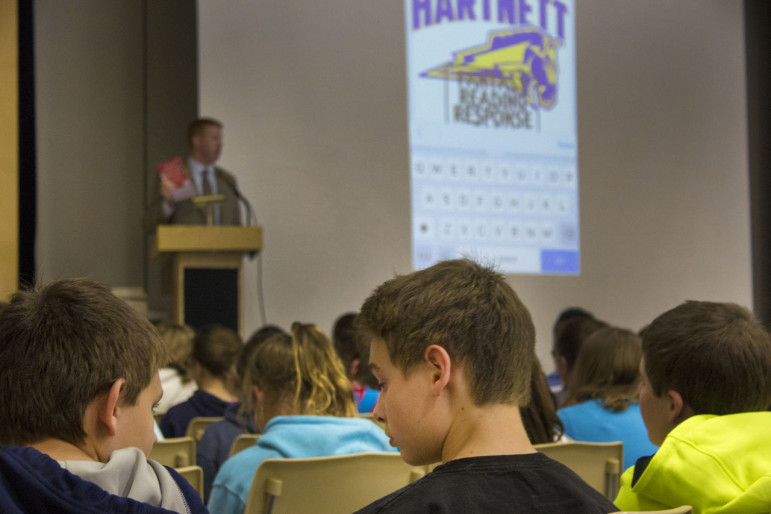
BLACKSTONE, Mass. -- The cafeteria at Frederick W. Hartnett Middle School buzzes as the entire student body of sixth- to eighth-graders comes clamoring in. It's draft time at the school, and everyone is beyond excited to see who will get signed to which team this year.
"So everybody should have two things with them," principal Justin Cameron tells the students when they've taken their seats. "They should have their independent reading book, and they should have their draft card."
Many of these kids love sports, but they're not here for a football draft. Rather, Cameron explains to the school's roughly 450 students that it's a draft for something different: Hartnett's fantasy reading league.
"So fantasy reading takes a model from fantasy football or any other fantasy sport that you have," says Cameron. "But what I find that is incredibly neat, is that instead of drafting pro athletes to make up a team, every adult in this building puts together a team of you."
For the second year, Hartnett will transform into a school-wide fantasy league that combines literature, digital fantasy sports and fierce competition. It's all part of a push to keep students reading at a crucial stage of their learning lives.
The Fantasy Reading League
It works like this. Every staff member at the school, from the custodian to the principal, is randomly assigned a team of about nine students. As in fantasy sports, teams amass points based on their players' stats. But in this league, there's only one stat that counts: the time students spend reading each weekend.
"This book is your football for the next six weeks," Cameron tells the attentive crowd.
And, as in fantasy football, if a player fumbles in a game, the team loses points. In this case, if a student is caught in a study hall without his or her reading book, that fumble costs the team 5 minutes.
"We take a fantasy football model, but when it comes to the actual competition it almost looks like March Madness," says Cameron. "We have a different tournament bracket every weekend."
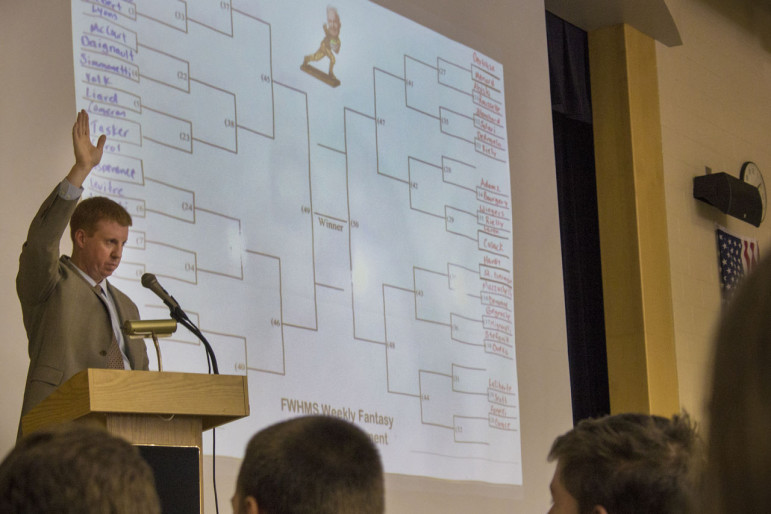
Each week, staff members and their teams will face off against one another. The team with the most points, or minutes read, wins. Students log their minutes in an app created by Cameron. If students claim they've read more than 120 minutes, they need to provide a parent's email address so the school can congratulate the parent -- and maybe verify that all that time was really spent reading.
The season culminates in a Thanksgiving recess "Super Bowl," in which the team that reads the most is crowned league champion.
"Our students are often involved in fantasy sports or fantasy football," says Cameron. "So we kind of looked at the model of fantasy football, and we brought it to reading."
The link between reading for fun and succeeding in school is well established. According to a 2013 study, children who read for pleasure make more progress in math, vocabulary and spelling between the ages of 10 and 16 than those who don't. And while a majority of U.S. 9-year-olds read for fun every day, fewer than 20 percent of 17-year-olds say they do.
Cameron hopes that the competition will drive his middle-school students to read for pleasure during those crucial early teen years.
"The competitive element of it is what I look forward to every year," says Cameron. "Every year we’ve done this, there’s something new that we haven’t seen."
With a noisy countdown, the students gathered in the cafeteria excitedly open their draft cards. Inside is the name of the staff member whose team they'll be playing for.
The Coach's Huddle
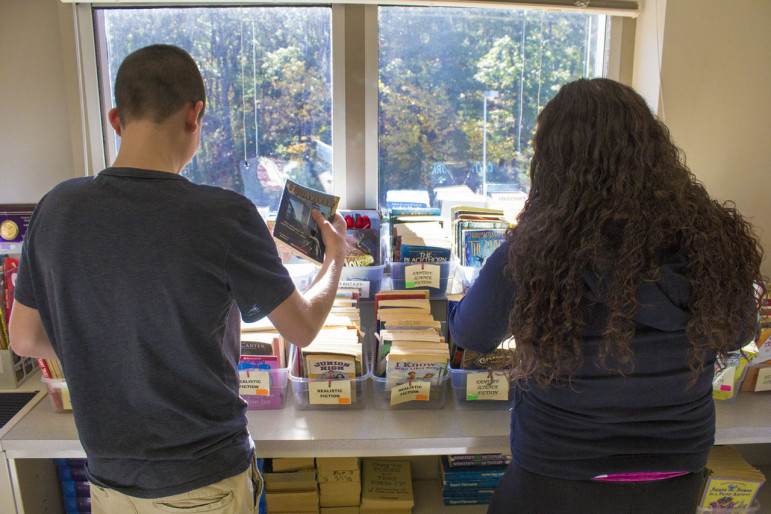
After the draft, sixth-grade English teacher Patty Bourgery hosts a "coach's huddle" with her team in a bright first-floor classroom. Bins of young-adult books with titles like "Geography of You and Me," "I Survived" and books from the "Hunger Games" trilogy line the walls.
"So, I do want to talk about our strategy for winning and beating Mr. Cameron, because you know that he is the most ultra-competitive person in this building," Bourgery tells her students. "So our goal really is to beat his team."
Like the rest of the school, she's meeting with her team of sixth-, seventh- and eighth-graders for the very first time. They're talking reading strategies -- including the fact that it's OK to put down a book that you don't enjoy -- and Bourgery takes team photos, which she'll publicly display alongside the minutes they read each week.
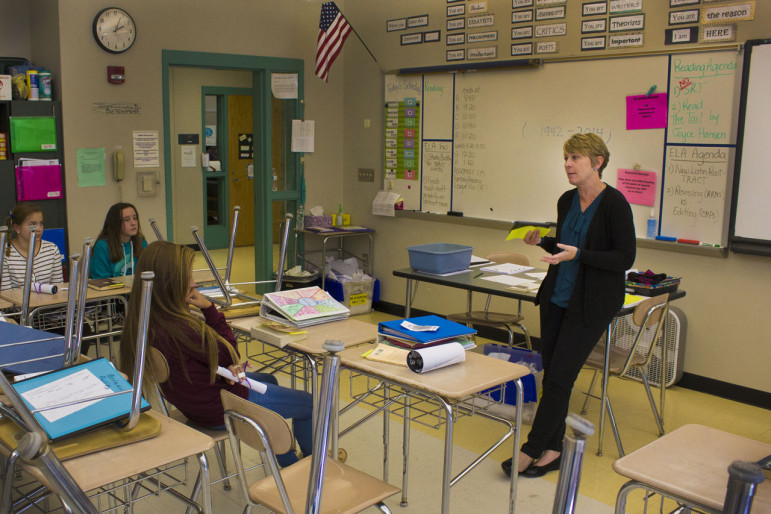
A 25-year teaching veteran, Bourgery welcomes the competition as a way to keep students engaged outside of school. While she has wanted to be a teacher since she was in fifth grade, she says her first love lies in reading. And she's excited to share that love with students.
"Rather than sit and watch a movie, it's really a movie in your mind," says Bourgery. "That's the cool thing about reading, is that you really don't need Netflix or a DVR or anything. You just need a good book, and, you know, you can kind of escape for a little while."
At a time when a third of U.S. 13-year-olds say they read for pleasure no more than twice a year, by the end of last year's season the students at Hartnett would each read an average of four hours a weekend. During the Thanksgiving recess "Super Bowl," principal Cameron says, the winning team, which he coached, read an average of three hours a day.
"Students become almost manic in the competition aspect of it," says Cameron.
Pranks And Camaraderie
Staff coaches can be a little manic, too, sometimes motivating their students with food, team T-shirts or other wacky high jinks. Last year, principal Cameron's team hid every item in the school store, in an attempt to pressure store manager and special education teacher Megan Menard to let one of her star readers defect to the Cameron team as a free agent.
"They actually put it all up in the ceiling tiles," says Menard. "And, like, for months we were finding things everywhere."
It's the team structure of the contest, she says, that, pranks aside, helps unite the entire school.
"It gets people motivated to read, but it also gives them a sense of camaraderie in the classroom," says Menard.
It's a camaraderie that extends well beyond team members. The competition allows students to form a relationship with building staff members they might never otherwise know. Across the room from Menard, school nurse Sue Wiegers meets with her team of nine students.
"Typically I see kids, students, who come in who are not feeling well, who need to come in for daily medications or daily treatments," says Wiegers. "So this allows me to see students that I do not normally interact with."
Only One Bet
For students in the school, the reactions to the league are mixed. Sixth-grader Akasha Quarles, who is on Menard's team, says she's excited to participate in her first competition.
"It's a competitive thing, and a great thing to do, to read," says Quarles. "And it's a great learning experience."
But as students pack up from their lockers at day's end, many with reading books in hand, others have different opinions.
Eighth-grader Zach Pitler, who doesn't always enjoy reading, says the competition creates pressure to do something he'd rather not. Still, he'd like to do better than he did last year.
"I'm going to read more than nothing," says Pitler.
Sixth-grader Mallory Hreczuch, on the other hand, says she's feeling good about the competition. She already has a few strategies in mind to keep her team's marks up.
"I'll ask them if they're reading," says Hreczuch. "And I'll read a lot and keep up to date with it and not stop."
While principal Cameron, a self-professed Patriots fan, no longer plays fantasy sports, he says this homegrown competition fills any void that might have left.
"This kind of allows me to get caught up with our students and staff with the competitive nature of sports," says Cameron, "but at the same time we’re promoting and endorsing a love of literacy."
While Cameron says there's no betting in this fantasy sports league, from the looks of it, staff have already placed bets on their students to succeed.
Edit: A previous version of this article identified Hartnett's store manager and special education teacher as Jackie Menard. Her correct name is Megan Menard. We regret the error.