Lawrence Schools Under State Control For At Least 3 More Years
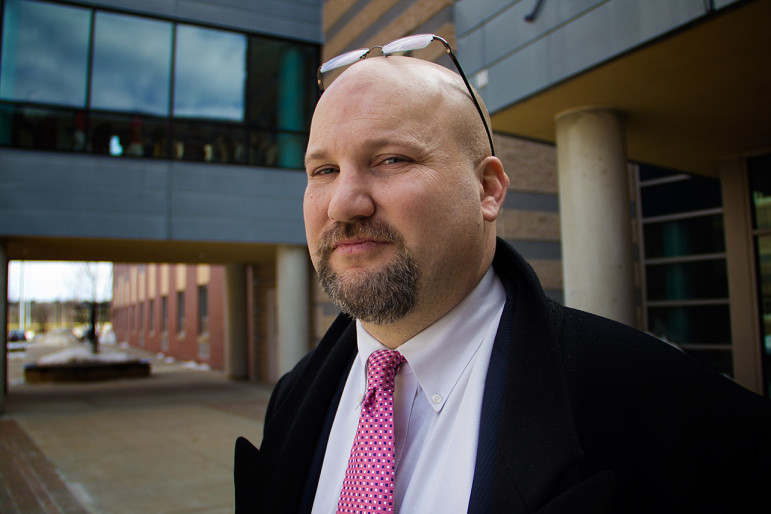
The public school system in Lawrence will stay under state control for at least three more years, according to a renewed turnaround plan developed by the state-appointed receiver and the state's commissioner of elementary and secondary education.
Although Lawrence Public Schools has seen improvements in test scores and graduation rates since being taken over by the state in 2012, state officials say there's more homework to be done before local control is reinstated.
The turnaround plan details the strengths and weaknesses of the takeover so far and lays out plans for additional improvements in the district through 2018.
Receivership Brings Reforms
In 2012, the state declared Lawrence Public Schools "chronically underachieving," citing dismal test scores and a graduation rate well below the state average. The district was placed into state receivership under Jeff Riley's control and, in a bid to turnaround district performance, dozens of reforms have been enacted since.
“We had to change the mindset of how the Lawrence Public Schools operated," said Riley. "It went from a large, central bureaucracy, command-and-control structure to a new system that we put in place."
As a part of turnaround efforts that began in 2012, Lawrence has seen more school autonomy, revamped teacher evaluation and compensation systems, longer school days and new outside partnerships with educational consultants.
The turnaround plan also called for drastic cuts to the district central office -- cutting 30 percent of staff -- and funneled that money directly to public schools.
State officials say that more time is needed to fine-tune the existing reforms and implement new ones in order to boost district performance, including a consolidated high school campus, an extended school year for ninth-graders and improved parent engagement.
Gains, But Not Enough
Despite gains since receivership began, Lawrence lags behind peers when it comes to graduation rates and scores on state assessments. Both are indicators used by the state to judge the district's performance.
"It's not a surprise," Frank McLaughlin, president of Lawrence's teachers union, said of the continued receivership. " We have come a long way over the past couple of years, but we do have a way to go."
When the state takeover began in 2012, Lawrence's graduation rate was 52 percent, 31 points below Massachusetts average. Last year, 67 percent of high school seniors graduated, 19 percent below the state average.
Since the takeover, proficiency on state assessments in math increased from 28 percent to 41 percent. In English it increased from 41 percent to 44 percent, and in science it increased from 13 to 21 percent.
Statewide last year, average proficiency in math was 60 percent. In English, it was 69 percent, and in science, it was 55 percent.
"We've had some success and we've had some failures but generally, I'd say we're moving in the right direction and we're working together to improve the situation for the children in Lawrence," McLaughlin said. "And I think that's commendable."
For the district's renewed turnaround to be considered successful, student graduation rates and proficiency scores need to reach specific target levels.
By June 2018, Lawrence' graduation rate should reach 77.9 percent for the turnaround plan to be deemed successful. Math and English proficiency should surpass 50 percent.
"We've seen some gains on the test scores -- the graduation rate has risen and the dropout rate has been cut in half -- but I think we've got a little bit longer to go until we get to a point where we feel comfortable turning it back over to the city," said Riley.
Poverty, English-language Learners Present Challenges
The demographics are challenging in themselves -- 80 percent are considered high needs, meaning they have at least two of the following qualities: live in poverty, have a home language other than English, have special needs, are homeless or recently immigrated.
About 70 percent of students in the district grew up speaking a language other than English. Nearly half of those students are English-language learners, meaning they are not yet academically proficient in English.
And 62 percent of the district's students come from low-income households. Recent research shows that poverty may be the largest factor that affects academic achievement and likelihood of dropping out of school.
The renewed turnaround plan will continue to develop targeted supports for English-language learners, students with disabilities and expanded parent and community engagement.
Riley plans to remain at the helm of the district's turnaround efforts for the next three years.