Parents Do The Math As School Supplies Costs Add Up
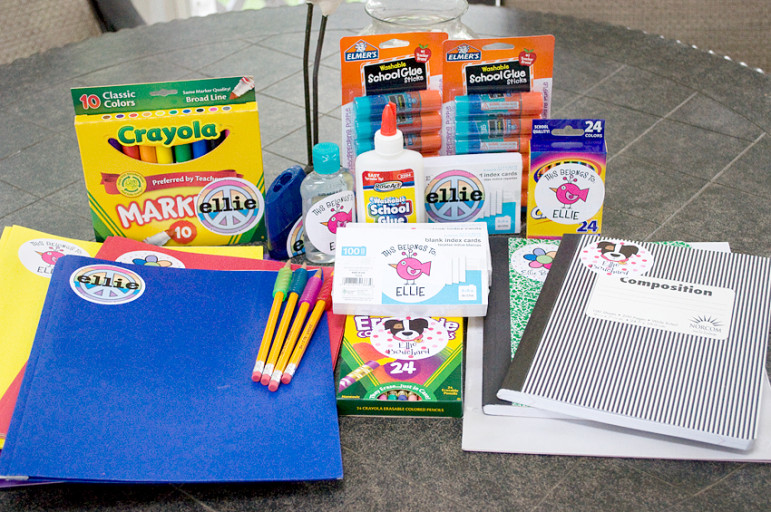
BOSTON -- Tuesday is the first day of school in Boston. While heading back to school might give some students butterflies, the cost of the school supplies they need to bring along can leave parents like Mary Lewis-Pierce -- "taken aback."
"My son is 9, we’ve been going back-to-school for five years now, and the school supply lists are getting longer and longer," says Lewis-Pierce, a Boston Public Schools parent. "I was concerned about our budget. I was concerned about getting all of the supplies."
While parents have always been responsible for basic items like pencils, binders and folders, schools increasingly ask parents to contribute more. Classroom supplies like copy paper, tissues, paper towels and hand sanitizer -- items once covered by schools -- have become staple items on supply lists.
And the costs add up: Over the past 10 years, families have spent an average 42 percent more on back-to-school items, according to a recent survey by the National Retail Federation.
This year, American families with school-aged children will spend an average $630.36 on school supplies, electronics, apparel and other back-to-school purchases, according to the survey.
'An Expected Expense'
Just days before schools begin, the Staples at Fenway's Landmark Center is abuzz in the middle of the day.
College students wander the aisles, eyeing printer ink and packs of pens. Parents walk with children in tow, hoping to cross items off of school supplies lists.
"We're getting binders, some stuff for math and looking for tabs and a flash drive," says Shibani Rao, as she walks down the aisles with her two children. "We kind of had to do two trips because we were so late. We went to Target and didn't get half the stuff."
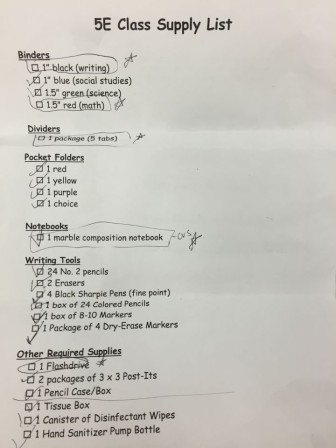
The lists for her second and fifth grade children, who attend Brookline's Lawrence School, require students to bring pencils, binders, notebooks, pocket folders, hand sanitizer and boxes of tissues.
Beth Winickoff, also of Brookline, came to Staples with her three children. She's seen the nature of school supplies lists change over the years.
"They weren’t so specific about you needed," says Winickoff, with a laugh. "Now all the teachers are like, 'You need this kind of notebook, and you need this many folders, and they have to be different colors, and they have to be heavy duty plastic, and three hole punched and three book covers...'"
At this Staples, binders range from 1-inch binders at $2.49 to heavy duty 5-inch binders at $35.19. Packs of No. 2 pencils range from $7 to $16.99. A graphing calculator, often required in high school, costs $120.
Winickoff and other parents at the store say they can easily spend $100 or more per child just to cover the items on back-to-school lists.
"You know it's coming. It's just an expected expense for September," says Elizabeth Laurencot, of Brookline, who spends about $200 each year on back-to-school supplies for her two children.
Some Show Up Without
But not all families can easily cover the expense, expected or not.
While measures like the state sales tax holiday are meant to help families balance the cost of school supplies, teachers often see students without required supplies, year after year.
"Some of our homeless students are students who are really in the lower socioeconomic demographic," says Lisa Brewster-Cook, an English teacher at Somerville High School. "They certainly are not going to raise their hand and say 'I can't afford that' or 'I don't have that' or 'I can't do that.' "
To help, Brewster-Cook does her best to collect extra school supplies and have them available for any student that wants them.
"Then there's no stigma attached to it, no reason that you have to give a reason for doing it," said Brewster-Cook. "It's just, 'Come and get it.' "
But costs can add up for teachers, as well. With many public schools facing funding challenges, teachers increasingly cover costs their students may not be able to afford.
While the IRS says educators can deduct up to $250 for unreimbursed expenses classroom material, often it's not enough.
According to a 2015 survey, American teachers shell out an average of almost $500 each year to pay for items that often include pens, pencils, printer ink, computer paper and other basic classroom supplies.
Lending A Helping Hand
Teachers are not alone in reaching out to students whose families may struggle to cover the costs of school supplies. Districts like Somerville, where over two-thirds of the students qualify for free or reduced lunch, also partner with outside organizations to do so.
At East Somerville Community School, volunteers ready themselves to hand out free backpacks full of school supplies to a packed auditorium of students in first and fourth grade.
"This is the second day of school and there are a lot of kids here who don't have backpacks," says Sharon Reilly, executive director of Cradles to Crayons, a Cambridge-based nonprofit that assists low-income and homeless families with childhood needs.
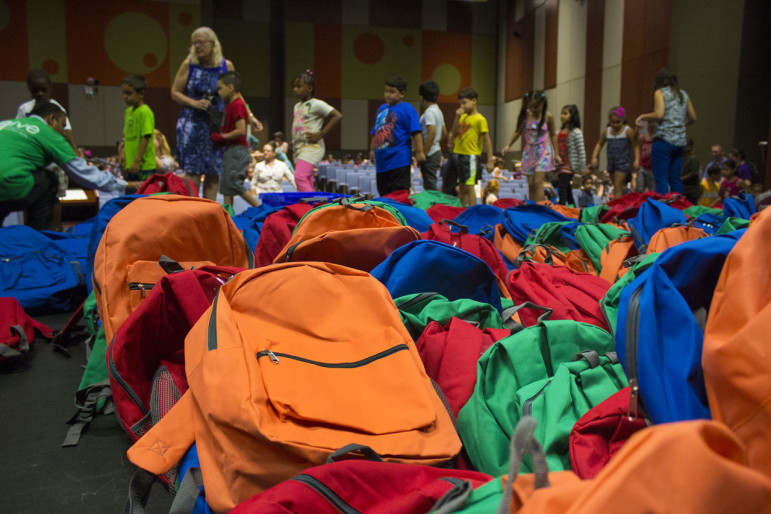
The organization plans to distribute 55,000 backpacks across the state this year.
Excited Somerville students line the auditorium stage to receive new backpacks filled with pencils, erasers, age-appropriate books, folders, a ruler and more. Reilly knows many families may not be able to easily afford these materials.
"The costs keep getting more expensive," says Reilly. "When you consider that many of these parents have multiple kids, you're talking about a pretty extensive hit -- and for some parents, they just can't do it."
But Cradles to Crayons hopes to lift some of the burden by partnering with 123 organizations to to distribute supplies directly to families, or host giveaway events at health centers and schools.
As the young Somerville students exit the stage proudly wearing brand new backpacks, they receive high fives and words of encouragement from teachers, staff and volunteers -- including Somerville Mayor Joseph Curtatone and Superintendent Mary Skipper.
"It’s amazingly important for students to start the school year off feeling ready," says Skipper. "Sometimes it’s very stressful for parents and for kids not to have the things they need."
"We want them to love and embrace learning," adds Curtatone. "This goes a long way towards that."