Learning Lab
This is an archive of WBUR’s Learning Lab, which covered education in Massachusetts from 2013 to 2016.

Reporter's Notebook

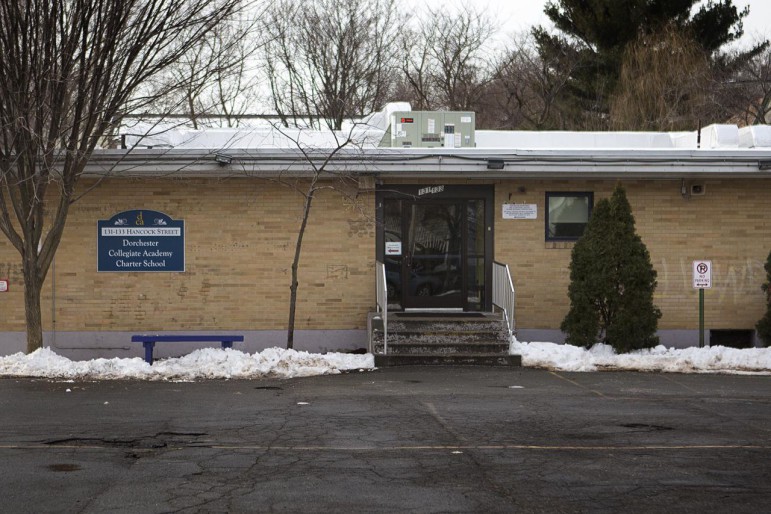
State Assumes Control Of Southbridge Schools, Revokes Dorchester School's Charter

BOSTON -- The Massachusetts Board of Elementary and Secondary Education voted Tuesday to declare Southbridge schools "chronically underperforming" and place the district in state receivership.

At a meeting in Roxbury, board members voted 9-0 in favor of the move, with one abstention.

Education Commissioner Mitchell Chester said low academic performance, large achievement gaps and constant leadership turnover have left the south-central Massachusetts district in need of state intervention.

"In the past five or so years, they've had seven different superintendents, seven different high school principals," said Chester, who had recommended receivership. "We can do better than Southbridge has been doing. With the receivership authority we have the tools and the ability to do better. "

Read more of State Assumes Control Of Southbridge Schools, Revokes Dorchester School's Charter →

Reporter's Notebook

Mass. High School Graduation Rate Rises; Dropout Rate Falls

BOSTON -- Massachusetts' four-year high school graduation rates climbed for the ninth year in a row, with some of the largest gains in such groups as black females, Hispanic students and students from low-income families, the state education department announced Thursday.

"These impressive results reflect the dedication of the Commonwealth's educators, counselors and administrators to keeping all students engaged in school," Mitchell Chester, elementary and secondary education commissioner, said in a statement.

The four-year graduation rate for black females jumped from 79.2 percent in 2014 to 82.3 percent in 2015.

Across the state, 87.3 percent of students who entered ninth grade in the 2011-12 school year graduated four years later, in 2015. That's a 1.2 percent increase from last year's rate.

While the state's overall graduation numbers look good, large gaps persist. The graduation rate of male English-language learners dropped moderately from last year, to 60.5 percent. In general, Hispanic English-language learners had a graduation rate of 55 percent, the lowest of any group in the state.

Read more of Mass. High School Graduation Rate Rises; Dropout Rate Falls →

Reporter's Notebook

A Teacher, A Committee Member And A Parent Walk Into A Blog ...

When Burlington High School history teacher Michael Milton began blogging about his classroom, 10 posts flew from his fingers in three days.

Their topics ranged from his lesson plans, like "The (Industrial) Revolution will be Twitterized*," to reflections on modeling a classroom after the TV show "The West Wing."

"It was just like I had all these things stored up that I wanted to say," Milton says. "I hope that putting myself out there, that’s kind of like showing 'Here’s the mind of a teacher, here’s what teachers do.'"

Soon after its 2012 creation, Milton's blog, michaelkmilton.com, began to pick up steam. Educators flocked to the online resource for lesson plans and discussions about their craft. Today, Milton has over 3,000 followers, and his most popular post has over 6,700 hits.

“A lot of times people who show lesson plans, they’re different businesses or nonprofits,” Milton says. “A voice that is always missing is teachers.”

Now, that's changing. Milton is just one of a growing number of local educators, parents and policymakers who have turned to independent blogs to spread awareness about their school experiences.

Armed with platforms on websites like WordPress and Blogger, these keyboard crusaders create wide communities to share practices and concerns within the education world. And as the voice of bloggers gets louder, it's having a growing effect on education practice and policy.

Read more of A Teacher, A Committee Member And A Parent Walk Into A Blog ... →

Reporter's Notebook

Commissioner Recommends State Take Over Southbridge Schools

Mitchell Chester, state commissioner of elementary and secondary education, recommended Friday that Southbridge Public Schools go into state receivership.

If the state board of education approves his recommendation, Southbridge would join Holyoke and Lawrence to become the third Massachusetts district in five years to be taken over by the state.

Citing continued "low academic performance, low graduation rates and unstable leadership," as well as high suspension rates and failure to comply with regulations on teaching English language learners, Chester said in a statement that the district falls short of its duty to provide an effective education.

Read more of Commissioner Recommends State Take Over Southbridge Schools →

Comment of the Day

Guest Commentary: Beware The College Financial Aid Letter

By Bob Hildreth

This is the time of year when students and their parents pack a light lunch or an overnight bag and head off to visit colleges. Some may be aware that these highly orchestrated guided tours are marketing tools. After all, colleges are in a high-stakes competition with one another to attract students and money. That’s capitalism.

Families later receive a second big marketing job: the financial aid letter. Unfortunately it hides more than it reveals.

Specifically, it obscures the real cost of going to college and the means of paying for it. Colleges, in which we put so much trust, knowingly draft confusing and deceptive financial aid letters to make their value look better than it actually is.

According to Mark Kantrowitz, a financial aid consultant with Edvisors.com, the letters “are designed to convince the family that the college costs less and is more affordable than it really is.”

Read more of Guest Commentary: Beware The College Financial Aid Letter →

Reporter's Notebook

Facing Districtwide Budget Cuts, One Boston School Pushes Back

BOSTON -- Boston Community Leadership Academy may not have much of a leadership program next year.

Or a library. Or gym class. Or four of its current teachers.

If the Hyde Park high school’s proposed 2016-17 budget is approved, BCLA will start the school year with a projected shortfall of more than $870,000. That’s 19 percent of its current operating budget, and it would force cuts to just about every program that is not required by law.

"It's a position from history, it's a position from science, a position from math, the rest of the library, the leadership coordinator,” math teacher Grace Evans told about 25 fellow teachers at a meeting last week. “It's gym..." The list goes on.

Read more of Facing Districtwide Budget Cuts, One Boston School Pushes Back →

Reporter's Notebook

Boston Schools' Budget May Fall Short By $50 Million, Chang Says

BOSTON -- Superintendent Tommy Chang said Tuesday that Boston Public Schools could fall short by as much as $50 million next year.

BPS will not close any schools in the 2016-17 school year, Chang pledged in a letter to parents.

"We have chosen not to close schools in this current budget," Chang wrote.  "Closing schools must be a deliberate process based on equity of access and student needs."

Last year, budget cuts led to the closing of two schools in Hyde Park. This year, Chang said the district has already identified $20 million to cut in central departments and investments.

Read more of Boston Schools' Budget May Fall Short By $50 Million, Chang Says →

Reporter's Notebook

Guest Commentary: Schools Need Restraint -- And Restraint In Using It

By James V. Major

It is a precarious line that teachers and staff walk when students erupt into emotional and physical outbursts, kicking, biting or punching fellow students or teachers. It might seem that children should never be physically restrained in school. But, when all other interventions have failed, how do we deter a child from running into traffic, break up a fight between 18-year-olds or stop a teenager in an acute psychotic episode from committing suicide?

The use of restraints in schools has not been without reason. There are times when emotionally, behaviorally and medically challenged students need to be prevented from hurting themselves, classmates and teachers. School professionals should continue to embrace positive behavior management tools, but they should also be highly trained and skilled in using safe restraint techniques when dangerous situations arise.

Given recent events, the public is right to be concerned about the use of physical restraints in schools. School administrators must provide the proper training and support to staff so it is understood that restraints must never be used as punishment and are not therapeutic. Restraints can only be used as a last resort to protect students and staff -- after all other interventions have failed.

This month, new state regulations go into effect that govern the use of physical restraint and seclusion in all publicly funded schools and group care facilities in Massachusetts. The new state regulations, which limit the use of physical restraints, are the result of last year’s extensive debate by advocates, school personnel and parents across the state. While both public and private schools have invested a great deal of time and energy in preparing to comply with the regulations, the real focus of our work should be, and has been, on the prevention and elimination of the need for physical restraints in the first place.

Read more of Guest Commentary: Schools Need Restraint -- And Restraint In Using It →

Reporter's Notebook

Massachusetts Education Again Ranks No. 1 Nationally

BOSTON -- Massachusetts has the best public school system in the country but could do more to help low-income students, according to a new report that ranks states by the quality of their public schools.

Education Week's annual national report, Quality Counts, gave Massachusetts the top spot because it has the nation's top fourth- and eighth-grade reading and math scores, high postsecondary degree attainment and rising AP test scores.

Massachusetts has ranked No. 1 every year since the index began in 2008.

Mitchell Chester, commissioner of elementary and secondary education, said he's "very proud" of the ranking.

"We've focused on doing well; we've focused on aiming high in terms of our academic expectation," said Chester. "Our educators have done the smart, hard work that has put us at the top."

Read more of Massachusetts Education Again Ranks No. 1 Nationally →

Reporter's Notebook

MCAS 2.0, Tommy Chang And Other 2015 Education News

Education is always a hot topic in Massachusetts, but this year it seemed to be on fire. Here are a few of the hot spots -- and perhaps the hottest is standardized testing.

By last school year, more than half of Massachusetts school districts had piloted a new standardized test called PARCC. These took the place of the MCAS tests given in Massachusetts schools since 1998. PARCC is more closely aligned to Common Core standards and can be given on computers.

Over the year, teachers and administrators provided feedback on PARCC, and multiple studies were done to study the new test’s effects.

It all laid the groundwork for the Board of Elementary and Secondary Education’s November vote on whether the state should adopt a new standardized test. Teachers, parents, students, policymakers -- everyone seemed to have a pro-MCAS or pro-PARCC stance.

But much of the controversy surrounded one figure: Mitchell Chester, Massachusetts commissioner of elementary and secondary education.

Read more of MCAS 2.0, Tommy Chang And Other 2015 Education News →