Learning Lab
This is an archive of WBUR’s Learning Lab, which covered education in Massachusetts from 2013 to 2016.

Posts by Louise Kennedy

Reporter's Notebook

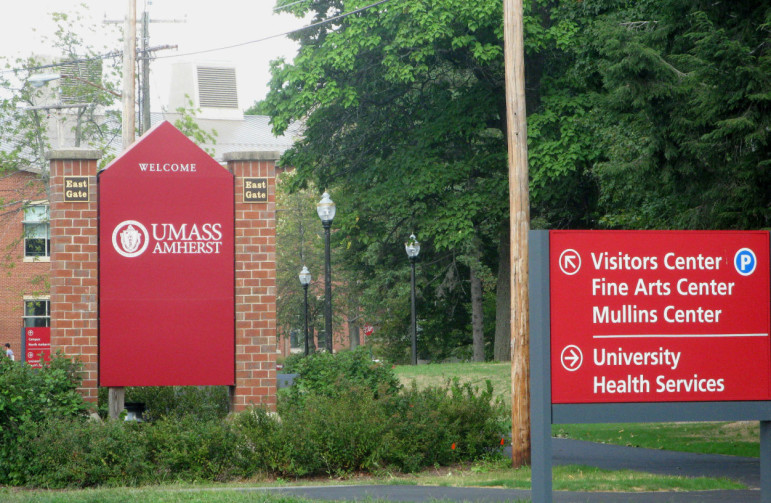
State Program Could Lower Cost Of College For Mass. Students

State officials are touting a new program they say could help Massachusetts students save an average of about $5,000 off the cost of obtaining a bachelor’s degree.

The initiative, dubbed “Commonwealth Commitment,” will give qualifying undergraduates a 10 percent rebate at the end of each semester they complete. Students would earn an associate's degree at one of the state's community colleges, then transfer with a tuition waiver to a four-year Massachusetts university. In addition, their tuition and mandatory fees on any campus would be frozen at the date they start the program.

The plan, which state officials say is the first of its kind in the nation, was announced Thursday in Lowell by Gov. Charlie Baker, Lt. Gov. Karyn Polito and public higher education officials. It was developed by faculty members and administrators from all three branches of the state's public higher education system: the University of Massachusetts, state universities such as Worcester State and community colleges such as Middlesex.

Read more of State Program Could Lower Cost Of College For Mass. Students →
Reporter's Notebook

Differences In Suspension May Cause 20 Percent Of Achievement Gap

The achievement gap between black students and their peers is well documented, but conclusive explanations of the reasons for the gap are harder to come by.

Now a study of more than 15,000 students in Kentucky says that as much as 20 percent of the difference may be due to a single cause: getting suspended from school.

“This analysis -- the first of its kind -- reveals that school suspensions account for approximately one-fifth of black-white differences in school performance,” write sociology professors Edward W. Morris and Brea L. Perry in the study, published in the journal Social Problems last month.

Read more of Differences In Suspension May Cause 20 Percent Of Achievement Gap →

Reporter's Notebook

Boston Schools Audit: Empty Seats, Special Ed Costs And Other 'Opportunities'

BOSTON -- An audit commissioned by Mayor Marty Walsh says Boston Public Schools could save millions of dollars by consolidating schools, revising special education services to put more children into mainstream classrooms, streamlining administrative staff and changing bus routes.

"This isn't a map for us on how to turn the system around," Walsh told The Boston Globe Thursday. "This is an idea of what some of the suggestions might be from an outside, third-party, independent source."

The city paid the management consulting firm McKinsey & Co. $660,000 to conduct the audit, in hopes of exploring "more efficient operational approaches and ... reallocating potential cost savings to better serve all students in the system," according to a BPS statement.

The report is dated April 2015 but was publicly released Friday.

"The audit was being updated throughout the year as additional information was becoming available," Bonnie McGilpin, the mayor's press secretary, said Friday.

The report outlines "opportunities" in four key areas and estimates potential savings for each. Stating that BPS currently has 93,000 total seats available but only about 54,000 of them filled, McKinsey estimates that the system could save between $1.7 million and $2.2 million a year by consolidating schools. It also notes possible income of $4 million per school if the buildings were sold.

Read more of Boston Schools Audit: Empty Seats, Special Ed Costs And Other 'Opportunities' →

Reporter's Notebook

Report: Schools Fall Short In Handling Students' Digital Data

Many Massachusetts schools are using technology to monitor students, collect personal data about them and share that data in ways that raise troubling questions about student privacy, according to a new study from the American Civil Liberties Union of Massachusetts.

The study, released Wednesday, examined 35 school districts across the state, including Boston, Springfield and various rural and suburban districts. Almost universally, the study found, students in those districts have "no expectation of privacy" when going online in school; many are similarly unprotected when using school-issued electronic devices, such as Chromebooks or iPads.

And many districts reserve the right to inspect those devices without notice or consent, the report said. Unlike searches of school lockers or student backpacks, the report said, in many cases school officials can search cellphones and other devices without even a "reasonable suspicion."

Read more of Report: Schools Fall Short In Handling Students' Digital Data →

Reporter's Notebook

MCAS Vs. PARCC: Now, Education Board Might Face A Third Option

At the Tuesday meeting of the state Board of Elementary and Higher Education where the latest standardized test scores were released, those scores weren't the main topic of the day. Instead, talk focused on a new twist in the ongoing discussion of whether to keep using the MCAS test or switch to PARCC: How about neither one?

Mitchell Chester, commissioner of elementary and secondary education, is due to make his recommendation on the tests to the board before its Nov. 17 vote. In a special meeting Monday, he told the board that he was now weighing a third possibility, or "Door No. 3," as he put it: a so-called "MCAS 2.0," which could use elements of the new PARCC tests to build a state-specific assessment.

"It's not a binary decision," Chester said Tuesday.

Read more of MCAS Vs. PARCC: Now, Education Board Might Face A Third Option →

5 Questions With

5 Questions With 'The Prize' Author Dale Russakoff

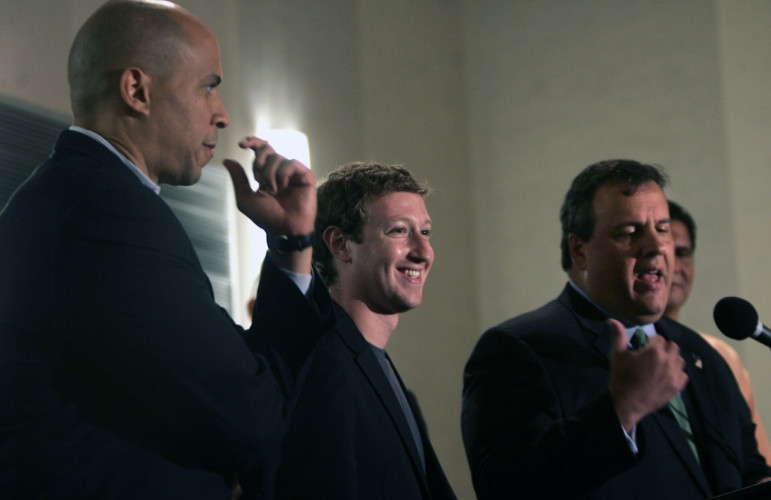
When Facebook founder Mark Zuckerberg announced on "Oprah" in 2010 that he was donating $100 million to the city of Newark to improve its schools, longtime Washington Post reporter Dale Russakoff decided to follow along and see what happened next. Over the next four years, she talked with teachers, parents, students, administrators, politicians, donors -- just about every major figure in the story, in Newark and beyond -- to build a deeply researched, nuanced and thoughtful report.

The result, her book "The Prize," has just been published to widespread acclaim. In it, Russakoff details the missteps and controversies that plagued the reformers from the beginning -- starting, perhaps, with their decision to announce the gift on national television before telling anyone in Newark about it. Even with an additional $100 million in matching funds, the largesse seems to have done shockingly little to improve the quality of Newark's public schools.

Anyone who's interested in how to improve urban schools -- and how not to -- will find a wealth of information and insight in "The Prize." By focusing deeply on one city's issues, the book illuminates many of the problems that all cities face.

Read more of 5 Questions With 'The Prize' Author Dale Russakoff →

Reporter's Notebook

Detailed MCAS Results: Mostly Up, But Some Concerns

Updated at 12:06 p.m. 9/24/2015

Mitchell Chester, Massachusetts commissioner of elementary and secondary education, is “very concerned” about this year’s MCAS reading scores in the early grades, he said in a telephone press conference Wednesday. In addition, he said the Department of Elementary and Secondary Education is investigating “anomalies” in math test results for 10th graders at Boston English High School.

But he said he is “very pleased” with overall results on the 2015 Massachusetts Comprehensive Assessment System tests. The state released district-by-district and individual school results Thursday.

The district and school results showed that “most have either improved or held their own,” Chester said. That’s in line with the statewide results released Monday, which also included partial results from PARCC, the alternative test that Massachusetts is currently considering as a replacement for MCAS.

Although Boston English sophomores showed improvement in English, with 33 percent more of them than last year scoring proficient or higher, Chester said the state was not releasing math scores for those students because “I saw some anomalies on the math side that I want to review before we release them.” He said he had “no indication” of cheating but would not comment further before investigating.

Read more of Detailed MCAS Results: Mostly Up, But Some Concerns →

Reporter's Notebook

Senate's Revised Education Bill Passes, Without Warren's Vote

Sen. Elizabeth Warren (D-Mass.) was one of just three Democrats to vote against the Every Child Achieves Act, the Senate's revision of the education law known as No Child Left Behind, which passed Thursday by a vote of 81-17.

While she called the measure "a significant improvement in federal education policy," Warren said in a statement that it "eliminates basic, fundamental safeguards to ensure that federal dollars are actually used to improve both schools and educational outcomes for those students who are often ignored."

Warren supported the bill in committee because, she said, she was promised that "it would improve." But "in the past two weeks, Republicans have blocked every attempt to establish even minimum safeguards to ensure that money would be used effectively," she said. "I cannot support this legislation until this critical issue is meaningfully addressed."

Read more of Senate's Revised Education Bill Passes, Without Warren's Vote →