Because I founded a nonprofit organization that helps underserved students go to college, I am often asked if saving for college still makes sense. Is it smart to start saving for your child’s college education, or will your savings just be gobbled up by colleges when they’re figuring out your possible financial aid?
That’s a question that concerns many parents, at all income levels.
One low-income mother told me she had encouraged her daughter to start saving for college when she started high school at 14. Now, though, she’s not sure she did the right thing.
BOSTON -- With one week until school begins, Boston school officials expect about 125 Boston Public Schools (BPS) teachers to have no classroom assignment this fall, at an estimated cost of over $10.5 million in salary and benefits.
Although lacking classes to teach, the 125 teachers will remain on the BPS payroll because they have earned "permanent" status. Teachers will work alternative assignments over the course of the year until vacancies in the district occur.
"As classrooms open up either due to enrollment changes, retirement or teachers going out on leave, we're lucky," said Emily Kalejs Qazilbash, BPS assistant superintendent for human capital. "We have this pool of strong teachers who we can then match to positions."
Until classrooms open up, school officials say teachers will be assigned among 28 district schools where they may serve as substitutes, assist in academic interventions or help in other teachers' classrooms.
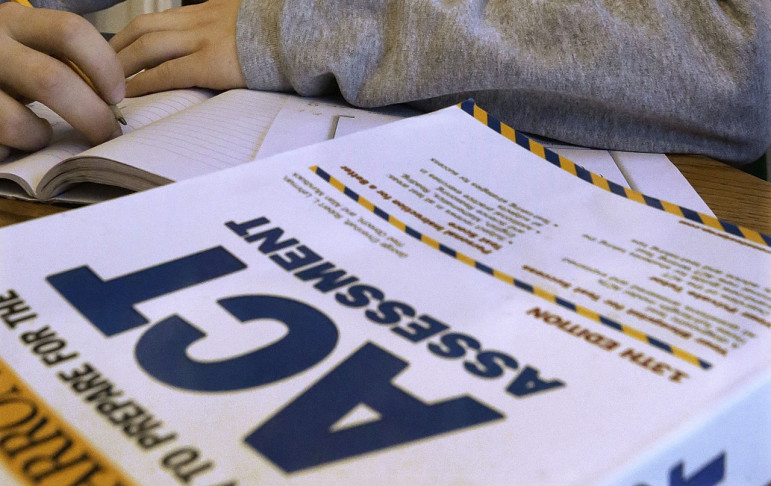
Massachusetts high school seniors tied this year for the nation's highest average score on the ACT, a standardized test akin to the SAT that measures college and career readiness.
The average score for public and private school graduates in Massachusetts and Connecticut was 24.4 out of 36, the highest in the nation and more than three points higher than the national average. The results were released Wednesday by the ACT.
"I congratulate our Commonwealth's students, who continue to lead the country in academic achievement and college readiness," said Governor Charlie Baker in a statement.
Just over half of Massachusetts students met all four ACT College Readiness Benchmarks, well above the national average of 28 percent. The benchmarks represent the level of achievement for students in English, math, reading and science.
Kids in Boston and many other local districts go back to school the day after Labor Day. Others are already there. Either way, school always starts around now, and it always has, because kids had to spend the summer at work on the farm, right?
Not exactly.
"The agrarian model that dominated our educational landscape looked very different from what we have now," says Kenneth Gold, dean of education at the College of Staten Island. "That's just the prevailing myth."
In fact, the familiar September-to-June school year has almost nothing to do with farm kids.
BOSTON -- Universal pre-kindergarten in Boston Public Schools is still a goal, but it won't be happening this school year.
School officials say more than 1,800 3- and 4-year-olds have been placed on wait lists for pre-kindergarten because the city does not have any more open spaces. The city added 100 pre-K seats this year, bringing the total to 2,400, but still fell short.
“What this really tells us is there is a great demand for pre-K seats here in Boston,” said Boston School Superintendent Tommy Chang, “and we cannot fulfill that need because we don't have the space and we don't have the funding yet at this point.”
Chang said he and Mayor Marty Walsh recognize how essential early education is to students' long-term success.
“As we all know, the mayor and myself are very committed over the long term to make sure that there is a quality pre-K seat for any student that wants it,” Chang said. “I think this calls all of us into some action. We know that as early as we can provide education, formal education, to our youngest kids, it's going to be best for them long term. The research is very clear about that.”
But he said he doesn’t know how long it will take to find the money to make pre-K available to everyone who wants it.
“If there were guaranteed seats and we could find seats in neighborhoods for all parents, that's what we would do,” he said. “A lot of this is a funding issue.”
In response to news reports that more than 8,000 BPS students were still awaiting assignments, Chang said that most of the unassigned students were pre-kindergarten 3- and 4-year-olds.
BOSTON -- Schools in 11 Massachusetts school districts will receive $14 million in state grants to extend the time of the school day this year.
"Too often, our school year is insufficient to provide a strong, high-quality education," Mitchell Chester, commissioner of elementary and secondary education, said in a statement. "I am pleased to see schools take advantage of this opportunity to strengthen their programs for both students and teachers."
The grants will pay for at least 300 hours of additional learning time in each school. That time may be filled with more classroom instruction, enrichment opportunities for students, additional professional development for educators or a combination of these activities.
BOSTON -- Though a sailboat may be bigger than their parents' cars, young captains Valerie Geraldo and Wendy Santamaria operate the vessel with ease. They harness the wind and sail their 19-foot boat through Boston Harbor.
"I've been learning how to sail and how to pull the jib when we need to go to another direction," says Geraldo, a soon-to-be fourth grade student. "When you steer you need to go to the opposite side."
"My favorite part about sailing is that it helps you get your strength up," adds Santamaria, a soon-to-be fifth grade student. "Because you have to pull the mainsail and the jib -- and it's really heavy."
Geraldo and Santamaria are members of Courageous Sailing's "Swim, Sail, Science!" summer program run out of the Charlestown Navy Yard. The program, for soon-to-be fourth- and fifth-grade Boston students, has been operating since 2012 to give low-income youth lessons in swimming, sailing and science -- all at no cost to their families.
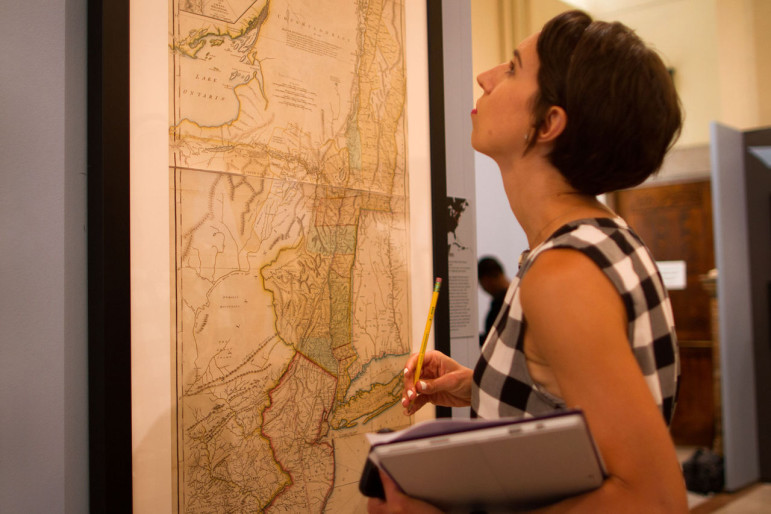
BOSTON -- On a Wednesday morning in July, the sun reflects blindingly off the impressive stone facade of the Boston Public Library. It's cooler inside, where tourists, students and silence-seeking city dwellers explore the book-lined rooms. Among today's visitors are 28 teachers who swarm around archived maps, peer over their eyeglasses into shiny display cases and take photos of historical documents.
It's the third day of the Norman B. Leventhal Map Center's Summer Teacher Institute, and this group of educators has come from around the East Coast to learn how maps and primary sources can bolster their teaching. It's the kind of program the institute has run for educators since opening in 2004, using its extensive collection of maps and documents.
For educators, summer is not just a time for vacation; it's also a valuable opportunity to learn new teaching strategies and plan for the year ahead. Professional development courses like this one can help them do that.
“There’s a misconception that summers are time off for teachers," says Seth Pingree, a seventh-grade teacher who's participating in this year's institute. "Every summer since I started teaching, I’ve done some sort of professional development that’s taken up a large chunk of my time."
BOSTON -- The first time Devin Rich died, it was the night before Mother's Day 2014. He was 17, and he overdosed on a cocktail of codeine, prescription tranquilizers and other drugs.
When Rich woke up in the hospital at 6 p.m. the next day, his mother was sitting by his side. She had spent all of Mother's Day sitting next to him, crying and hoping that he would revive. But the first thing Rich noticed, he says, was that he no longer had his drugs.
"I didn't wake up feeling remorseful or guilty," says Rich. "I woke up angry because my drugs weren't in my pocket, my night was cut short and my friends didn't help me -- they called the cops."
Against medical advice, he ran out of the hospital. A subsequent court order required that he be treated for substance abuse, whether he agreed to it or not.
"Even at that time I wanted to get clean, because my life sucked and I was very depressed," says Rich. "But I wanted to get high more than I wanted to get clean. I wanted instant gratification. I wanted to feel better today for a couple hours, rather than feel better a couple months from now forever."
In June, little more than a year later, Rich graduated sober from one of Massachusetts' four publicly funded high schools for students in recovery. But before he could get there, he had to die again.
BOSTON -- Recent state standards that called for bans on sugary sodas, potato chips and other vending machine snacks in schools are working, says a study published Wednesday.
The study looked at "competitive" food available in school -- foods offered for sale beyond the standard school meals and typically found in school stores, vending machines or a la carte lines. It found that Massachusetts schools are offering significantly fewer foods that fail to meet the standards.
"What we showed in our Massachusetts data is that schools are able to implement the standards effectively with very little technical assistance, with no financial assistance," said Jessica Hoffman, a Northeastern associate professor and the study's lead author.