Learning Lab
This is an archive of WBUR’s Learning Lab, which covered education in Massachusetts from 2013 to 2016.

Reporter's Notebook

Reporter's Notebook

How A Boston School Uses Design To Help Heal Students' Trauma

BOSTON -- Walk into any classroom, in any school, and you're likely to find students suffering from severe trauma. Even students in kindergarten? Unfortunately, yes.

When Dorchester’s Codman Academy Charter School expanded to include kindergarten students two years ago, executive director Meg Campbell found herself face to face with this sad fact.

"The children coming in, the 4- and 5-year-olds, so many of them were so ... traumatized," recalls Campbell. "Clearly traumatized."

She was seeing the kind of severe trauma that typically runs rampant across all grades in urban schools. Trauma from constant exposure to violence. From emotional, physical or sexual abuse. From daily worries about food, housing or safety. Beyond that, those kindergartners had grown up in the aftermath of the 2008 recession and as a result, Campbell says, had many of their social services cut.

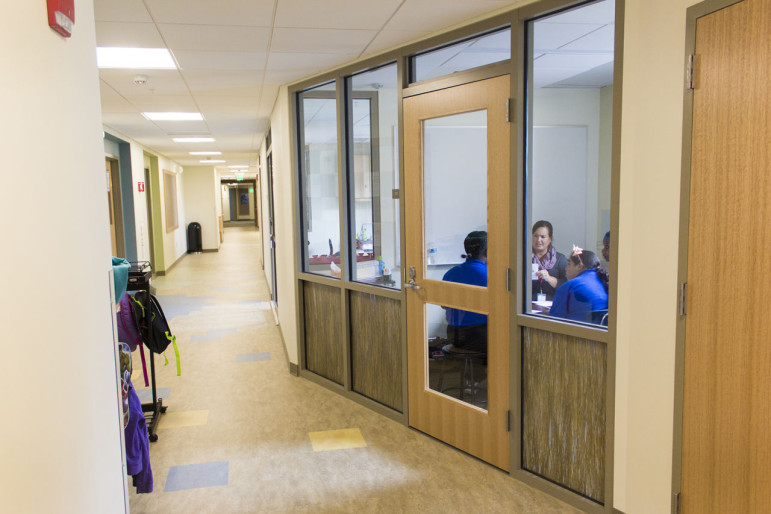
Now, to support its entire student body, Codman has turned somewhere unique: the very walls of the building that its lower and middle schools moved into this year. Using what's known as "trauma-informed building design," the newly renovated space harnesses architecture as a tool to address students' social and emotional needs.

Read more of How A Boston School Uses Design To Help Heal Students' Trauma →
Reporter's Notebook

Guest Commentary: Something Is Rotten In The State Of Massachusetts

By Rebecca Steinitz

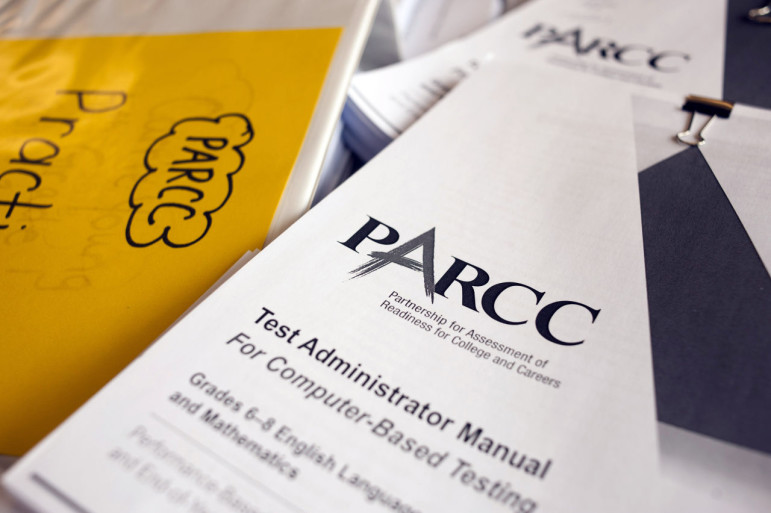
An Open Letter to Gov. Baker about Transparency, Accountability and the PARCC Test

Dear Gov. Baker,

Eighteen months ago, I wrote an open letter to President Obama in which I shared my deep qualms about the quality and efficacy of the PARCC test. The letter quickly went viral, suggesting that the nation’s parents, teachers and politicians shared my concerns. In the subsequent year and a half, our concerns have only escalated, an opt-out movement has emerged, and a growing number of educators have spoken out against the increased focus on testing in American education.

I wish I were writing to you today, Gov. Baker, to tell you that my concerns have been assuaged and that I am ready to embrace the PARCC tests. Unfortunately, I am not. Instead, I am writing to express my new concern: that the Department of Elementary and Secondary Education (DESE) and Commissioner Mitchell Chester are recklessly pushing Massachusetts into the PARCC test, without giving educators, citizens and lawmakers the information we need to make a real choice about our children’s educational future.

Read more of Guest Commentary: Something Is Rotten In The State Of Massachusetts →

Reporter's Notebook

Holyoke Schools Turnaround Plan: Longer Days, Possible Cuts, New Programs

Updated October 2, 2015, 11:08 am

State officials plan to turn around Holyoke Public Schools by lengthening the school day in elementary and middle schools, creating individualized college and career plans for high schoolers, focusing more intensively on English-language learners and disabled students and overhauling the district's assessment system.

Under the turnaround plan for the struggling Pioneer Valley school district, released Thursday, the district would also reallocate funds from the central office to individual schools whenever possible. Because most of the budget goes to salaries, the plan notes that staffs may be cut.

"We must ensure that those expenditures are made in the most effective manner to increase student learning," the plan states. "Therefore, principals will have the authority to ensure that the most effective staff are selected and retained."

Read more of Holyoke Schools Turnaround Plan: Longer Days, Possible Cuts, New Programs →

Reporter's Notebook

As State's First Virtual School Grows, So Do Concerns

At a lunchtime meeting, teachers from the Massachusetts Virtual Academy at Greenfield are swapping classroom stories between bites of salmon and roasted potatoes. It’s a late August day, the first in a week of teacher training, and these educators know the coming year will bring back some challenges they’ve encountered before in their online-teaching careers.

“In virtual it’s different. You need to be constantly checking for understanding to make sure there’s comprehension,” says Jason Martin, who’s in his third year as an English teacher at the academy. “You can’t see the kid; they can see you.”

But as teachers focus on their challenges in the online classroom, others are raising concerns about the nature of the Greenfield school itself. Based on per-pupil spending, WBUR estimates that the school received more than $4.1 million of public money for student tuition in 2014, but it ranked among the lowest performing 20 percent of public schools in the state that year. The academy has been on probation since October 2014.

Mitchell Chester, the state's commissioner of elementary and secondary education, recommended probation then, primarily because, he told the state education board, he had "concerns regarding the academic performance and governance of this virtual school, which has declined each year since 2010."

Read more of As State's First Virtual School Grows, So Do Concerns →

Reporter's Notebook

Boston Launches 10-Year Plan To Update School Facilities

BOSTON -- In hopes of updating Boston schools to meet modern teaching demands, Boston Mayor Marty Walsh launched a comprehensive facilities overhaul on Tuesday.

"The most important investment we can make is in our young people," said Walsh in a statement. "We do that by supporting their education and making sure they have the best opportunities and learning facilities available to them."

In a joint partnership between Boston Public Schools (BPS) and city education officials, the city will develop a 10-year master plan that may include renovations, repairs or additions to existing facilities and new construction proposals. Walsh said it could cost over $1 billion.

Read more of Boston Launches 10-Year Plan To Update School Facilities →

Reporter's Notebook

Detailed MCAS Results: Mostly Up, But Some Concerns

Updated at 12:06 p.m. 9/24/2015

Mitchell Chester, Massachusetts commissioner of elementary and secondary education, is “very concerned” about this year’s MCAS reading scores in the early grades, he said in a telephone press conference Wednesday. In addition, he said the Department of Elementary and Secondary Education is investigating “anomalies” in math test results for 10th graders at Boston English High School.

But he said he is “very pleased” with overall results on the 2015 Massachusetts Comprehensive Assessment System tests. The state released district-by-district and individual school results Thursday.

The district and school results showed that “most have either improved or held their own,” Chester said. That’s in line with the statewide results released Monday, which also included partial results from PARCC, the alternative test that Massachusetts is currently considering as a replacement for MCAS.

Although Boston English sophomores showed improvement in English, with 33 percent more of them than last year scoring proficient or higher, Chester said the state was not releasing math scores for those students because “I saw some anomalies on the math side that I want to review before we release them.” He said he had “no indication” of cheating but would not comment further before investigating.

Read more of Detailed MCAS Results: Mostly Up, But Some Concerns →

Reporter's Notebook

MCAS Scores Rise As State Also Releases First PARCC Results

BOSTON -- At most grade levels, a higher percentage of students scored proficient or higher on the 2015 MCAS tests than in 2014, according to figures released Monday. In addition, the same proportion of sophomores -- 88 percent -- passed this year's test on their first try as did in 2014.

The results for this year's MCAS, the Massachusetts Comprehensive Assessment System standardized tests, were released along with  the first Massachusetts results for PARCC, the Partnership for Assessment for Readiness for College and Careers (PARCC) test, which were lower overall than the MCAS results.

State officials cautioned, however, against comparing the two tests directly because the PARCC data is preliminary. It includes only those students who took the test on computers; results for the handful of districts that used pencil and paper are due out by November.

The MCAS results also indicate that, while white students continue to score higher than their peers, the achievement gap is narrowing, officials said.

Read more of MCAS Scores Rise As State Also Releases First PARCC Results →

Reporter's Notebook

Boston Proposes Combining Charter, District Enrollment Applications

BOSTON -- Boston students would be able to apply simultaneously to charter and district schools under a proposal that Mayor Marty Walsh plans to release Thursday.  It comes just as Boston students file a lawsuit to lift the charter cap in the state.

Currently, families enter one lottery for district seats and another for each charter school they wish to apply to. Under the proposed system, families would enter the same home-based Boston Public Schools lottery for both public and charter schools.

"[The plan would] provide one application, one portal and one deadline for parents who want to make choices and who need to make choices about schools," Rahn Dorsey, chief of education for the City of Boston, told WBUR. The proposal is being handled by Dorsey and Rachel Weinstein, chief collaboration officer for the Boston Compact.

The proposed plan could also effectively change charter schools that opt into the enrollment process from citywide schools to neighborhood schools. Currently charter schools may accept students from throughout the city. Under the proposed process, Weinstein said, students would be given a choice of charter schools based on where they live, just as they are for district schools.

Read more of Boston Proposes Combining Charter, District Enrollment Applications →

Reporter's Notebook

Group Sues To Lift Massachusetts Charter Cap

BOSTON -- Arguing that the charter school cap unconstitutionally denies children access to an adequate education, three lawyers from top Boston firms filed a class-action lawsuit Tuesday to lift the cap.

Paul Ware Jr., Michael Keating and William Lee filed suit in Suffolk Superior Court on behalf of five Boston students who were denied spots at charter schools. Charter school seats are assigned by lottery and are limited by state law.

"The charter school cap stands in the way, arbitrarily, of some children obtaining that constitutionally mandated minimally adequate education," said Lee, a partner at WilmerHale. That standard comes from the Massachusetts Constitution.

Charter school supporters say the schools, which do not have to be unionized and may set their own curricula, are some of the few alternatives for low-income children and families who are unhappy with the public education system. Critics say the schools take away money and resources from public schools.

"The record is that public school districts have lost millions of dollars to charter schools after state reimbursements," said Lisa Guisbond, executive director of Citizens for Public Schools. "If we lift the cap, those losses will just get much bigger, meaning district school students lose access to important educational opportunities, as we’ve seen already happen. Things like art, music, phys ed, access to social workers."

Read more of Group Sues To Lift Massachusetts Charter Cap →

Reporter's Notebook

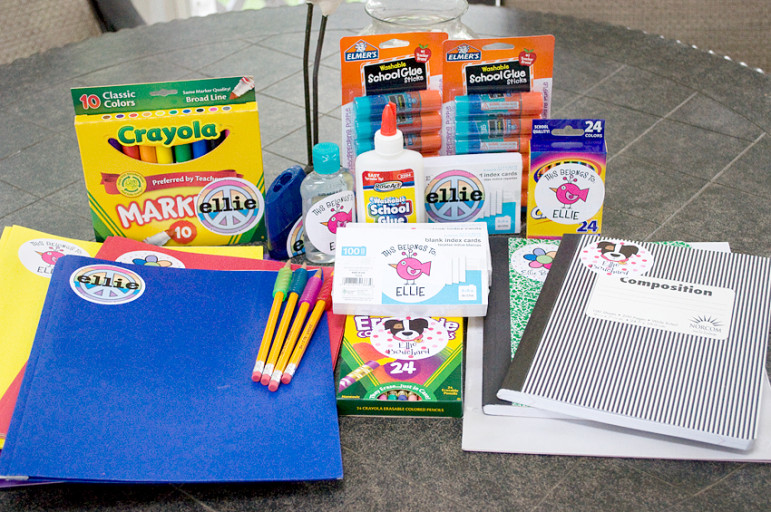
Parents Do The Math As School Supplies Costs Add Up

BOSTON -- Tuesday is the first day of school in Boston. While heading back to school might give some students butterflies, the cost of the school supplies they need to bring along can leave parents like Mary Lewis-Pierce -- "taken aback."

"My son is 9, we’ve been going back-to-school for five years now, and the school supply lists are getting longer and longer," says Lewis-Pierce, a Boston Public Schools parent. "I was concerned about our budget. I was concerned about getting all of the supplies."

While parents have always been responsible for basic items like pencils, binders and folders, schools increasingly ask parents to contribute more. Classroom supplies like copy paper, tissues, paper towels and hand sanitizer -- items once covered by schools -- have become staple items on supply lists.

And the costs add up: Over the past 10 years, families have spent an average 42 percent more on back-to-school items, according to a recent survey by the National Retail Federation.

This year, American families with school-aged children will spend an average $630.36 on school supplies, electronics, apparel and other back-to-school purchases, according to the survey.

Read more of Parents Do The Math As School Supplies Costs Add Up →