Learning Lab
This is an archive of WBUR’s Learning Lab, which covered education in Massachusetts from 2013 to 2016.

Reporter's Notebook

Boston Launches 10-Year Plan To Update School Facilities

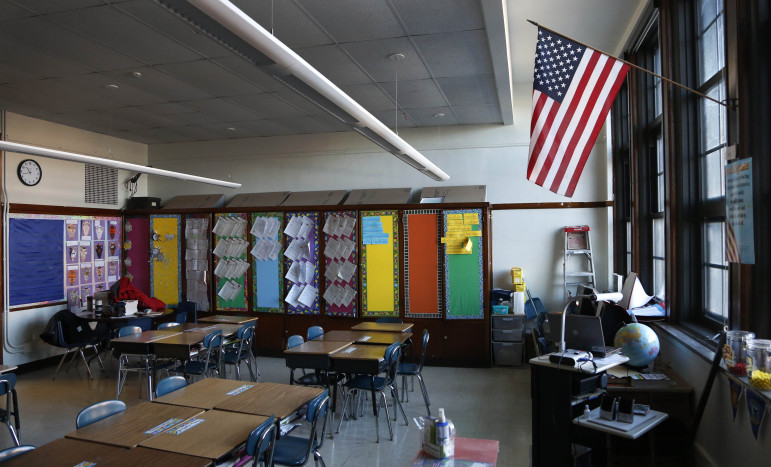
BOSTON -- In hopes of updating Boston schools to meet modern teaching demands, Boston Mayor Marty Walsh launched a comprehensive facilities overhaul on Tuesday.

"The most important investment we can make is in our young people," said Walsh in a statement. "We do that by supporting their education and making sure they have the best opportunities and learning facilities available to them."

In a joint partnership between Boston Public Schools (BPS) and city education officials, the city will develop a 10-year master plan that may include renovations, repairs or additions to existing facilities and new construction proposals. Walsh said it could cost over $1 billion.

Read more of Boston Launches 10-Year Plan To Update School Facilities →

Reporter's Notebook

Detailed MCAS Results: Mostly Up, But Some Concerns

Updated at 12:06 p.m. 9/24/2015

Mitchell Chester, Massachusetts commissioner of elementary and secondary education, is “very concerned” about this year’s MCAS reading scores in the early grades, he said in a telephone press conference Wednesday. In addition, he said the Department of Elementary and Secondary Education is investigating “anomalies” in math test results for 10th graders at Boston English High School.

But he said he is “very pleased” with overall results on the 2015 Massachusetts Comprehensive Assessment System tests. The state released district-by-district and individual school results Thursday.

The district and school results showed that “most have either improved or held their own,” Chester said. That’s in line with the statewide results released Monday, which also included partial results from PARCC, the alternative test that Massachusetts is currently considering as a replacement for MCAS.

Although Boston English sophomores showed improvement in English, with 33 percent more of them than last year scoring proficient or higher, Chester said the state was not releasing math scores for those students because “I saw some anomalies on the math side that I want to review before we release them.” He said he had “no indication” of cheating but would not comment further before investigating.

Read more of Detailed MCAS Results: Mostly Up, But Some Concerns →

Reporter's Notebook

MCAS Scores Rise As State Also Releases First PARCC Results

BOSTON -- At most grade levels, a higher percentage of students scored proficient or higher on the 2015 MCAS tests than in 2014, according to figures released Monday. In addition, the same proportion of sophomores -- 88 percent -- passed this year's test on their first try as did in 2014.

The results for this year's MCAS, the Massachusetts Comprehensive Assessment System standardized tests, were released along with  the first Massachusetts results for PARCC, the Partnership for Assessment for Readiness for College and Careers (PARCC) test, which were lower overall than the MCAS results.

State officials cautioned, however, against comparing the two tests directly because the PARCC data is preliminary. It includes only those students who took the test on computers; results for the handful of districts that used pencil and paper are due out by November.

The MCAS results also indicate that, while white students continue to score higher than their peers, the achievement gap is narrowing, officials said.

Read more of MCAS Scores Rise As State Also Releases First PARCC Results →

Comment of the Day

Guest Column: Let's Dump The ABC's -- And D's and F's, Too

By Alden S. Blodget

The votes are in. Experience, common sense and neuroscientists agree: People don’t learn when they are scared. Well, they learn, but they don’t learn math or history or whatever lessons schools are actually trying to teach. Kids learn to hate school or to fear Mr. Smith or even to hate themselves, and the cause is so frequently connected to grades that it’s a wonder we continue to revere them.

Too often, grades create a fog of fear and loathing, or at least despair and frustration, that poison those on both sides of the desk. They can turn teachers and students into antagonists when they should be natural allies, one helping the other to develop new skills and knowledge, make sense of the world and find a meaningful place in it.

Many students see grades below A as mirrors of their stupidity or unworthiness. Like most of us, students don’t like being criticized or judged, so they react defensively, usually by wadding up the essays and tests containing the labor of their teachers' thoughtful comments and suggestions and hurling them, unread, at the wastebasket, sparking a jolt of anger in the teacher. Or they seek the teacher out, not to learn how to improve but to challenge the grade, putting the teacher on the defensive. Parents call teachers to berate them for the grades they have “given” their children.

Read more of Guest Column: Let's Dump The ABC's -- And D's and F's, Too →

Reporter's Notebook

Boston Proposes Combining Charter, District Enrollment Applications

BOSTON -- Boston students would be able to apply simultaneously to charter and district schools under a proposal that Mayor Marty Walsh plans to release Thursday.  It comes just as Boston students file a lawsuit to lift the charter cap in the state.

Currently, families enter one lottery for district seats and another for each charter school they wish to apply to. Under the proposed system, families would enter the same home-based Boston Public Schools lottery for both public and charter schools.

"[The plan would] provide one application, one portal and one deadline for parents who want to make choices and who need to make choices about schools," Rahn Dorsey, chief of education for the City of Boston, told WBUR. The proposal is being handled by Dorsey and Rachel Weinstein, chief collaboration officer for the Boston Compact.

The proposed plan could also effectively change charter schools that opt into the enrollment process from citywide schools to neighborhood schools. Currently charter schools may accept students from throughout the city. Under the proposed process, Weinstein said, students would be given a choice of charter schools based on where they live, just as they are for district schools.

Read more of Boston Proposes Combining Charter, District Enrollment Applications →

Reporter's Notebook

Group Sues To Lift Massachusetts Charter Cap

BOSTON -- Arguing that the charter school cap unconstitutionally denies children access to an adequate education, three lawyers from top Boston firms filed a class-action lawsuit Tuesday to lift the cap.

Paul Ware Jr., Michael Keating and William Lee filed suit in Suffolk Superior Court on behalf of five Boston students who were denied spots at charter schools. Charter school seats are assigned by lottery and are limited by state law.

"The charter school cap stands in the way, arbitrarily, of some children obtaining that constitutionally mandated minimally adequate education," said Lee, a partner at WilmerHale. That standard comes from the Massachusetts Constitution.

Charter school supporters say the schools, which do not have to be unionized and may set their own curricula, are some of the few alternatives for low-income children and families who are unhappy with the public education system. Critics say the schools take away money and resources from public schools.

"The record is that public school districts have lost millions of dollars to charter schools after state reimbursements," said Lisa Guisbond, executive director of Citizens for Public Schools. "If we lift the cap, those losses will just get much bigger, meaning district school students lose access to important educational opportunities, as we’ve seen already happen. Things like art, music, phys ed, access to social workers."

Read more of Group Sues To Lift Massachusetts Charter Cap →

Comment of the Day

Our School's Rosh Hashanah Gift: The Day Off

By Linda K. Wertheimer

Through most of elementary school and high school, I had a holiday inferiority complex.

My two brothers and I were the only Jews in our rural Ohio school system, and only two holidays seemed to matter – Christmas and Easter. Vacation days were given for Christmas and Good Friday, and there was no pretense at political correctness. They were labeled Christmas and Easter vacation on the school calendars. Pastors came in and led us in prayer in Jesus’ name in annual Easter and Christmas assemblies. Teachers always wished us a merry Christmas or happy Easter.

None of my teachers or peers in the Van Buren schools acknowledged the existence of Jewish holidays, such as Rosh Hashanah, Yom Kippur, Passover or Hanukkah. There was no mention, either, of Eid al-Fitr and Eid al-Adha, major Muslim holidays, and Diwali, the Hindu festival of lights. My brothers and I represented the only religious minority group in the school, but no one knew or seemed to want to know anything about our traditions.

Read more of Our School's Rosh Hashanah Gift: The Day Off →

Reporter's Notebook

Parents Do The Math As School Supplies Costs Add Up

BOSTON -- Tuesday is the first day of school in Boston. While heading back to school might give some students butterflies, the cost of the school supplies they need to bring along can leave parents like Mary Lewis-Pierce -- "taken aback."

"My son is 9, we’ve been going back-to-school for five years now, and the school supply lists are getting longer and longer," says Lewis-Pierce, a Boston Public Schools parent. "I was concerned about our budget. I was concerned about getting all of the supplies."

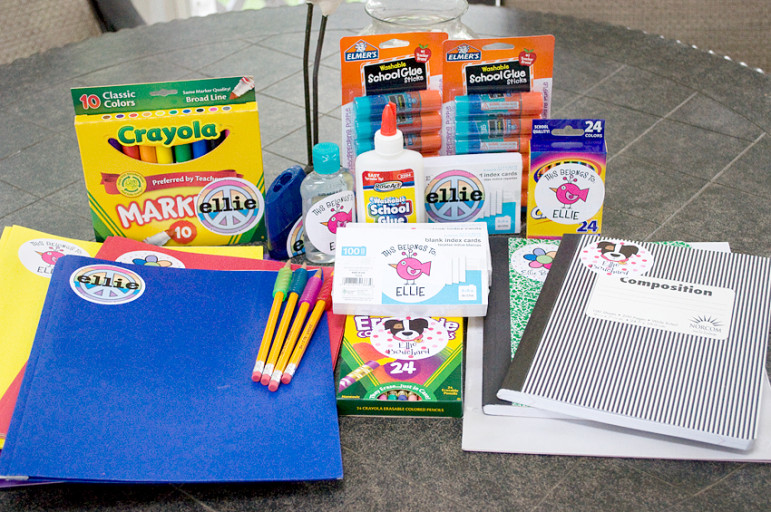
While parents have always been responsible for basic items like pencils, binders and folders, schools increasingly ask parents to contribute more. Classroom supplies like copy paper, tissues, paper towels and hand sanitizer -- items once covered by schools -- have become staple items on supply lists.

And the costs add up: Over the past 10 years, families have spent an average 42 percent more on back-to-school items, according to a recent survey by the National Retail Federation.

This year, American families with school-aged children will spend an average $630.36 on school supplies, electronics, apparel and other back-to-school purchases, according to the survey.

Read more of Parents Do The Math As School Supplies Costs Add Up →

Reporter's Notebook

Guest Column: Should You Save For College?

By Bob Hildreth

Because I founded a nonprofit organization that helps underserved students go to college, I am often asked if saving for college still makes sense. Is it smart to start saving for your child’s college education, or will your savings just be gobbled up by colleges when they’re figuring out your possible financial aid?

That’s a question that concerns many parents, at all income levels.

One low-income mother told me she had encouraged her daughter to start saving for college when she started high school at 14. Now, though, she’s not sure she did the right thing.

Read more of Guest Column: Should You Save For College? →

Reporter's Notebook

Boston Expects 125 Teachers Unassigned To Their Own Classroom

BOSTON -- With one week until school begins, Boston school officials expect about 125 Boston Public Schools (BPS) teachers to have no classroom assignment this fall, at an estimated cost of over $10.5 million in salary and benefits.

Although lacking classes to teach, the 125 teachers will remain on the BPS payroll because they have earned "permanent" status. Teachers will work alternative assignments over the course of the year until vacancies in the district occur.

"As classrooms open up either due to enrollment changes, retirement or teachers going out on leave, we're lucky," said Emily Kalejs Qazilbash, BPS assistant superintendent for human capital. "We have this pool of strong teachers who we can then match to positions."

Until classrooms open up, school officials say teachers will be assigned among 28 district schools where they may serve as substitutes, assist in academic interventions or help in other teachers' classrooms.

Read more of Boston Expects 125 Teachers Unassigned To Their Own Classroom →